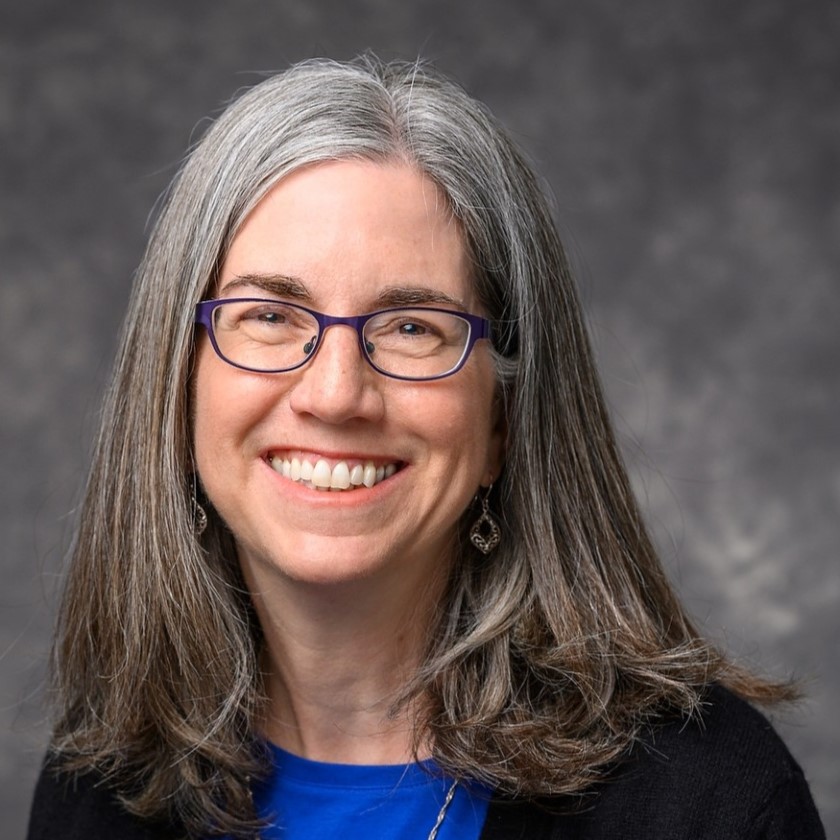
Francine Hirsch
Alice D. Mortenson/Petrovich Distinguished Chair of Russian History
608.263.1783
Office: 5211 Levy Hall
Office Hours: TBA
Curriculum Vitae (pdf)
I am a historian of Modern Europe with a specialization in Russia and the Soviet Union. My research and teaching interests include Russian and Soviet History, Modern European History, Comparative Empires, the History of Human Rights, and Russian-American Engagement.
My second book, Soviet Judgment at Nuremberg: A New History of the International Military Tribunal After World War II (New York: Oxford University Press, 2020) presents the first complete history of the Nuremberg Trials. Drawing on thousands of documents from the former Soviet archives, it reveals the unexpected contribution of Stalin’s Soviet Union to the International Military Tribunal and to the postwar development of international law.
My first book, Empire of Nations: Ethnographic Knowledge and the Making of the Soviet Union (Ithaca: Cornell University Press, 2005) examined the role of ethnographers and other former imperial experts in the formation of the Soviet Union. Empire of Nations received the Herbert Baxter Adams Prize of the American Historical Association, the Wayne S. Vucinich Book Prize of the American Association for the Advancement of Slavic Studies, and the Council For European Studies Book Award.
I have recently launched a new book project on the history of Russian-American entanglement, which will look at international relations through the lenses of economics, culture, science, and international law.
Education
Ph.D., Princeton
M.A., Princeton
B.A., Cornell
Books

Russian translation of “Soviet Judgment at Nuremberg: A History of the New International Military Tribunal After World War II.” Translated by Robert Abatullin.
Francine Hirsch. Russian Translation of “Soviet Judgment at Nuremberg: A History of the New International Military Tribunal After World War II.” Translated by Robert Abatullin. NLO, 2023.
Organized in the immediate aftermath of World War II to try the former Nazi leaders for war crimes, the Nuremberg trials, known as the International Military Tribunal (IMT), paved the way for global conversations about genocide, justice, and human rights that continue to this day. As Francine Hirsch reveals in this immersive new history of the trials, a central piece of the story has been routinely omitted from standard accounts: the critical role that the Soviet Union played in making Nuremberg happen in the first place. Hirsch’s book reveals how the Soviets shaped the trials–only to be written out of their story as Western allies became bitter Cold War rivals. Soviet Judgment at Nuremberg offers the first full picture of the war trials, illuminating the many ironies brought to bear as the Soviets did their part to bring the Nazis to justice. Everyone knew that Stalin had originally allied with Hitler before the Nazi invasion of the Soviet Union. The Molotov-Ribbentrop Pact of 1939 hung heavy over the courtroom, as did the suspicion among the Western prosecutors and judges that the Soviets had falsified evidence in an attempt to pin one of their own war crimes, the Katyn massacre of Polish officers, on the Nazis. It did not help that key members of the Soviet delegation, including the Soviet judge and chief prosecutor, had played critical roles in Stalin’s infamous show trials of the 1930s. For the lead American prosecutor Robert H. Jackson and his colleagues, Soviet participation in the Nuremberg Trials undermined their overall credibility and possibly even the moral righteousness of the Allied victory. Yet Soviet jurists had been the first to conceive of a legal framework that treated war as an international crime. Without it, the IMT would have had no basis for judgment. The Soviets had borne the brunt of the fighting against Germany–enduring the horrors of the Nazi occupation and experiencing almost unimaginable human losses and devastation. There would be no denying their place on the tribunal, nor their determination to make the most of it. Once the trials were set in motion, however, little went as the Soviets had planned. Soviet Judgment at Nuremberg shows how Stalin’s efforts to direct the Soviet delegation and to steer the trials from afar backfired, and how Soviet war crimes became exposed in open court. Hirsch’s book offers readers both a front-row seat in the courtroom and a behind-the-scenes look at the meetings in which the prosecutors shared secrets and forged alliances. It reveals the shifting relationships among the four countries of the prosecution (the U.S., Great Britain, France, and the USSR), uncovering how and why the Palace of Justice in Nuremberg became a Cold War battleground. In the process Soviet Judgment at Nuremberg offers a new understanding of the trials and a fresh perspective on the post-war movement for human rights.

Russian translation of “Empire of Nations: Ethnographic Knowledge and the Making of the Soviet Union”. Translated by Robert Ibatullin
Francine Hirsch. Russian Translation of “Empire of Nations: Ethnographic Knowledge and the Making of the Soviet Union". Translated by Robert Ibatullin. NLO, 2022.
Published in English in 2005, The Empire of Nations has already earned the status of a classic study of the history of Soviet nationality politics. Francine Hirsch traces the interaction of power and expertise in the process of state building, showing the contribution of ethnographers, anthropologists, geographers, linguists and other specialists in the formation of Soviet ideas about the nation and race, as well as the development of the very principles of the structure of the USSR as a multinational state. In the 1920s and 1930s, specific forms of state policy towards certain peoples depended on experts who had pre-revolutionary training and relied on Western European ideas. Based on extensive archival research, the author shows how, through planning and conducting censuses, mapping, creating museum exhibitions, the general ideas of the Bolsheviks crystallized into political decisions. The European idea of cultural evolutionism, the Marxist theory of stage development and the Leninist idea of the ability of a revolutionary party to accelerate historical development became the basis of the state policy of integrating different peoples and cultures within the framework of the Soviet project. Francine Hirsch is Professor of History at the University of Wisconsin–Madison (USA).

Soviet Judgment at Nuremberg A New History of the International Military Tribunal after World War II
Francine Hirsch. Soviet Judgment at Nuremberg A New History of the International Military Tribunal After World War II. Oxford University Press, 2020.
Organized in the immediate aftermath of World War II to try the former Nazi leaders for war crimes, the Nuremberg trials, known as the International Military Tribunal (IMT), paved the way for global conversations about genocide, justice, and human rights that continue to this day. As Francine Hirsch reveals in this immersive new history of the trials, a central piece of the story has been routinely omitted from standard accounts: the critical role that the Soviet Union played in making Nuremberg happen in the first place. Hirsch’s book reveals how the Soviets shaped the trials–only to be written out of their story as Western allies became bitter Cold War rivals. Soviet Judgment at Nuremberg offers the first full picture of the war trials, illuminating the many ironies brought to bear as the Soviets did their part to bring the Nazis to justice. Everyone knew that Stalin had originally allied with Hitler before the Nazi invasion of the Soviet Union. The Molotov-Ribbentrop Pact of 1939 hung heavy over the courtroom, as did the suspicion among the Western prosecutors and judges that the Soviets had falsified evidence in an attempt to pin one of their own war crimes, the Katyn massacre of Polish officers, on the Nazis. It did not help that key members of the Soviet delegation, including the Soviet judge and chief prosecutor, had played critical roles in Stalin’s infamous show trials of the 1930s. For the lead American prosecutor Robert H. Jackson and his colleagues, Soviet participation in the Nuremberg Trials undermined their overall credibility and possibly even the moral righteousness of the Allied victory. Yet Soviet jurists had been the first to conceive of a legal framework that treated war as an international crime. Without it, the IMT would have had no basis for judgment. The Soviets had borne the brunt of the fighting against Germany–enduring the horrors of the Nazi occupation and experiencing almost unimaginable human losses and devastation. There would be no denying their place on the tribunal, nor their determination to make the most of it. Once the trials were set in motion, however, little went as the Soviets had planned. Soviet Judgment at Nuremberg shows how Stalin’s efforts to direct the Soviet delegation and to steer the trials from afar backfired, and how Soviet war crimes became exposed in open court. Hirsch’s book offers readers both a front-row seat in the courtroom and a behind-the-scenes look at the meetings in which the prosecutors shared secrets and forged alliances. It reveals the shifting relationships among the four countries of the prosecution (the U.S., Great Britain, France, and the USSR), uncovering how and why the Palace of Justice in Nuremberg became a Cold War battleground. In the process Soviet Judgment at Nuremberg offers a new understanding of the trials and a fresh perspective on the post-war movement for human rights.

Empire of Nations: Ethnographic Knowledge and the Making of the Soviet Union
Francine Hirsch. Empire of Nations: Ethnographic Knowledge and the Making of the Soviet Union. Cornell University Press, 2005.
When the Bolsheviks seized power in 1917, they set themselves the task of building socialism in the vast landscape of the former Russian Empire, a territory populated by hundreds of different peoples belonging to a multitude of linguistic, religious, and ethnic groups. Before 1917, the Bolsheviks had called for the national self-determination of all peoples and had condemned all forms of colonization as exploitative. After attaining power, however, they began to express concern that it would not be possible for Soviet Russia to survive without the cotton of Turkestan and the oil of the Caucasus. In an effort to reconcile their anti-imperialist position with their desire to hold on to as much territory as possible, the Bolsheviks integrated the national idea into the administrative-territorial structure of the new Soviet state. In Empire of Nations, Francine Hirsch examines the ways in which former imperial ethnographers and local elites provided the Bolsheviks with ethnographic knowledge that shaped the very formation of the new Soviet Union. The ethnographers—who drew inspiration from the Western European colonial context—produced all-union censuses, assisted government commissions charged with delimiting the USSR’s internal borders, led expeditions to study “the human being as a productive force,” and created ethnographic exhibits about the “Peoples of the USSR.” In the 1930s, they would lead the Soviet campaign against Nazi race theories . Hirsch illuminates the pervasive tension between the colonial-economic and ethnographic definitions of Soviet territory; this tension informed Soviet social, economic, and administrative structures. A major contribution to the history of Russia and the Soviet Union, Empire of Nations also offers new insights into the connection between ethnography and empire.
Videos & Podcasts
- March 26, 2021, Author Interview: Francine Hirsch on Soviet Judgment at Nuremberg
- November 12, 2020, “Soviet Judgment at Nuremberg,” virtual book discussion at the National History Center and the Wilson Center as part of the Washington History Seminar Series.
- November 19, 2020,”Soviet Judgment at Nuremberg: Revisiting the International Military Tribunal on its 75th Anniversary,” Area Studies Showcase Lecture Series for the Title VI National Resource Centers.
- July 27, 2020, “Soviet Judgment at Nuremberg,” virtual book talk presented at the Harvard Book Store, co-sponsored by the Harvard Book Store and the Davis Center for Russian and Eurasian Studies at Harvard University.
- July 17, 2020, Sean’s Russia Blog Podcast, discussion of Soviet Judgment at Nuremberg.
- July 9, 2020, New Books Network Podcast, discussion of Soviet Judgment at Nuremberg.
Selected Publications
Academic
- “The Politics of the Nuremberg Trials and the Postwar Moment,” in Political Trials in Theory and History, ed. Devin Pendas and Jens Meierhenrich. Cambridge: Cambridge University Press, 2016.
- “The Nuremberg Trials as Cold War Competition.” Memory and Postwar Memorials: Confronting the Past as Violence, ed. Marc Silberman and Florence Vatan, 17-40. New York: Palgrave MacMillan, 2013.
- “The Soviets at Nuremberg: International Law, Propaganda, and the Making of the Postwar Order.” The American Historical Review 113, no. 3 (June 2008): 701-730.
Non-Academic
- “War Crimes: What are they? How can they be prosecuted,” (pdf) Great Decisions 2023, pp. 17-28.
- “Russia is counting on the media to spread propaganda about show trials. How the media can avoid getting lured into a trap,” Washington Post, June 23, 2022.
- “Ukraine and Russia Are Both Looking to the Nuremberg Trials—But Finding Different Lessons in the History,” Time, May 26, 2022.
- “Putin’s Russia has crossed a threshold: It now looks like 1933 Germany,” Boston Globe Ideas, April 28, 2022. (Sunday issue April 31, 2022).
- “De-Ukrainization is genocide: Biden was right to sound the alarm,” The Hill, April 14, 2022.
- “Lessons from the Soviets on how to hold Russia accountable for war crimes,” cowritten with Eugene Finkel, Los Angeles Times, April 13, 2022.
- “What a YouTube Comment Feed Might Tell Us About Dissent in Putin’s Russia,” The New Republic, March 29, 2022.
- “Reading Russian Media Between the Lines: On Kommersant’s ‘Nuremberg’ Photo“, NYU Jordan Center Blog, March 18, 2022.
- “Putin’s Revised Foreign Agent Law Could Enable Mass Repression“, Lawfare, March 14, 2022.
- “How the Soviet Union Helped Establish the Crime of Aggressive War,” Just Security, March 9, 2022.
- “Putin’s Memory Laws Set the Stage for His War in Ukraine,” Lawfare, February 28, 2022.
- “The Nuremberg Judgment,” for Origins: Current Events in Historical Perspective, hosted by The Ohio State University and Miami University, October 2021.
Advisor To
History Courses
- History 200 – Russia and America – Syllabus 2016 (pdf)
- History 201 – Russia and America – Syllabus 2020 (pdf)
- History 201 – Russia Engages America; America Engages Russia – Syllabus 2014 (pdf)
- History 223 – Explorations in European History – Topics: “Revolutionary Russia”
- History 419 – History of Soviet Russia – Syllabus 2020 (pdf)
- History 424 – Soviet Union & World, 1917-1991 – Syllabus 2015 (pdf)
- History 600 – Totalitarianism – Syllabus 2020 (pdf)
- History 600 – History of Idea of Human Rights – Syllabus 2010 (pdf)
- History 600 – Soviet Socialist Revolution through Film
- History 600 – Genocide, Justice, and Postwar Human Rights – Syllabus 2014 (pdf)
- History 600 – Stalin and Hitler – Syllabus 2016 (pdf)
- History 753 – Comparative World History
- History 850 – Graduate Seminar on the History and Historiography of the Soviet Union – Syllabus 2020 (pdf)
- History 891 – Postwar Europe – Syllabus 2013 (pdf)