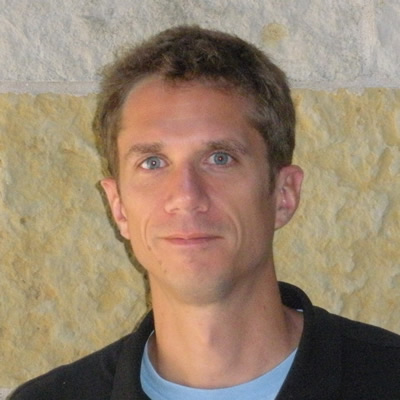
Judd Kinzley
Associate Chair; Professor of History
608.263.1861
Office: 5213 Levy Hall
Curriculum Vitae (pdf)
Office Hours: TBA
I am a historian of modern China. But I am particularly interested in the ways that natural resources define and often limit state power in Chinese border regions. My book, Natural Resources and the New Frontier: Constructing Modern China’s Borderlands, which will be published by the University of Chicago Press in spring 2018, offers a new material-centered perspective on the development of institutions of state power and authority in China’s far western province of Xinjiang. I focus in this book on the efforts of a motley assortment of state and non-state, Chinese and non-Chinese actors to find, exploit, process, and transport various natural resources in 20th century Xinjiang, including gold, petroleum, wool, and rare minerals, among others. In the end, my work offers a unique perspective on the development of Xinjiang’s connections to the modern Chinese state, the roots of ethnic tensions and unrest in the region, and provides a framework for thinking about the integration border regions more generally.
Building on my interests in natural resources and the material world along China’s borders, I have begun research on my second project, which focuses on the Trans-Pacific material exchange of American industrial goods and Lend-Lease equipment for Chinese raw materials during the 1940s. My work reveals the power of these weapons, industrial goods, and raw materials that were traveling between the United States and China during the wartime and civil war periods. My early research finds that the movement of these goods shaped a number of institutions and infrastructures central to modern China, and helped create networks of exchange that continue to serve as the economic and institutional foundations of Cold War East Asia.
I have published articles on gold mining, roads, and geological surveys and, broadly speaking have research and teaching interests that center around environmental history, borderlands, material centered histories, and political economy. I am currently accepting graduate applications for students of Chinese history with interests in any of these areas.
Education
Ph.D., University of California, San Diego, 2012
M.A., Washington University in St. Louis, 2005
B.A., Macalester College, 1999
Books

Uneasy Allies: Sino-American Relations at the Grassroots, 1937–1949
Zach Fredman (Co-editor), and Judd Kinzley (Co-editor). Uneasy Allies: Sino-American Relations at the Grassroots, 1937–1949. Cambridge University Press, 2024.
This timely collection of essays examines Sino-American relations during the Second World War, the Chinese Civil War and the opening of the Cold War. Drawing on new sources uncovered in China, Taiwan, the UK and the US, the authors demonstrate how ‘grassroots’ engagements – not just elite diplomacy – established the trans-Pacific networks that both shaped the postwar order in Asia, and continue to influence Sino-US relations today. In these crucial years, servicemen, scientists, students, businesspeople, activists, bureaucrats and many others travelled between the US and China. In every chapter, this innovative volume’s approach uncovers their stories using both Chinese and English language sources. By examining interactions among various Chinese and American actors in the dynamic wartime environment, Uneasy Allies reveals a new perspective on the foundations of American power, the brittle nature of the Sino-American relationship, and the early formation of the institutions that shaped the Cold War Pacific.

Natural Resources and the New Frontier: Constructing Modern China’s Borderlands
Judd Kinzley. Natural Resources and the New Frontier: Constructing Modern China’S Borderlands. University of Chicago Press, 2018.
China’s westernmost province of Xinjiang has experienced escalating cycles of violence, interethnic strife, and state repression since the 1990s. In their search for the roots of these growing tensions, scholars have tended to focus on ethnic clashes and political disputes. In Natural Resources and the New Frontier, historian Judd C. Kinzley takes a different approach—one that works from the ground up to explore the infrastructural and material foundation of state power in the region. As Kinzley argues, Xinjiang’s role in producing various natural resources for regional powers has been an important but largely overlooked factor in fueling unrest. He carefully traces the buildup to this unstable situation over the course of the twentieth century by focusing on the shifting priorities of Chinese, Soviet, and provincial officials regarding the production of various resources, including gold, furs, and oil among others. Through his archival work, Kinzley offers a new way of viewing Xinjiang that will shape the conversation about this important region and offer a model for understanding the development of other frontier zones in China as well as across the global south.
Selected Publications
- With Agnieszka Joniak-Luthi (researcher, Institute of Social and Cultural Anthropology, Ludwig Maximilien University, Munich, Germany) “Territory, Border, Infrastructure: Imagining and Crafting National Borderlands in 20th Century China” in Crossroads Asia Working Paper Series 36 (December 2016)
- “The Spatial Legacy of Informal Empire: Oil, the Soviet Union, and the Contours of Economic Development in China’s Far West,” Twentieth Century China 40, no. 3 (October, 2015), 220-237
- With Jia Jianfei (research fellow, Chinese Academy of Social Sciences) “Xinjiang and the Promise of Salvation in Free China” in 1943: China at the Crossroads, Matthew Combs, Joseph Esherick, eds. (Cornell University East Asia Series, 2015)
- “Crisis and the Development of China’s Southwestern Periphery: the Transformation of Panzhihua, 1936-1969,” Modern China 38, no. 5 (Sept. 2012) 559-584
- “Turning Prospectors into Settlers: Gold, Immigrant Miners and the Settlement of the Frontier in Late Qing Xinjiang” in Paul Pickowicz and Sherman Cochran, eds. China on the Margins (Ithaca, NY: Cornell University East Asia Series, 2010)
Advisor To
Selected Awards
- 2019 American Council of Learned Societies Fellow
- 2018 Institute for Research in the Humanities Resident Fellow
- 2018 Research Grant for Foreign Scholars in Chinese Studies (funded by the Center for Chinese Studies, National Central Library, Taiwan, Republic of China)
- 2017-2018 Madison Teaching and Learning Excellence Fellow (funded by the University of Wisconsin, Madison, Vice Provost for Teaching and Learning)
- 2016 Crossroads Asia Fellowship (funded by the German Federal Ministry of Education and Research, Ludwig Maximilian University, Munich, Germany (Summer)
- 2013-2014 American Council of Learned Societies (ACLS) China Studies/Henry Luce Foundation Postdoctoral Fellowship
- 2012 Dryden Hull Endowed Award for Best Dissertation, University of California, San Diego (UCSD)
- 2009-2010 Fulbright Hays Doctoral Dissertation Research Award (DDRA)
History Courses
- History 145 – America and China, 1776-Present – Syllabus 2021 (pdf)
- History 225 – Exploration 3rd World History – Topic: “Does Mao Still Matter?”
- History 341 – History of Modern China, 1800-1949 – Syllabus 2015 (pdf)
- History 342 – History of Modern China, 1949-Present – Syllabus 2020 (pdf)
- History 363 – China and World War II in Asia – Syllabus 2022 (pdf)