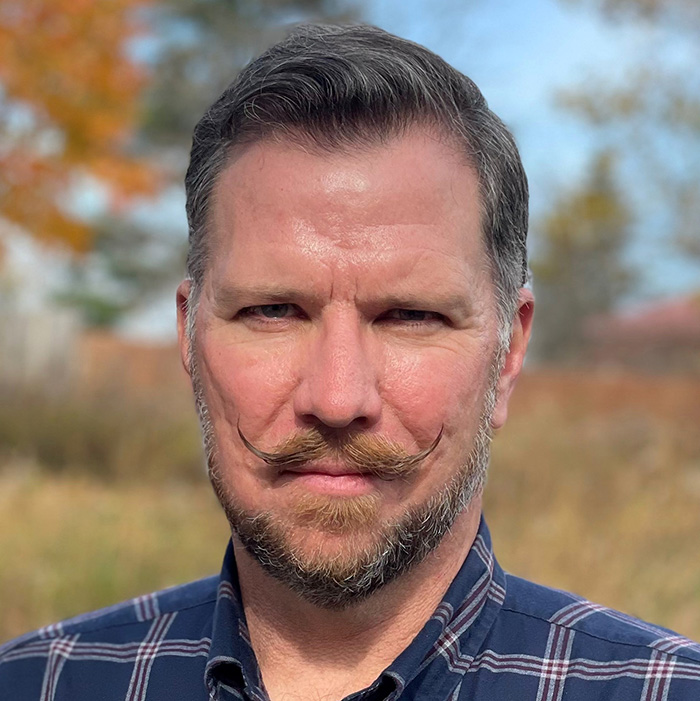
John W. Hall
Ambrose-Hesseltine Professor of U.S. Military History
608.263.2364
Office: 3277 Levy Hall
Curriculum Vitae (pdf)
Office Hours: TBA
I am a military historian broadly interested in the ways in which societies have organized violence to pursue and defend their interests. I am especially interested in the ethnohistorical study of military conflict and cooperation between the Native peoples of North America and European colonial powers. More generally, I am interested in Native American and early American history with particular emphasis on the Revolutionary Era and the Early Republic. Within the field of military history, my research has focused on “small wars” involving irregular forces and U.S. defense policy. I am currently working on a military history of Indian Removal in the southeastern United States.
A past president of the Society for Military History, I am also a retired U.S. Army Reserve colonel with past assignments as a historian to the U.S. Military Academy at West Point, U.S. European Command, U.S. Central Command, and the Joint Chiefs of Staff.
Education
Ph.D., University of North Carolina-Chapel Hill
M.A., University of North Carolina-Chapel Hill
B.S., U.S. Military Academy
Books

Uncommon Defense: Indian Allies in the Black Hawk War
John W. Hall. Uncommon Defense: Indian Allies in the Black Hawk War. Harvard University Press, 2009.
In the spring of 1832, when the Indian warrior Black Hawk and a thousand followers marched into Illinois to reoccupy lands earlier ceded to American settlers, the U.S. Army turned to rival tribes for military support. Elements of the Menominee, Dakota, Potawatomi, and Ho Chunk tribes willingly allied themselves with the United States government against their fellow Native Americans in an uncommon defense of their diverse interests. As the Black Hawk War came only two years after the passage of the Indian Removal Act and is widely viewed as a land grab by ravenous settlers, the military participation of these tribes seems bizarre. What explains this alliance? In order to grasp Indian motives, John Hall explores their alliances in earlier wars with colonial powers as well as in intertribal antagonisms and conflicts. In the crisis of 1832, Indians acted as they had traditionally, leveraging their relationship with a powerful ally to strike tribal enemies, fulfill important male warrior expectations, and pursue political advantage and material gain. However, times had changed and, although the Indians achieved short-term objectives, they helped create conditions that permanently changed their world. Providing a rare view of Indian attitudes and strategies in war and peace, Hall deepens our understanding of Native Americans and the complex roles they played in the nation’s history. More broadly, he demonstrates the risks and lessons of small wars that entail an “uncommon defense” by unlikely allies in pursuit of diverse, even conflicting, goals.
Selected Publications:
- “To Starve an Army: How Great Power Armies Respond to Austerity.” In Sustainable Security: Rethinking American National Security Strategy, edited by Jeremi Suri and Benjamin A. Valentino, 166-195. New York: Oxford University Press, 2016.
- “An Irregular Reconsideration of George Washington and the American Military Tradition,” Journal of Military History 78, no. 3 (July 2014): 961-993.
- “‘My Favorite Officer’: George Washington’s Apprentice, Nathanael Greene,” in Sons of the Father: George Washington and His Protégés, ed. Robert McDonald, 149-168 (Charlottesville: University of Virginia Press, 2013).
- ‘A Reckless Waste of Blood and Treasure’: The Last Campaign of the Second Seminole War,” in Between War and Peace: How America Ends Its Wars, ed. Matthew Moten (New York: Free Press, 2011).
Advisor To
- Jesse Gant
- Tom Rider
- David Hice
- Madeleine Culpepper
- Joel Matthews
- Sean Nowlan
- Theodore Xing
Selected Awards
- 2015 – Philip R. Certain & Gary D. Sandefur Distinguished Faculty Award, College of Letters and Science, University of Wisconsin–Madison
- 2015 – Army Historical Foundation Distinguished Writing Award for “An Irregular Reconsideration of George Washington and the American Military Tradition”
- 2014 – William H. Kiekhofer Distinguished Teaching Award, University of Wisconsin–Madison
- 2012 – Dorothy and Hsin-Nung Yao Teaching Award, Department of History, University of Wisconsin–Madison
- 2011 – Vilas Associate, 2011-2012, University of Wisconsin–Madison
History Courses
- History 137 – The History of War in Film – Syllabus 2025 (pdf)
- History 201 – The Historian’s Craft: The History of Wisconsin in 100 Objects – Syllabus 2016 (pdf)
- History 201 – The Historian’s Craft: Wisconsin History & Material Culture – Syllabus 2017 (pdf)
- History 201 – The Historian’s Craft: Indian Removal – Syllabus 2026 (pdf)
- History 221 – Explorations in American History: “The American Military Experience Since 1899″ – Syllabus 2011 (pdf)
- History 229 – Explorations in Transnational/Comparative History – “The History of War in Film” – Syllabus 2023 (pdf)
- History 345 – American Military History – Syllabus 2026 (pdf)
- History 427 – The American Military Experience to 1902 – Syllabus 2014 (pdf)
- History 428 – The American Military Experience Since 1899 – Syllabus 2016 (pdf)
- History 600 – American Military History – Syllabus 2024 (pdf)
- History 600 – American Ways of War – Syllabus 2010 (pdf)
- History 600 – Indian Removal – Syllabus 2025 (pdf)
- History 706 – Readings in Transnational War & Society – Syllabus 2025 (pdf)
- History 753 – Readings in Transnational Military Culture & Thought, a.k.a. “Classics & Culture” – Syllabus 2019 (2019)
- History 941 – Indians and Empires – Syllabus 2012 (pdf)
- History 958 – Seminar in American Military History – Syllabus 2024 (pdf)