Biography
Biography
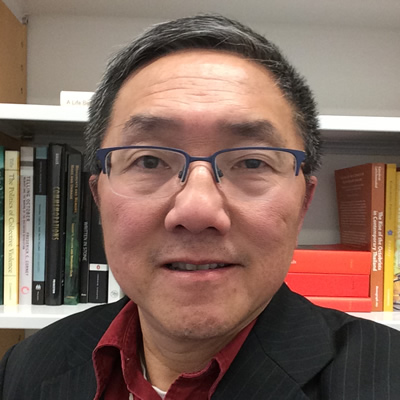
Thongchai Winichakul is Emeritus Professor of History at University of Wisconsin–Madison, a Research Fellow Emeritus at Institute of Developing Economies (IDE-JETRO), Japan, and currently a Visiting Professor at the Pridi Banomyong International College (PBIC), Thammasat University. His book, Siam Mapped (University of Hawaii Press, 1994), was awarded the Harry J Benda Prize from the Association for Asian Studies (AAS, USA) and the Grand Prize from the Asian Affairs Research Council (Japan). It was translated into Japanese, Chinese, Korean, Vietnamese, and Thai. His latest book, Moments of Silence: The Unforgetting of the October 6, 1976, Massacre in Bangkok (University of Hawaii Press, 2020) was awarded the humanities book prize by the European Association for Southeast Asian Studies in 2022. He received the John Simon Guggenheim Award in 1994, and was elected to the American Academy of Arts and Sciences in 2003 and the President of the Association for Asian Studies in 2013/14. His research interests are in the intellectual foundations of modern Siam under colonial conditions (1880s-1930s) including modern geography and sovereignty, historical ideology, and the legal system. He has published eight books and several articles in Thai. He is also a well-known critic of Thai political and social issues.
Education
Ph.D., University of Sydney
M.A., University of Sydney
B.A., Thammasat University (Thailand)
Books
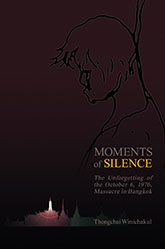
Moments of Silence: The Unforgetting of the October 6, 1976, Massacre in Bangkok
Thongchai Winichakul. Moments of Silence: The Unforgetting of the October 6, 1976, Massacre in Bangkok. University of Hawaii Press, 2020.
The massacre on October 6, 1976, in Bangkok was brutal and violent, its savagery unprecedented in modern Thai history. Four decades later there has been no investigation into the atrocity; information remains limited, the truth unknown. There has been no collective coming to terms with what happened or who is responsible. Thai society still refuses to confront this dark page in its history.Moments of Silence focuses on the silence that surrounds the October 6 massacre. Silence, the book argues, is not forgetting. Rather it signals an inability to forget or remember—or to articulate a socially meaningful memory. It is the “unforgetting,” the liminal domain between remembering and forgetting. Historian Thongchai Winichakul, a participant in the events of that day, gives the silence both a voice and a history by highlighting the factors that contributed to the unforgetting amidst changing memories of the massacre over the decades that followed. They include shifting political conditions and context, the influence of Buddhism, the royal-nationalist narrative of history, the role played by the monarchy as moral authority and arbiter of justice, and a widespread perception that the truth might have devastating ramifications for Thai society. The unforgetting impacted both victims and perpetrators in different ways. It produced a collective false memory of an incident that never took place, but it also produced silence that is filled with hope and counter-history. Moments of Silence tells the story of a tragedy in Thailand—its victims and survivors—and how Thai people coped when closure was unavailable in the wake of atrocity. But it also illuminates the unforgetting as a phenomenon common to other times and places where authoritarian governments flourish, where atrocities go unexamined, and where censorship (imposed or self-directed) limits public discourse. The tensions inherent in the author’s dual role offer a riveting story, as well as a rare and intriguing perspective. Most of all, this provocative book makes clear the need to provide a place for past wrongs in the public memory.
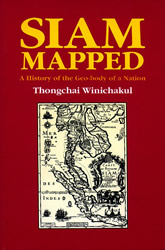
Siam Mapped: A History of the Geo-body of a Nation
Thongchai Winichakul. Siam Mapped: A History of the Geo-Body of a Nation. Honolulu: University of Hawaii Press, 1994.
This unusual and intriguing study of nationhood explores the 19th-century confrontation of ideas that transformed the kingdom of Siam into the modern conception of a nation. Siam Mapped challenges much that has been written on Thai history because it demonstrates convincingly that the physical and political definition of Thailand on which other works are based is anachronistic.
Selected Publications
- 2003 – “Writing at the Interstices: Southeast Asian Historians and Post-National Histories in Southeast Asia”, leading article in New Terrains in Southeast Asian History, ed. Abu Talib Ahmad and Tan Liok Ee, Athens: Ohio University Press, pp. 3-29.
- 2002 – “Remembering/ Silencing the Traumatic Past: the Ambivalent Memories of the October 1976 Massacre in Bangkok” in Cultural Crisis and Social Memory: Modernity and Identity in Thailand and Laos, ed. Charles F Keyes and Shigeharu Tanabe, London and New York: Routledge/ Curzon, pp. 243-283.
- 2000 – “The Others Within: Travel and Ethno-spatial Differentiation of Siamese Subjects, 1885-1910,” lead article in Civility and Savagery: Social Identity in Tai States, ed. Andrew Turton, London: Curzon Press, pp. 38-62.
- 2000 – “The Quest for ‘Siwilai’: A geographical discourse of Civilizational Thinking in the Late 19th and early 20th Century Siam”, Journal of Asian Studies 59, 3 (Aug 2000): 528-549.
Selected Awards
- 2004 – Grand Prize for the Asia Pacific Book Award from the Asian Affairs Research Council, Japan
- 2003 – Elected member of the American Academy of Arts and Sciences, class of 2003
- 1994/95 – The John Simon Guggenheim Award
- 1995 – The Harry J. Benda Award, Association for Asian Studies, for the book Siam Mapped.
History Courses Taught
- History 283 – Intermediate Honors Seminar – Topics: “Studies in History”
- History 438 – Buddhism and Society in Southeast Asian History
- History 457 – History of Southeat Asia to 1800
- History 500 – Reading Seminar in History
- History 600 – Orientalism: The Others in our Knowledge
- History 703 – Geography at Work in History
- History 753 – Seminar in Comparative World History
- History 755 – State and Society in Pre-Colonial Southeast Asia