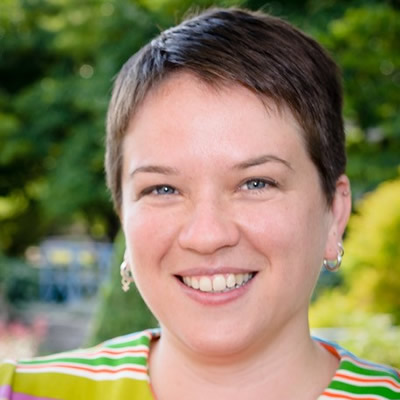
Nicole C. Nelson
Associate Professor in the Department of Medical History and Bioethics
608.265.3525
Office: 1426 Medical Sciences Center
Curriculum Vitae (pdf) | Website
Office Hours: TBA
Joint Appointment: Medical History & Bioethics
I am an Associate Professor in the Department of Medical History and Bioethics at the University of Wisconsin–Madison. My other affiliations are with the Holtz Center for Science and Technology Studies and the History department. Previously I was a postdoctoral research fellow in Social Studies of Medicine at McGill University.
My research examines scientists’ assumptions about the natural world and how these assumptions shape scientific practice. In my book, Model Behavior, I explore how animal behavior geneticists’ beliefs about the complexity of gene action and of psychiatric disorders are reflected in their research with mouse models. For this work I won a First Book Award from the UW–Madison Center for the Humanities.
My next project will focus on the “reproducibility crisis,” a recent phenomenon where scientists have discovered that many established findings are difficult or impossible to replicate on subsequent investigation. I am interested in what assumptions scientists make about variation, and how these assumptions about the nature and magnitude of variation inform reproducibility efforts—researchers may be unsurprised to find, for example, that results vary between sexes, but much more concerned by variation between laboratories. I’ll be working on this new project as a fellow in residence at the Radcliffe Institute during the 2018-2019 academic year.
I also do research on new technologies in oncology research and clinical practice. As an embedded ethnographer in a trial investigating resistance to chemotherapy, I observed researchers as they introduced genomic technologies into existing clinical research routines. Work from this project, conducted in collaboration with Alberto Cambrosio and Peter Keating, has been published in Social Science & Medicine and New Genetics and Society. Currently I am conducting research with Pilar Ossorio on machine learning algorithms in oncology, where algorithms are now routinely used to estimate a patient’s risk of reoccurrence of their cancer.
At UW–Madison, I direct the Health and the Humanities undergraduate certificate program, and teach courses in science and technology studies, biology and society, and history of science. I have won numerous awards for my undergraduate teaching.
I am a Collaborating Editor for the journal Social Studies of Science, where I manage the review process and make decisions on a subset of manuscripts submitted to the journal. I’m also on the editorial board for the journal New Genetics and Society, the Journal of the History of Biology, and was the reviews editor at Social Studies of Science.
Education
Ph.D., Cornell University, Ithaca, NY, Science and Technology Studies, 2011
M.A., Cornell University, Ithaca, NY, Science and Technology Studies, 2007
B.Sc., University of Western Ontario, London, ON, Genetics and Social and Political Thought, 2004
Books
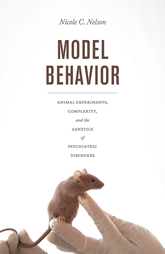
Model Behavior: Animal Experiments, Complexity, and the Genetics of Psychiatric Disorders
Nicole C. Nelson. Model Behavior: Animal Experiments, Complexity, and the Genetics of Psychiatric Disorders. University of Chicago Press, 2018.
Mice are used as model organisms across a wide range of fields in science today—but it is far from obvious how studying a mouse in a maze can help us understand human problems like alcoholism or anxiety. How do scientists convince funders, fellow scientists, the general public, and even themselves that animal experiments are a good way of producing knowledge about the genetics of human behavior? In Model Behavior, Nicole C. Nelson takes us inside an animal behavior genetics laboratory to examine how scientists create and manage the foundational knowledge of their field. Behavior genetics is a particularly challenging field for making a clear-cut case that mouse experiments work, because researchers believe that both the phenomena they are studying and the animal models they are using are complex. These assumptions of complexity change the nature of what laboratory work produces. Whereas historical and ethnographic studies traditionally portray the laboratory as a place where scientists control, simplify, and stabilize nature in the service of producing durable facts, the laboratory that emerges from Nelson’s extensive interviews and fieldwork is a place where stable findings are always just out of reach. The ongoing work of managing precarious experimental systems means that researchers learn as much—if not more—about the impact of the environment on behavior as they do about genetics. Model Behavior offers a compelling portrait of life in a twenty-first-century laboratory, where partial, provisional answers to complex scientific questions are increasingly the norm.
Selected Publications
- Nicole C. Nelson and Kaitlin Stack Whitney. 2018. “Becoming a research rodent.” Living with Animals: Bonds Across Species, eds. Natalie Porter and Ilana Gershon. Ithaca, NY: Cornell University Press.
- Nicole C. Nelson and Aaron Panofksy. 2018. “Behavior Genetics: Boundary Crossings and Epistemic Cultures.” In Handbook of Genomics, Health, and Society, edited by Sahra Gibbon, Barbara Prainsack, Stephen Hilgartner and Janelle Lamoreaux. New York: Routledge.
- Alberto Cambrosio, Etienne Vignola-Gagné, Nicole C. Nelson, Peter Keating, and Pascale Bourret. 2018. “Genomic platforms and clinical research.” In Handbook of Genomics, Health, and Society, edited by Sahra Gibbon, Barbara Prainsack, Stephen Hilgartner and Janelle Lamoreaux. New York: Routledge.
- “Model Homes for Model Organisms: Intersections of Animal Welfare and Behavioral Neuroscience around the Environment of the Laboratory Mouse.” BioSocieties 11:1 (2016), 46–66.
- “A Knockout Experiment: Disciplinary Divides and Experimental Skill in Animal Behavior Genetics,” Medical History 59:3 (2015), 465–485.
- Nelson, Nicole C., Peter Keating, Alberto Cambrosio, Adriana Aguilar-Mahecha, and Mark Basik, “Testing Devices or Experimental Systems? Cancer Clinical Trials Take the Genomic Turn,” Social Science and Medicine 111 (2014), 74-83.
- “Modeling Mouse, Human, and Discipline: Epistemic Scaffolds in Animal Behavior Genetics,” Social Studies of Science 43:1 (2013), 3-29.
- Nelson, Nicole C., Peter Keating, and Alberto Cambrosio, “On being ‘Actionable’: Clinical Sequencing and the Emerging Contours of Genomic Medicine in Oncology,” New Genetics and Society 32:4 (2013), 405-428.
- “Shooting Genes, Distributing Credit: Narrating the Development of the Biolistic Gene Gun,” Science as Culture 21:2 (2012), 205-232.
Advisor To
Courses Taught:
- History 201 – The 20th Century Gene –Syllabus 2018 (pdf)
- HistSci 133 – Biology and Society, 1950–today – Syllabus 2023 (pdf)
- HistSci 180 – The 20th Century Gene: From Eugenics to Epigenetics – Syllabus 2016 (pdf)
- HistSci 720 – Proseminar in Historiography and Methods – Syllabus 2017 (pdf)
- STS 201 – Where Science Meets Society – Syllabus 2017 (pdf)