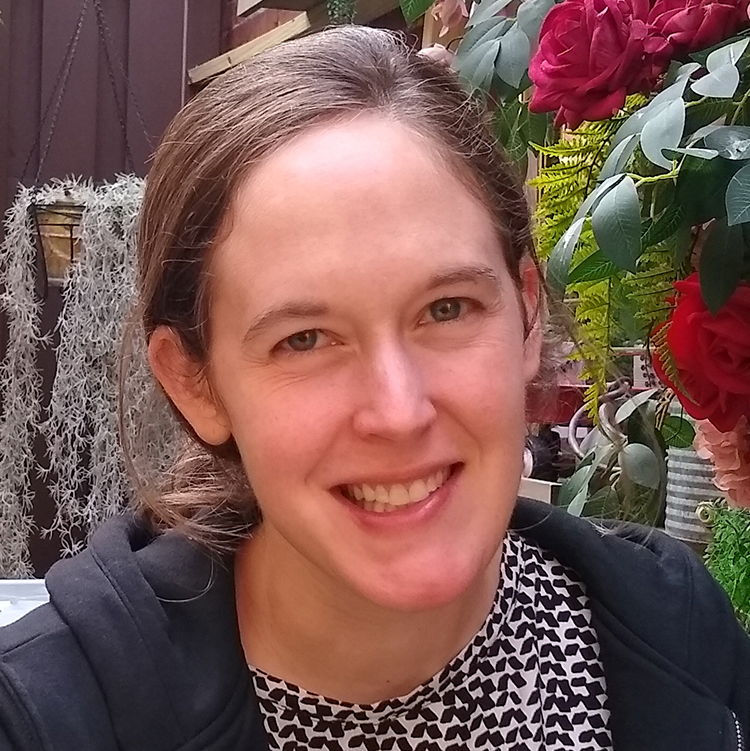
Emma Kuby
Professor of History
608.262.4243
Office: 2259 Levy Hall
Mailbox: TBD
Office Hours: On leave in Fall 2026
I am an intellectual, political and cultural historian of modern France and its empire. To date, my research has focused on the legacies of World War II’s violence during the era of decolonization. My first book, Political Survivors: The Resistance, the Cold War, and the Fight against Concentration Camps after 1945, examined a French-led activist campaign by Nazi camp survivors to expose ongoing crimes against humanity in the postwar USSR, Francoist Spain, Maoist China, French Algeria, and beyond. It showed that the project championed by these non-state actors — centered not on genocide but on concentration camps as sites of political repression — helped foster a universalist paradigm for defending human rights but foundered on the limits of members’ own memory politics, the ideological pressures of the Cold War, and an inability to adapt to new forms of European violence in the context of decolonizing warfare. The book received the George Louis Beer Prize from the American Historical Association, the David H. Pinkney Prize from the Society for French Historical Studies, and the Council for European Studies Book Award.
My current book project, The Outsider Turned Ambassador: American Jews, Holocaust Memory, and Tensions of Empire in Postwar France, reconstructs the ephemeral community of Jewish American expatriates who lived and worked in France and its empire after 1945, and tells the story of their efforts to grapple with the violent legacies of the Second World War in a context of French domestic conflict and colonial crisis. As these writers, scholars, bureaucrats, journalists, NGO staffers, and politicians helped establish France as the headquarters for diplomatic and humanitarian efforts to rebuild a ravaged continent in the wake of catastrophe, they also made it the unexpected focus of a post-Holocaust, early Cold War intellectual quest to reclaim Europe as a site of “Western civilization” — and to redefine themselves as consummate transatlantic mediators of Western liberal values.
My teaching interests include modern Europe and modern France; colonialism and decolonization; war, atrocity, and post-conflict reconstruction; transnational activism; Jewish history; intellectual history; and gender and sexuality
Education
Ph.D., Cornell University
M.A., Cornell University
B.A., Brown University
Books

Political Survivors: The Resistance, the Cold War, and the Fight against Concentration Camps after 1945
Emma Kuby. Political Survivors: The Resistance, the Cold War, and the Fight Against Concentration Camps After 1945. Cornell University Press, 2019.
In 1949, as Cold War tensions in Europe mounted, French intellectual and former Buchenwald inmate David Rousset called upon fellow concentration camp survivors to denounce the Soviet Gulag as a “hallucinatory repetition” of Nazi Germany’s most terrible crime. In Political Survivors, Emma Kuby tells the riveting story of what followed his appeal, as prominent members of the wartime Resistance from throughout Western Europe united to campaign against the continued existence of inhumane internment systems around the world. The International Commission against the Concentration Camp Regime brought together those originally deported for acts of anti-Nazi political activity who believed that their unlikely survival incurred a duty to bear witness for other victims. Over the course of the next decade, these pioneering activists crusaded to expose political imprisonment, forced labor, and other crimes against humanity in Franco’s Spain, Maoist China, French Algeria, and beyond. Until now, the CIA’s secret funding of Rousset’s movement has remained in the shadows. Kuby reveals this clandestine arrangement between European camp survivors and American intelligence agents. She also brings to light how Jewish Holocaust victims were systematically excluded from Commission membership – a choice that fueled the group’s rise, but also helped lead to its premature downfall. The history that she unearths provides a striking new vision of how wartime memory shaped European intellectual life and ideological struggle after 1945, showing that the key lessons Western Europeans drew from the war centered on “the camp,” imagined first and foremost as a site of political repression rather than ethnic genocide. Political Survivors argues that Cold War dogma and acrimony, tied to a distorted understanding of WWII’s chief atrocities, overshadowed the humanitarian possibilities of the nascent anti-concentration camp movement as Europe confronted the violent decolonizing struggles of the 1950s.
Videos & Podcasts
- “Survival and Witnessing: A Conversation with Emma Kuby, PhD, About French Concentration Camp Survivors as Activists.” National World War II Museum Webinar Series, August 5, 2020.
- “A Conversation with Emma Kuby about Political Survivors.” Journal of the History of Ideas Podcast, October 7, 2019.
- “Emma Kuby: Political Survivors.” New Books in French Studies Podcast, August 16, 2019.
- “Memory in Postwar France.” H-France Webinar, October 27, 2018.
Selected Publications
- “‘Queens of the Earth’ with Women to Serve Them: White Freedom and Black Unfreedom in Flora Tristan’s Feminist Imagination.” French Historical Studies 49, no. 1 (Winter 2026): 75-101.
- “‘Slavery Old and New’: Cold War Liberals in the Global Forced Labor Debate, 1947-1954.” In Cold War Liberalism: Power in a Time of Emergency, edited by Daniel Bessner and Michael Brenes, 166-183. New York: Cambridge University Press, 2026.
- “‘The Last Act in the Tragedy of Judaism’: Stalinist Antisemitism, the American Jewish Committee, and French Holocaust Memory in the Cold War.” Jewish Social Studies 29, no. 1 (2024): 87- 119.
- “Madame Right for Monsieur Wrong: Prisoner Marriage Petitions and State Surveillance of Women in Postwar France, 1946-1959.” Gender & History 34, no. 2 (July 2022): 476-494.
- “What Counts as a Concentration Camp?” History Today 69, no. 9 (September 2019).
- “Survivors against Concentration Camps,” Dissent, July 2019.
- “From Auschwitz to Algeria: The Mediterranean Limits of the French Anti-Concentration Camp Movement, 1952-1959.” In French Mediterraneans: Transnational and Imperial Histories, edited by Patricia M.E. Lorcin and Todd Shepard, 347-371. Lincoln: University of Nebraska Press, 2016.
- “‘Our Actions Never Cease to Haunt Us’: Frantz Fanon, Jean-Paul Sartre, and the Violence of the Algerian War.” Historical Reflections/Réflexions Historiques 41, no. 3 (Winter 2015): 59-78.
- “In the Shadow of the Concentration Camp: David Rousset and the Limits of Apoliticism in Postwar French Thought.” Modern Intellectual History 11, no. 1 (April 2014): 147-173.
- “From the Torture Chamber to the Bedchamber: French Soldiers, Anti-War Activists, and the Discourse of Sexual Deviancy in the Algerian War (1954-1962).” Contemporary French Civilization 38, no. 2 (Summer 2013): 131-153.
- “A War of Words over an Image of War: The Fox Movietone Scandal and the Portrayal of French Violence in Algeria, 1955-56.” French Politics, Culture & Society 30, no. 1 (Spring 2012): 46-67.
Advisor To
- Christopher Lough
- Hyegang Yoo
Selected Awards
- George Louis Beer Prize, American Historical Association, 2020 (for Political Survivors)
- Council for European Studies Book Award, 2020 (for Political Survivors)
- David H. Pinkney Prize, Society for French Historical Studies, 2020 (for Political Survivors)
- Excellence in Undergraduate Teaching Award, Northern Illinois University, 2018
History Courses
- History 120 – Europe in the Modern World, 1815-Present
- History 201 – Europe in 1945: Year Zero?
- History 348 – France from Napoleon to the Great War, 1799-1914
- History 358 – French Revolution and Napoleon
- History 392 – Women and Gender in Modern Europe
- History 710 – Dissertation Writing Workshop
- History 952 – Comparative European Empire: Twentieth-Century France and Russia, co-taught with Prof. Francine Hirsch