Faculty Books

Games and Visual Culture in the Middle Ages and the Renaissance
Vanina Kopp (Co-editor), and Elizabeth Lapina (Co-editor). Games and Visual Culture in the Middle Ages and the Renaissance. Brepols, 2021.
The volume contributes to reconstruction of medieval and early modern gaming culture through analysis of visual and material evidence. During the Middle Ages and the Renaissance, games were not an idle pastime, but were in fact important tools for exploring, transmitting, enhancing, subverting, and challenging social practices and their rules. Their study, through both visual and material sources, offers a unique insight into medieval and early modern gaming culture, shedding light not only on why, where, when, with whom and in what conditions and circumstances people played games, but also on the variety of interpretations that they had of games and play. Representations of games, and of artefacts associated with games, also often served to communicate complex ideas on topics that ranged from war to love, and from politics to theology. This volume offers a particular focus onto the type of games that required little or no physical exertion and that, consequently, all people could enjoy, regardless of age, gender, status, occupation, or religion. The representations and artefacts discussed here by contributors, who come from varied disciplines including history, literary studies, art history, and archaeology, cover a wide geographical and chronological range, from Spain to Scandinavia to the Ottoman Turkey and from the early medieval period to the seventeenth century and beyond. Far from offering the ‘last word’ on the subject, it is hoped that this volume will encourage further studies. Vanina Kopp is Privatdozentin at the University of Münster. She was research group leader on medieval games at the German Historical Institute in Paris, where she wrote her second book Sacred, Serious, Subversive (Habilitation, 2020) on literary games in monastic, courtly, and urban contexts, and she has co-edited two volumes on educational games (Jeux éducatifs et savoirs ludiques in Ludica, 2016-2018). She is also the author of one monograph (Der König und die Bücher, Thorbecke 2016) and co-author of an edited volume on archives and power (Archiv Macht Wissen, Campus 2010). Elizabeth Lapina is Associate Professor of Medieval History and Director of the Medieval Studies Program at the University of Wisconsin – Madison. She is the author of one monograph (Warfare and the Miraculous in the Chronicles of the First Crusade, Penn State, 2015) and is co-editor of two volumes (The Crusades and Visual Culture, Ashgate, 2015 and The Uses of the Bible in Crusader Sources, Brill, 2017). Her articles include ”Gambling and Gaming in the Holy Land: Chess, Dice and Other Games in the Sources of the Crusades,” published in Crusades in 2013. Table of Contents List of Illustrations Introduction — VANINA KOPP AND ELIZABETH LAPINA Rhetoric and Reality in the Visual Culture of Medieval Celtic Board Games: Literary and Archaeological Evidence Combined — KATHERINE FORSYTH AND MARK A. HALL ‘Turne Over the Leef’: Games and Interpretation on Misericords — PAUL HARDWICK Gambling Miners — LENA ASRIH AND JENNIFER GARNER Chess and Cultural Crossings in Boccaccio — AKASH KUMAR Visualizing Chess and Love in Les Eschéz d’Amours — DANIEL E. O’SULLIVAN Game as a Sign of Social Status: Backgammon in the Ottoman Literature and Visual Culture — TÜLÜN DEĞIRMENCI Chess of the Gnostics: The Sufi Version of Snakes and Ladders in Turkey and India — İRVIN CEMIL SCHICK Playthings: Ivory on Ivory — ELINA GERTSMAN The Playing Eye: On the Transfer of Game-related Knowledge through Miniatures in Alfonso X’s Book of Games (1283/84) — MICHAEL A. CONRAD Children’s Toys in Italy, 1350–1550 — ANNEMARIEKE WILLEMSEN The Printed Book and the Visual Culture of Chess in the Late Middle Ages: William Caxton’s 1483 Edition of The Game and Playe of Chess — LOUISE FANG Graffiti as Gaming: Vikings at Play in the Orkney Islands — JULIE MELL Scratching the Surface: Graffiti Games in the Byzantine Empire — WALTER CRIST

On Civilization’s Edge: A Polish Borderland in the Interwar World
Kathryn Ciancia. On Civilization’s Edge: A Polish Borderland in the Interwar World. Oxford University Press, 2020.
As a resurgent Poland emerged at the end of World War I, an eclectic group of Polish border guards, state officials, military settlers, teachers, academics, urban planners, and health workers descended upon Volhynia, an eastern borderland province that was home to Ukrainians, Poles, and Jews. Its aim was not simply to shore up state power in a place where Poles constituted an ethnic minority, but also to launch an ambitious civilizing mission that would transform a poor Russian imperial backwater into a region that was at once civilized, modern, and Polish. Over the next two decades, these men and women recast imperial hierarchies of global civilization-in which Poles themselves were often viewed as uncivilized-within the borders of their supposedly anti-imperial nation-state. As state institutions remained fragile, long-debated questions of who should be included in the nation re-emerged with new urgency, turning Volhynia’s mainly Yiddish-speaking towns and Ukrainian-speaking villages into vital testing grounds for competing Polish national visions. By the eve of World War II, with Nazi Germany and the Soviet Union growing in strength, schemes to ensure the loyalty of Jews and Ukrainians by offering them a conditional place in the nation were replaced by increasingly aggressive calls for Jewish emigration and the assimilation of non-Polish Slavs. Drawing on research in local and national archives across four countries and utilizing a vast range of written and visual sources that bring Volhynia to life, On Civilization’s Edge offers a highly intimate story of nation-building from the ground up. We eavesdrop on peasant rumors at the Polish-Soviet border, read ethnographic descriptions of isolated marshlands, and scrutinize staged photographs of everyday life. But the book’s central questions transcend the Polish case, inviting us to consider how fears of national weakness and competitions for local power affect the treatment of national minorities, how more inclusive definitions of the nation are themselves based on exclusions, and how the very distinction between empires and nation-states is not always clear-cut.
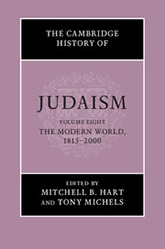
The Cambridge History of Judaism: Volume 8. The Modern World, 1815–2000
Tony Michels (Co-editor), and Mitchell B. Hart (Co-editor). The Cambridge History of Judaism: Volume 8. The Modern World, 1815–2000. Cambridge University Press, 2017.
The eighth and final volume of The Cambridge History of Judaism covers the period from roughly 1815–2000. Exploring the breadth and depth of Jewish societies and their manifold engagements with aspects of the modern world, it offers overviews of modern Jewish history, as well as more focused essays on political, social, economic, intellectual and cultural developments. The first part presents a series of interlocking surveys that address the history of diverse areas of Jewish settlement. The second part is organized around the emancipation. Here, chapter themes are grouped around the challenges posed by and to this elemental feature of Jewish life in the modern period. The third part adopts a thematic approach organized around the category ‘culture’, with the goal of casting a wide net in terms of perspectives, concepts and topics. The final part then focuses on the twentieth century, offering readers a sense of the dynamic nature of Judaism and Jewish identities and affiliations.

The Uses of the Bible in Crusader Sources
Elizabeth Lapina (Co-editor), and Nicholas Morton (Co-editor). The Uses of the Bible in Crusader Sources. Brill, 2017.
The Uses of the Bible in Crusader Sources sets out to understand the ideology and spirituality of crusading by exploring the biblical imagery and exegetical interpretations which formed its philosophical basis. Medieval authors frequently drew upon scripture when seeking to justify, praise, or censure the deeds of crusading warriors on many frontiers. After all, as the fundamental written manifestation of God’s will for mankind, the Bible was the ultimate authority for contemporary writers when advancing their ideas and framing their world view. This volume explores a broad spectrum of biblically-derived themes surrounding crusading and, by doing so, seeks to better comprehend a thought world in which lethal violence could be deemed justifiable according to Christian theology. Contributors are: Jessalynn Bird, Adam M. Bishop, John D. Cotts, Sini Kangas, Thomas Lecaque, T. J. H. McCarthy, Nicholas Morton, Torben Kjersgaard Nielsen, Luigi Russo, Uri Shachar, Iris Shagrir, Kristin Skottki, Katherine Allen Smith, Thomas W. Smith, Carol Sweetenham, Miriam Rita Tessera, Jan Vandeburie, Julian J. T. Yolles, and Lydia Marie Walker.

Confronting Capital and Empire: Rethinking Kyoto School Philosophy
Viren Murthy (Co-editor), Fabian Schäfer (Co-editor), and Maz Ward (Co-editor). Confronting Capital and Empire: Rethinking Kyoto School Philosophy. Brill, 2017.
Confronting Capital and Empire inquires into the relationship between philosophy, politics and capitalism by rethinking Kyoto School philosophy in relation to history. The Kyoto School was an influential group of Japanese philosophers loosely related to Kyoto Imperial University’s philosophy department, including such diverse thinkers as Nishida Kitarō, Tanabe Hajime, Nakai Masakazu and Tosaka Jun. Confronting Capital and Empire presents a new perspective on the Kyoto School by bringing the school into dialogue with Marx and the underlying questions of Marxist theory. The volume brings together essays that analyse Kyoto School thinkers through a Marxian and/or critical theoretical perspective, asking: in what ways did Kyoto School thinkers engage with their historical moment? What were the political possibilities immanent in their thought? And how does Kyoto School philosophy speak to the pressing historical and political questions of our own moment?

East-Asian Marxisms and Their Trajectories
Viren Murthy (Co-editor), and Joyce C.H. Liu (Co-editor). East-Asian Marxisms and Their Trajectories. Routledge Taylor & Francis Group, 2017.
In this volume, leading scholars from around the world suggest that radical ideologies have shaped complex historical processes in East Asia by examining how intellectuals and activists interpreted, rethought and criticized Marxism in East Asia. The contributors to this volume ask how we can use Marxism to understand East Asia in a global capitalist world, and where the problems that Marxism highlighted, including imperialism, domination and inequality, are increasingly prevalent. The volume draws on various disciplines to reinterpret Marx, and shed light on the complex dynamics of global capitalism in various historical/national contexts. The distinguished contributors illuminate, rethink and make accessible highly complex Marxist concepts, such as the question of class contradiction, the temporalities of capitalism, real and formal subsumption, relative surplus value and the commodity form, the question of class and the proletariat. At a time when people around the world are struggling to cope with the crises of global capitalism, this volume on regional responses to capitalism is especially welcome. It will be of interest to students and scholars of East Asian studies, social and political theory, sociology and globalization studies.

The Crusades and Visual Culture
Elizabeth Lapina (Co-editor), April Jehan Morris (Co-editor), Laura J Whatley (Co-editor), and Susanna A. Throop (Co-editor). The Crusades and Visual Culture. Ashgate, 2015.
The crusades, whether realized or merely planned, had a profound impact on medieval and early modern societies. Numerous scholars in the fields of history and literature have explored the influence of crusading ideas, values, aspirations and anxieties in both the Latin States and Europe. However, there have been few studies dedicated to investigating how the crusading movement influenced and was reflected in medieval visual cultures. Written by scholars from around the world working in the domains of art history and history, the essays in this volume examine the ways in which ideas of crusading were realized in a broad variety of media (including manuscripts, cartography, sculpture, mural paintings, and metalwork). Arguing implicitly for recognition of the conceptual frameworks of crusades that transcend traditional disciplinary boundaries, the volume explores the pervasive influence and diverse expression of the crusading movement from the twelfth through the fifteenth centuries.

Warfare and the Miraculous in the Chronicles of the First Crusade
Elizabeth Lapina. Warfare and the Miraculous in the Chronicles of the First Crusade. Penn State University Press, 2015.
In Warfare and the Miraculous in the Chronicles of the First Crusade, Elizabeth Lapina examines a variety of these chronicles, written both by participants in the crusade and by those who stayed behind. Her goal is to understand the enterprise from the perspective of its contemporaries and near contemporaries. Lapina analyzes the diversity of ways in which the chroniclers tried to justify the First Crusade as a “holy war,” where physical violence could be not just sinless, but salvific. The book focuses on accounts of miracles reported to have happened in the course of the crusade, especially the miracle of the intervention of saints in the Battle of Antioch. Lapina shows why and how chroniclers used these miracles to provide historical precedent and to reconcile the messiness of history with the conviction that history was ordered by divine will. In doing so, she provides an important glimpse into the intellectual efforts of the chronicles and their authors, illuminating their perspectives toward the concepts of history, salvation, and the East. Warfare and the Miraculous in the Chronicles of the First Crusade demonstrates how these narratives sought to position the crusade as an event in the time line of sacred history. Lapina offers original insights into the effects of the crusade on the Western imaginary as well as how medieval authors thought about and represented history.

A Companion to Global Historical Thought
Viren Murthy (Co-editor), Andrew Sartori (Co-editor), and Prasenjit Duara (Co-editor). A Companion to Global Historical Thought. Wiley, 2014.
A Companion to Global Historical Thought provides an in-depth overview of the development of historical thinking from the earliest times to the present, across the world, directly addressing the issues of historical thought in a globalized context. Provides an overview of the development of historical thinking from the earliest times to the present, across the world, through essays written by a team of leading international scholars Complements the Companion to Western Historical Thought, placing non-Western perspectives on historiography at the center of the discussion Explores the different historical traditions that have shaped the discipline, and the challenges posed by modernity and globalization

The Challenge of Linear Time: Nationhood and the Politics of History in East Asia
Viren Murthy. The Challenge of Linear Time: Nationhood and the Politics of History in East Asia. Brill, 2014.
Edited by: Viren Murthy, University of Wisconsin–Madison and Axel Schneider, University of Göttingen The papers collected in this volume congeal around a debate about the ways and extent of the dominance of linear time and progressive history and the concomitant delineation of the nation in Chinese and Japanese historiography. As China and Japan entered the global capitalist system of nation states, the Chinese and Japanese regimes implemented a number of reforms, which resulted in transformations that affected everyday experience. In the face of imperialism and the perceived threat of being split up, the Meiji and late Qing governments radically reoriented policies in order to become wealthy and powerful in the global arena. People not only began to experience time and space in new ways, but elites also were increasingly exposed to Western theories of history and concepts of nationhood, which became dominant. These changes contributed to the production of new types of historical consciousness and collective identity. The essays in this volume each provide a perspective on the complex ways in which imagining national and regional identity in East Asia were and continue to be enmeshed with visions of time and history. This book should be of interest to all those who are interested in nationalism, modernity in China and Japan, global capitalism and the politics of time.
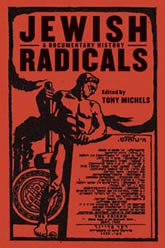
Jewish Radicals: A Documentary History
Tony Michels. Jewish Radicals: A Documentary History. NYU Press, 2012.
Jewish Radicals explores the intertwined histories of Jews and the American Left through a rich variety of primary documents. Written in English and Yiddish, these documents reflect the entire spectrum of radical opinion, from anarchism to social democracy, Communism to socialist-Zionism. Rank-and-file activists, organizational leaders, intellectuals, and commentators, from within the Jewish community and beyond, all have their say. Their stories crisscross the Atlantic, spanning from the United States to Europe and British-ruled Palestine. The documents illuminate in fascinating detail the efforts of large numbers of Jews to refashion themselves as they confronted major problems of the twentieth century: poverty, anti-semitism, the meaning of American national identity, war, and totalitarianism. In this comprehensive sourcebook, the story of Jewish radicals over seven decades is told for the first time in their own words.

The Political Philosophy of Zhang Taiyan: The Resistance of Consciousness
Viren Murthy. The Political Philosophy of Zhang Taiyan: The Resistance of Consciousness. Brill, 2011.
Zhang Taiyan (1868-1936) is famous for being one of the first thinkers in China to promote revolution in the early twentieth century. Scholars have addressed Zhang’s revolutionary and nationalist thought, but until this work there has not been any sustained engagement with Zhang’s Buddhist writings which aimed to understand and criticize the world from the perspective of consciousness. These philosophical works are significant because they exemplify how, as Chinese intellectuals entered the global capitalist world, they constantly tried to find resources to create an alternative. As the author argues in the conclusion, this desire to create an alternative to capitalism remained throughout twentieth century China and continues today in the works of critical intellectuals such as Wang Hui. Thus this work is important not only to understand our past, but to hope for a better future.

Empire of Nations: Ethnographic Knowledge and the Making of the Soviet Union
Francine Hirsch. Empire of Nations: Ethnographic Knowledge and the Making of the Soviet Union. Cornell University Press, 2005.
When the Bolsheviks seized power in 1917, they set themselves the task of building socialism in the vast landscape of the former Russian Empire, a territory populated by hundreds of different peoples belonging to a multitude of linguistic, religious, and ethnic groups. Before 1917, the Bolsheviks had called for the national self-determination of all peoples and had condemned all forms of colonization as exploitative. After attaining power, however, they began to express concern that it would not be possible for Soviet Russia to survive without the cotton of Turkestan and the oil of the Caucasus. In an effort to reconcile their anti-imperialist position with their desire to hold on to as much territory as possible, the Bolsheviks integrated the national idea into the administrative-territorial structure of the new Soviet state. In Empire of Nations, Francine Hirsch examines the ways in which former imperial ethnographers and local elites provided the Bolsheviks with ethnographic knowledge that shaped the very formation of the new Soviet Union. The ethnographers—who drew inspiration from the Western European colonial context—produced all-union censuses, assisted government commissions charged with delimiting the USSR’s internal borders, led expeditions to study “the human being as a productive force,” and created ethnographic exhibits about the “Peoples of the USSR.” In the 1930s, they would lead the Soviet campaign against Nazi race theories . Hirsch illuminates the pervasive tension between the colonial-economic and ethnographic definitions of Soviet territory; this tension informed Soviet social, economic, and administrative structures. A major contribution to the history of Russia and the Soviet Union, Empire of Nations also offers new insights into the connection between ethnography and empire.
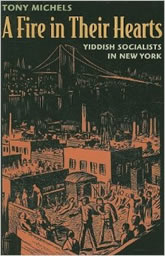
A Fire in Their Hearts: Yiddish Socialists in New York
Tony Michels. A Fire in Their Hearts: Yiddish Socialists in New York. Harvard University Press, 2005.
In a compelling history of the Jewish community in New York during four decades of mass immigration, Tony Michels examines the defining role of the Yiddish socialist movement in the American Jewish experience. The movement, founded in the 1880s, was dominated by Russian-speaking intellectuals, including Abraham Cahan, Mikhail Zametkin, and Chaim Zhitlovsky. Socialist leaders quickly found Yiddish essential to convey their message to the Jewish immigrant community, and they developed a remarkable public culture through lectures and social events, workers’ education societies, Yiddish schools, and a press that found its strongest voice in the mass-circulation newspaper Forverts. Arguing against the view that socialism and Yiddish culture arrived as Old World holdovers, Michels demonstrates that they arose in New York in response to local conditions and thrived not despite Americanization, but because of it. And the influence of the movement swirled far beyond the Lower East Side, to a transnational culture in which individuals, ideas, and institutions crossed the Atlantic. New York Jews, in the beginning, exported Yiddish socialism to Russia, not the other way around. The Yiddish socialist movement shaped Jewish communities across the United States well into the twentieth century and left an important political legacy that extends to the rise of neoconservatism. A story of hopeful successes and bitter disappointments, A Fire in Their Hearts brings to vivid life this formative period for American Jews and the American left.