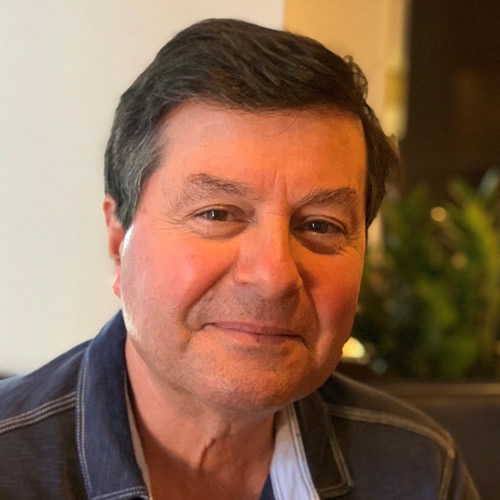
Biography
Biography
My specializations are Caribbean & Latin America. My research and teaching area is the history of the Caribbean region, with emphasis on the Spanish-speaking nations and Puerto Rico in particular. I have worked on all periods and a variety of topics, ranging from slavery and the plantation economy, demographic history, and the reconstituted peasantries of the Spanish Caribbean, to race and racialization processes and the influence of racial imagery on nation-building.
Education
Ph.D., Columbia University
M.A., Columbia University
B.A., Duke University
Books

Colonial Crucible: Empire in the Making of the Modern American State
Alfred W. McCoy (Editor), and Francisco Scarano (Editor). Colonial Crucible: Empire in the Making of the Modern American State. Madison: University of Wisconsin Press, 2009.
At the end of the nineteenth century the United States swiftly occupied a string of small islands dotting the Caribbean and Western Pacific, from Puerto Rico and Cuba to Hawaii and the Philippines. Colonial Crucible: Empire in the Making of the Modern American State reveals how this experiment in direct territorial rule subtly but profoundly shaped U.S. policy and practice—both abroad and, crucially, at home. Edited by Alfred W. McCoy and Francisco A. Scarano, the essays in this volume show how the challenge of ruling such far-flung territories strained the U.S. state to its limits, creating both the need and the opportunity for bold social experiments not yet possible within the United States itself. Plunging Washington’s rudimentary bureaucracy into the white heat of nationalist revolution and imperial rivalry, colonialism was a crucible of change in American statecraft. From an expansion of the federal government to the creation of agile public-private networks for more effective global governance, U.S. empire produced far-reaching innovations. Moving well beyond theory, this volume takes the next step, adding a fine-grained, empirical texture to the study of U.S. imperialism by analyzing its specific consequences. Across a broad range of institutions—policing and prisons, education, race relations, public health, law, the military, and environmental management—this formative experience left a lasting institutional imprint. With each essay distilling years, sometimes decades, of scholarship into a concise argument, Colonial Crucible reveals the roots of a legacy evident, most recently, in Washington’s misadventures in the Middle East.

Cuba: contrapuntos de cultura, historia y sociedad
Francisco Scarano. Cuba: Contrapuntos De Cultura, Historia Y sociedad. Ediciones Callejón, 2007.
Cuba: contrapuntos de cultura, historia y sociedad es una nueva e importante colección cuyos ensayos recorren cinco siglos de la realidad cubana. El libro se constituye en un foro dentro del cual plantear asuntos de gran interés para los estudiosos, artistas e intelectuales públicos, así en la Isla como en las comunidades que comprenden la diáspora cubana. Cada ensayo deslinda una imagen profunda de la cultura cubana, entendida aquí simbólicamente como un contrapunto de voces que rebasan los límites de la polarización política y los silencios que suelen acompañarla. Todas las contribuciones abordan asuntos vitales y temas perennes, entre ellos, la ausencia o fragmentación del diálogo crítico; la forma en que los cubanos, no importa dónde se encuentren, dan testimonio acerca de “la condición cubana”; el desplazamiento de la culpa y la responsabilidad, y la búsqueda de principios guías y figuras inspiradoras en la gran cantera de la historia cubana. Cuba: Counterpoints on Culture, History, and Society is a major new collection of essays ranging over five centuries of the Cuban experience. The editors have provided a forum for the current concerns of scholars, artists, and public intellectuals, both in the island and across the communities that constitute the Cuban Diaspora. Each essay confirms a deep image of Cuban culture, symbolically understood in these pages as a musical dialogue of voices reaching beyond the limitations of political polarization and its attending silences. The essays address pressing questions and persistent themes, including the absence or fragmentation of critical dialogue, the manner in which Cubans, wherever they may be, give testimony about “the Cuban condition,” the habitual displacement of blame and responsibility, and the search for guiding principles and inspirational figures in the bedrock of Cuban history.

Puerto Rico: Cinco siglos de historia
Francisco Scarano. Puerto Rico: Cinco Siglos De historia. McGraw-Hill, 2015.
La aparición de la primera edición de Puerto Rico: Cinco Siglos de Historia consolidó a Francisco A. Scarano como uno de los historiadores contemporáneos sobre Puerto Rico más reconocidos y documentados en Latinoamerica y el Caribe. En esta segunda edición, el autor mantiene la esencia del enfoque histórico en sus investyigaciones; analiza el devenir de los acontecimientos en Puerto Rico, remontándose a la llegada de los primeros pobladores del continente americano, para cerrar con el mundo boricua de finales del siglo XX. Su aguda visión nos guía en un recorrido histórico de cinco siglos, realizando una interpretación objetiva de los acontecimientos más relevantes del país caribeño, en los órdenes económico, político, geográfico y social. Con invaluables recursos didácticos y profusamente ilustrada, el lector encontrará en la presente edición una obra intelectual cuyo estudio es indispensable para comprender el Puereto Rico contemporáneo.
History Courses Taught
- History 241 – Colonial Latin America
- History 243 – Colony, Nation, and Minority: The Puerto Ricans’ World
- History 347 – The Caribbean and its Diasporas
- History 414 – Latino History and Politics
- History 422 – Latino History and Politics
- History 436 – Race, Class, and Colonialism in the Caribbean
- History 533 – Multi-Racial Societies in Latin America
- History 600 – Race and Nation in Latin America and the Caribbean
- History 600 -The Cuban Revolution
- History 730 – The Literature of Caribbean History
- History 730 – Caribbean Historiography
- History 730 – Capitalism & Slavery in the Caribbean
- History 829 – Research Seminar in Latin American History
- History 982 – Caribbean Peasants in Comparative Historical Perspective