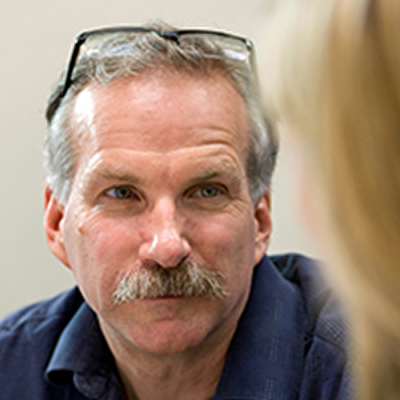
Biography
Biography
My teaching and research interests span environmental history, the history of science, medical history, and the visual culture of science and medicine, with a focus on the United States in the world. In particular, I seek to understand the ways in which political economy, cultural values and beliefs, and scientific knowledge intersect in shaping the interactions between people and environments over time. Over the past few years, I have been at work on a multimedia project—a film, book, and public history website—exploring the history and legacy of the Firestone Plantations Company in Liberia.
Education
Ph.D., University of Wisconsin–Madison, 1988
M.A., University of Wisconsin–Madison, 1984
B.S., Dalhousie University, 1981
Books
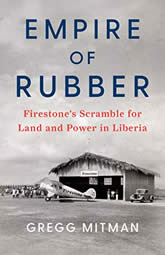
Empire of Rubber: Firestone’s Scramble for Land and Power in Liberia
Gregg Mitman. Empire of Rubber: Firestone’s Scramble for Land and Power in Liberia. The New Press, 2021.
In the early 1920s, Americans owned 80 percent of the world’s automobiles and consumed 75 percent of the world’s rubber. But only one percent of the world’s rubber grew under the U.S. flag, creating a bottleneck that hampered the nation’s explosive economic expansion. To solve its conundrum, the Firestone Tire and Rubber Company turned to a tiny West African nation, Liberia, founded in 1847 as a free Black republic. Empire of Rubber tells a sweeping story of capitalism, racial exploitation, and environmental devastation, as Firestone transformed Liberia into America’s rubber empire. Historian and filmmaker Gregg Mitman scoured remote archives to unearth a history of promises unfulfilled for the vast numbers of Liberians who toiled on rubber plantations built on taken land. Mitman reveals a history of racial segregation and medical experimentation that reflected Jim Crow America—on African soil. As Firestone reaped fortunes, wealth and power concentrated in the hands of a few elites, fostering widespread inequalities that fed unrest, rebellions and, eventually, civil war. A riveting narrative of ecology and disease, of commerce and science, and of racial politics and political maneuvering, Empire of Rubber uncovers the hidden story of a corporate empire whose tentacles reach into the present.
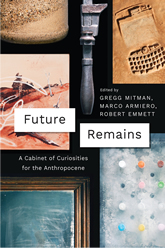
Future Remains: A Cabinet of Curiosities for the Anthropocene.
Marco Armiero (Co-editor), Robert S. Emmett (Co-editor), and Gregg Mitman (Co-editor). Future Remains: A Cabinet of Curiosities for the Anthropocene. University of Chicago Press, 2018.
What can a pesticide pump, a jar full of sand, or an old calico print tell us about the Anthropocene—the age of humans? Just as paleontologists look to fossil remains to infer past conditions of life on earth, so might past and present-day objects offer clues to intertwined human and natural histories that shape our planetary futures. In this era of aggressive hydrocarbon extraction, extreme weather, and severe economic disparity, how might certain objects make visible the uneven interplay of economic, material, and social forces that shape relationships among human and nonhuman beings? Future Remains is a thoughtful and creative meditation on these questions. The fifteen objects gathered in this book resemble more the tarots of a fortuneteller than the archaeological finds of an expedition—they speak of planetary futures. Marco Armiero, Robert S. Emmett, and Gregg Mitman have assembled a cabinet of curiosities for the Anthropocene, bringing together a mix of lively essays, creatively chosen objects, and stunning photographs by acclaimed photographer Tim Flach. The result is a book that interrogates the origins, implications, and potential dangers of the Anthropocene and makes us wonder anew about what exactly human history is made of.
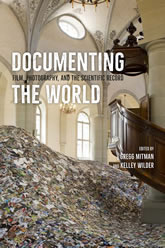
Documenting the World: Film, Photography, and the Scientific Record
Gregg Mitman (Co-editor), and Kelley Wilder (Co-editor). Documenting the World: Film, Photography, and the Scientific Record. University of Chicago Press, 2016.
Imagine the twentieth century without photography and film. Its history would be absent of images that define historical moments and generations: the death camps of Auschwitz, the assassination of John F. Kennedy, the Apollo lunar landing. It would be a history, in other words, of just artists’ renderings and the spoken and written word. To inhabitants of the twenty-first century, deeply immersed in visual culture, such a history seems insubstantial, imprecise, and even, perhaps, unscientific. Documenting the World is about the material and social life of photographs and film made in the scientific quest to document the world. Drawing on scholars from the fields of art history, visual anthropology, and science and technology studies, the chapters in this book explore how this documentation—from the initial recording of images, to their acquisition and storage, to their circulation—has altered our lives, our ways of knowing, our social and economic relationships, and even our surroundings. Far beyond mere illustration, photography and film have become an integral, transformative part of the world they seek to show us.
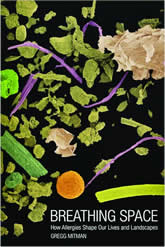
Breathing Space: How Allergies Shape Our Lives and Landscapes
Gregg Mitman. Breathing Space: How Allergies Shape Our Lives and Landscapes. Yale University Press, 2007.
Allergy is the sixth leading cause of chronic illness in the United States. More than fifty million Americans suffer from allergies, and they spend an estimated $18 billion coping with them. Yet despite advances in biomedicine and enormous investment in research over the past fifty years, the burden of allergic disease continues to grow. Why have we failed to reverse this trend? Breathing Space offers an intimate portrait of how allergic disease has shaped American culture, landscape, and life. Drawing on environmental, medical, and cultural history and the life stories of people, plants, and insects, Mitman traces how America’s changing environment from the late 1800s to the present day has led to the epidemic growth of allergic disease. We have seen a never-ending stream of solutions to combat allergies, from hay fever resorts, herbicides, and air-conditioned homes to numerous potions and pills. But, as Mitman shows, despite the quest for a magic bullet, none of the attempted solutions has succeeded. Until we address how our changing environment—physical, biological, social, and economic—has helped to create America’s allergic landscape, that hoped-for success will continue to elude us.
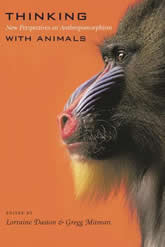
Thinking with Animals: New Perspectives on Anthropomorphism
Lorraine Daston (Editor), and Gregg Mitman (Editor). Thinking With Animals: New Perspectives on Anthropomorphism. Columbia University Press, 2005.
Is anthropomorphism a scientific sin? Scientists and animal researchers routinely warn against “animal stories,” and contrast rigorous explanations and observation to facile and even fanciful projections about animals. Yet many of us, scientists and researchers included, continue to see animals as humans and humans as animals. As this innovative new collection demonstrates, humans use animals to transcend the confines of self and species; they also enlist them to symbolize, dramatize, and illuminate aspects of humans’ experience and fantasy. Humans merge with animals in stories, films, philosophical speculations, and scientific treatises. In their performance with humans on many stages and in different ways, animals move us to think. From Victorian vivisectionists to elephant conservation, from ancient Indian mythology to pet ownership in the contemporary United States, our understanding of both animals and what it means to be human has been shaped by anthropomorphic thinking. The contributors to Thinking with Animals explore the how and why of anthropomorphism, drawing attention to its rich and varied uses. Prominent scholars in the fields of anthropology, ethology, history, and philosophy, as well as filmmakers and photographers, take a closer look at how deeply and broadly ways of imagining animals have transformed humans and animals alike. Essays in the book investigate the changing patterns of anthropomorphism across different time periods and settings, as well as their transformative effects, both figuratively and literally, upon animals, humans, and their interactions. Examining how anthropomorphic thinking “works” in a range of different contexts, contributors reveal the ways in which anthropomorphism turns out to be remarkably useful: it can promote good health and spirits, enlist support in political causes, sell products across boundaries of culture of and nationality, crystallize and strengthen social values, and hold up a philosophical mirror to the human predicament.
Landscapes of Exposure: Knowledge and Illness in Modern Environments
Gregg Mitman (Co-editor), Michelle Murphy (Co-editor), and Christopher Sellers (Co-editor). Landscapes of Exposure: Knowledge and Illness in Modern Environments. Vol. Osiris, Volume 19, University of Chicago Press, 2004.
Bringing together historians of science and medicine with environmental historians, and adding more contemporary vantage points from geography, anthropology, and sociology, Osiris Volume 19: Landscapes of Exposure offers an unprecedented interdisciplinary depiction of how, over the nineteenth and twentieth centuries, scientists and lay people have generated methods for connecting health and place, disease and ecology, calculation and risk.
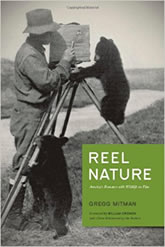
Reel Nature: America’s Romance With Wildlife on Film
Gregg Mitman. Reel Nature: America’S Romance With Wildlife on Film. Harvard University Press, 1999.
From the early exploits of Teddy Roosevelt in Africa to blockbuster films such as March of the Penguins, Gregg Mitman’s Reel Nature reveals how changing values, scientific developments, and new technologies have come to shape American encounters with wildlife on and off the big screen. Whether crafted to elicit thrills or to educate audiences about the real-life drama of threatened wildlife, nature films then and now have had an enormous impact on how Americans see, think about, consume, and struggle to protect animals across the globe.
The State of Nature: Ecology, Community, and American Social Thought, 1900-1950
Gregg Mitman. The State of Nature: Ecology, Community, and American Social Thought, 1900-1950. University of Chicago Press, 1992.
Although science may claim to be “objective,” scientists cannot avoid the influence of their own values on their research. In The State of Nature, Gregg Mitman examines the relationship between issues in early twentieth-century American society and the sciences of evolution and ecology to reveal how explicit social and political concerns influenced the scientific agenda of biologists at the University of Chicago and throughout the United States during the first half of this century. Reacting against the view of nature “red in tooth and claw,” ecologists and behavioral biologists such as Warder Clyde Allee, Alfred Emerson, and their colleagues developed research programs they hoped would validate and promote an image of human society as essentially cooperative rather than competitive. Mitman argues that Allee’s religious training and pacifist convictions shaped his pioneering studies of animal communities in a way that could be generalized to denounce the view that war is in our genes.
Advisor To
Selected Awards
- Andrew W. Carnegie Fellowship, 2017-2018
- John S. Guggenheim Memorial Foundation Fellowship, 2004–2005.
- Winner of the 2012 William H. Welch Medal from the American Association for the History of Medicine (Breathing Space)
- 2008 Outstanding Achievement Award, Wisconsin Library Association (Breathing Space)
- Winner of the 1994 Gustave O. Arlt Award in the Humanities from the Council of Graduate Schools. (The State of Nature)
- Winner of the 2000 Watson Davis and Helen Miles Davis Prize from the History of Science Society. (Reel Nature)
History Courses
- History / History of Science 125 – Green Screen: Environmental Perspectives through Film – Syllabus 2021 (pdf)
- History of Science 513 – Environment and Health in Global Perspective – Syllabus 2016 (pdf)
- History 705 – Commodities and Disease in Global History – Syllabus 2017 (pdf)