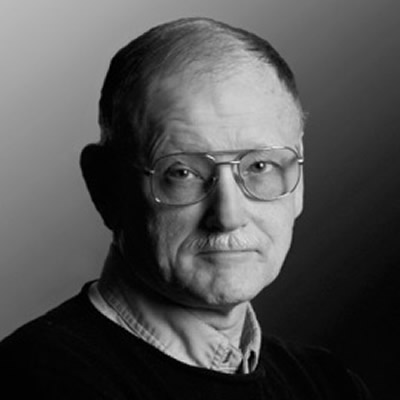
Alfred W. McCoy
Harrington Professor of History
608.263.1855
Office: 5245 Levy Hall
Curriculum Vitae (pdf)
Office Hours: TBA
After earning a Ph.D. in Southeast Asian history at Yale, my writing on this region has focused on three topics — the history of modern empires, Philippine political history and global opium trafficking.
My first book, The Politics of Heroin in Southeast Asia (New York, 1972), sparked controversy when the CIA tried to block publication. But after three English editions and translation into nine foreign languages, this study is now regarded as the “classic” work on the global drug traffic.
My more recent work on covert operations, A Question of Torture: CIA Interrogation, from the Cold War to the War on Terror (New York, 2006), explores the agency’s half-century history of psychological torture. A film based in part on that book, “Taxi to the Darkside,” won the Oscar for Best Documentary Feature in 2008. My latest study of this topic, Torture and Impunity (Madison, 2012), explores the political and cultural dynamics of America’s post 9/11 debate over interrogation.
The Philippines remains the major focus of my research. An investigation of President Marcos’s “fake medals,” published on page one of the New York Times (January 23, 1986) just weeks before the country’s presidential elections, contributed to the country’s transition from authoritarian rule. Analyzing the many coup attempts that followed, my book Closer Than Brothers (New Haven, 1999) documents the corrosive impact of torture upon the Philippine military.
Three of my edited volumes on Philippine historiography have won that country’s National Book Award. In 2001, the Association for Asian Studies awarded me the Goodman Prize for a “deep and enduring impact on Philippine historical studies.”
My book Policing America’s Empire: The United States, the Philippines, and the Rise of the Surveillance State (Madison, 2009), draws together several strands in my research to explore the transformative power of police, information, and scandal in shaping both the modern Philippine state and the U.S. internal security apparatus. In 2011, the Association for Asian Studies awarded that book the Kahin Prize, describing it as “a passionate, elegantly written book that owes its mastery to McCoy’s narrative and analytical gifts, his years of painstaking research and his sure sense of the ominous global implications of his story.”
In 2012, the Yale Graduate School Alumni Association awarded me the Wilbur Cross Medal which is presented annually to “a small number of outstanding alumni” to recognize “distinguished achievements in scholarship, teaching, academic administration, and public service.” Simultaneously, the University of Wisconsin–Madison gave me the Hilldale Award for Arts & Humanities for 2012.
My most recent book, Cold War on Five Continents: A Global History of Empire and Espionage (Chicago, 2025), explores the role of two generations in shaping the conduct of this global conflict—the battle-hardened World War II veterans who fought secret surrogate wars during its first decades and a younger generation of activists who led mass protest movements during its last years.
My teaching interests include: Modern Philippine social and political history; U.S. foreign policy; the Cold War; colonial empires in Southeast Asia; global illicit drug trafficking; and CIA covert operations.
Education
Ph.D., Yale
M.A., University of California-Berkeley
B.A., Columbia College
Books

Cold War on Five Continents: A Global History of Empire and Espionage
Alfred W. McCoy. Cold War on Five Continents: A Global History of Empire and Espionage. Haymarket Books, 2025.
A provocative analysis of the deadly conflicts that devastated countries and communities far from Moscow and Washington. Transforming battlegrounds in Africa, Asia, and Latin America into veritable wastelands, surrogate wars in the Cold War era left behind a legacy of collective trauma and social conflict that have persisted into the present. In this ambitious work, Alfred W. McCoy uses a bottom-up, outside-in approach to offer a new perspective on the longest, most consequential conflict in modern world history. McCoy offers an intimate portrait of covert operatives and young antiwar protesters, humanizing the history of the Cold War—a history that has too often been told in terms of economic growth, nuclear arsenals, or diplomatic ententes. By showing how otherwise ordinary individuals helped end a global conflict that threatened nuclear holocaust, McCoy offers important lessons for a younger generation facing climate change even as the great powers devote humanity’s scarce resources to a “new cold war.”

To Govern the Globe: World Orders and Catastrophic Change
Alfred W. McCoy. To Govern the Globe: World Orders and Catastrophic Change. Haymarket Books, 2021.
In a sweep through seven centuries from 1350 to 2050, the work explains how catastrophes– pandemics, wars, and climate crisis–have shaped the destiny of empires and world orders. In a tempestuous narrative that sweeps across five continents and seven centuries, this book explains how a succession of catastrophes—from the devastating Black Death of 1350 through the coming climate crisis of 2050—has produced a relentless succession of rising empires and fading world orders. During the long centuries of Iberian and British imperial rule, the quest for new forms of energy led to the development of the colonial sugar plantation as a uniquely profitable kind of commerce. In a time when issues of race and social justice have arisen with pressing urgency, the book explains how the plantation’s extraordinary profitability relied on a production system that literally worked the slaves to death, creating an insatiable appetite for new captives that made the African slave trade a central feature of modern capitalism for over four centuries. After surveying past centuries roiled by imperial wars, national revolutions, and the struggle for human rights, the closing chapters use those hard-won insights to peer through the present and into the future. By rendering often-opaque environmental science in lucid prose, the book explains how climate change and changing world orders will shape the life opportunities for younger generations, born at the start of this century, during the coming decades that will serve as the signposts of their lives—2030, 2050, 2070, and beyond.

In the Shadows of the American Century: The Rise and Decline of US Global Power
Alfred W. McCoy. In the Shadows of the American Century: The Rise and Decline of US Global Power. Haymarket Books, 2017.
Explores the distinctive instruments of American ascent to global domination and hegemony–including covert intervention, client elites, psychological torture, and surveillance. In a completely original analysis, prize-winning historian Alfred W. McCoy explores America’s rise as a world power—from the 1890s through the Cold War—and its bid to extend its hegemony deep into the twenty-first century through a fusion of cyberwar, space warfare, trade pacts, and military alliances. McCoy then analyzes the marquee instruments of US hegemony—covert intervention, client elites, psychological torture, and worldwide surveillance. Peeling back layers of secrecy, McCoy exposes a military and economic battle for global domination fought in the shadows, largely unknown to those outside the highest rungs of power. Can the United States extend the “American Century” or will China guide the globe for the next hundred years? McCoy devotes his final chapter to these questions, boldly laying out a series of scenarios that could lead to the end of Washington’s world domination by 2030.

Beer of Broadway Fame: The Piel Family and Their Brooklyn Brewery
Alfred W. McCoy. Beer of Broadway Fame: The Piel Family and Their Brooklyn Brewery. SUNY Press, 2016.
Explores the hundred-year history of Piel Bros., one of the prominent German American brands that once made New York City the brewing capital of America. For more than a century, New York City was the brewing capital of America, with more breweries producing more beer than any other city, including Milwaukee and St. Louis. In Beer of Broadway Fame, Alfred W. McCoy traces the hundred-year history of the prominent Brooklyn brewery Piel Bros., and provides an intimate portrait of the company’s German American family. Through quality and innovation, Piel Bros. grew from Brooklyn’s smallest brewery in 1884, producing only 850 kegs, into the sixteenth-largest brewery in America, brewing over a million barrels by 1952. Through a narrative spanning three generations, McCoy examines the demoralizing impact of pervasive US state surveillance during World War I and the Cold War, as well as the forced assimilation that virtually erased German American identity from public life after World War I. McCoy traces Piel Bros.’s changing fortunes from its early struggle to survive in New York’s Gilded Age beer market, the travails of Prohibition with police raids and gangster death threats, to the crushing competition from the big national brands after World War II. Through a fusion of corporate records with intimate personal correspondence, McCoy reveals the social forces that changed a great city, the US brewing industry, and the country’s economy.

Torture and Impunity: The U.S. Doctrine of Coercive Interrogation
Alfred W. McCoy. Torture and Impunity: The U.S. Doctrine of Coercive Interrogation. Madison: University of Wisconsin Press, 2012.
Many Americans have condemned the “enhanced interrogation” techniques used in the War on Terror as a transgression of human rights. But the United States has done almost nothing to prosecute past abuses or prevent future violations. Tracing this knotty contradiction from the 1950s to the present, historian Alfred W. McCoy probes the political and cultural dynamics that have made impunity for torture a bipartisan policy of the U.S. government. During the Cold War, McCoy argues, the U.S. Central Intelligence Agency covertly funded psychological experiments designed to weaken a subject’s resistance to interrogation. After the 9/11 terrorist attacks, the CIA revived these harsh methods, while U.S. media was flooded with seductive images that normalized torture for many Americans. Ten years later, the U.S. had failed to punish the perpetrators or the powerful who commanded them, and continued to exploit intelligence extracted under torture by surrogates from Somalia to Afghanistan. Although Washington has publicly distanced itself from torture, disturbing images from the prisons at Abu Ghraib and Guantanamo are seared into human memory, doing lasting damage to America’s moral authority as a world leader.

Endless Empire: Spain’s Retreat, Europe’s Eclipse, America’s Decline
Alfred W. McCoy. Endless Empire: Spain’s Retreat, Europe’s Eclipse, America’s Decline. Madison: University of Wisconsin Press, 2012.
As the American century of global dominion draws to a close, the signs of geopolitical change are gathering like thunderheads on the horizon. Is the United States poised at the brink of decline? What can the downfall of European empires tell us about America’s future as a superpower? Throughout four millennia of recorded history there has been no end to empire, but instead an endless succession of empires. After five centuries of sustained expansion, the half-dozen European powers that ruled half of humanity collapsed with stunning speed after World War II, creating a hundred emerging nations in Asia and Africa. Amid this imperial transition, the United States became the new global hegemon, dominating this world order with an array of power that closely resembled that of its European predecessors. As Brazil, Russia, India, China, and the European Union now rise in global influence, twenty leading historians from four continents take a timely look backward and forward to discover patterns of eclipse in past empires that are already shaping a decline in U.S. global power, including: Erosion of economic and fiscal strength needed for military power on a global scale Misuse of military power through micro-military misadventures Breakdown of alliances among major powers Weakened controls over the subordinate elites critical for any empire’s exercise of global power Insufficient technological innovation to sustain global force projection.

Policing America’s Empire: The United States, the Philippines, and the Rise of the Surveillance State
Alfred W. McCoy. Policing America’s Empire: The United States, the Philippines, and the Rise of the Surveillance State. Madison: University of Wisconsin Press, 2009.
At the dawn of the twentieth century, the U.S. Army swiftly occupied Manila and then plunged into a decade-long pacification campaign with striking parallels to today’s war in Iraq. Armed with cutting-edge technology from America’s first information revolution, the U.S. colonial regime created the most modern police and intelligence units anywhere under the American flag. In Policing America’s Empire Alfred W. McCoy shows how this imperial panopticon slowly crushed the Filipino revolutionary movement with a lethal mix of firepower, surveillance, and incriminating information. Even after Washington freed its colony and won global power in 1945, it would intervene in the Philippines periodically for the next half-century—using the country as a laboratory for counterinsurgency and rearming local security forces for repression. In trying to create a democracy in the Philippines, the United States unleashed profoundly undemocratic forces that persist to the present day. But security techniques bred in the tropical hothouse of colonial rule were not contained, McCoy shows, at this remote periphery of American power. Migrating homeward through both personnel and policies, these innovations helped shape a new federal security apparatus during World War I. Once established under the pressures of wartime mobilization, this distinctively American system of public- private surveillance persisted in various forms for the next fifty years, as an omnipresent, sub rosa matrix that honeycombed U.S. society with active informers, secretive civilian organizations, and government counterintelligence agencies. In each succeeding global crisis, this covert nexus expanded its domestic operations, producing new contraventions of civil liberties—from the harassment of labor activists and ethnic communities during World War I, to the mass incarceration of Japanese Americans during World War II, all the way to the secret blacklisting of suspected communists during the Cold War.

Colonial Crucible: Empire in the Making of the Modern American State
Alfred W. McCoy (Editor), and Francisco Scarano (Editor). Colonial Crucible: Empire in the Making of the Modern American State. Madison: University of Wisconsin Press, 2009.
At the end of the nineteenth century the United States swiftly occupied a string of small islands dotting the Caribbean and Western Pacific, from Puerto Rico and Cuba to Hawaii and the Philippines. Colonial Crucible: Empire in the Making of the Modern American State reveals how this experiment in direct territorial rule subtly but profoundly shaped U.S. policy and practice—both abroad and, crucially, at home. Edited by Alfred W. McCoy and Francisco A. Scarano, the essays in this volume show how the challenge of ruling such far-flung territories strained the U.S. state to its limits, creating both the need and the opportunity for bold social experiments not yet possible within the United States itself. Plunging Washington’s rudimentary bureaucracy into the white heat of nationalist revolution and imperial rivalry, colonialism was a crucible of change in American statecraft. From an expansion of the federal government to the creation of agile public-private networks for more effective global governance, U.S. empire produced far-reaching innovations. Moving well beyond theory, this volume takes the next step, adding a fine-grained, empirical texture to the study of U.S. imperialism by analyzing its specific consequences. Across a broad range of institutions—policing and prisons, education, race relations, public health, law, the military, and environmental management—this formative experience left a lasting institutional imprint. With each essay distilling years, sometimes decades, of scholarship into a concise argument, Colonial Crucible reveals the roots of a legacy evident, most recently, in Washington’s misadventures in the Middle East.

An Anarchy of Families: State and Family in the Philippines
Alfred W. McCoy (Editor). An Anarchy of Families: State and Family in the Philippines. Madison: University of Wisconsin Press, 2009.
Winner of the Philippine National Book Award, this pioneering volume reveals how the power of Filipino family-based oligarchies both derives from and contributes to a weak, corrupt state. From provincial warlords to modern managers, prominent Philippine leaders have fused family, politics, and business to subvert public institutions and amass private wealth—an historic pattern that continues to the present day. Edited by Alfred W. McCoy, An Anarchy of Families explores the pervasive influence of the modern dynasties that have led the Philippines during the past century. From the Osmeñas to the Lopezes and Pardo de Taveras, elite Filipino families have acted as formidable coalitions —controlling capital, dominating national politics, and deploying paramilitary force. Beyond Manila, strong men such as Ramon Durano, Ali Dimaporo, and Justiniano Montano have used “guns, goons, and gold” to accumulate wealth and power in far-flung islands and provinces.

A Question of Torture: CIA Interrogation, from the Cold War to the War on Terror
Alfred W. McCoy. A Question of Torture: CIA Interrogation, from the Cold War to the War on Terror. New York: Metropolitan Books, 2006.
In this revelatory account of the CIA’s fifty-year effort to develop new forms of torture, historian Alfred W. McCoy locates the deep roots of recent scandals at Abu Ghraib and Guantánamo in a long-standing, covert program of interrogation. A Question of Torture investigates the CIA’s practice of “sensory deprivation” and “self-inflicted pain,” in which techniques including isolation, hooding, hours of standing, and manipulation of time assault the victim’s senses and destroy the basis of personal identity. McCoy traces the spread of these practices across the globe, from Vietnam to Iran to Central America, and argues that after 9/11, psychological torture became the weapon of choice in the CIA’s global prisons, reinforced by “rendition” of detainees to “torture-friendly” countries. Finally, McCoy shows that information extracted by coercion is worthless, making a strong case for the FBI’s legal methods of interrogation. Scrupulously documented and grippingly told, A Question of Torture is a devastating indictment of inhumane practices that have damaged America’s laws, military, and international standing.

The Politics of Heroin: CIA Complicity in the Global Drug Trade
Alfred W. McCoy. The Politics of Heroin: CIA Complicity in the Global Drug Trade. New York: Lawrence Hill Books, 2003.
The first book to prove CIA and U.S. government complicity in global drug trafficking, The Politics of Heroin includes meticulous documentation of dishonesty and dirty dealings at the highest levels from the Cold War until today. Maintaining a global perspective, this groundbreaking study details the mechanics of drug trafficking in Asia, Europe, the Middle East, and South and Central America. New chapters detail U.S. involvement in the narcotics trade in Afghanistan and Pakistan before and after the fall of the Taliban, and how U.S. drug policy in Central America and Colombia has increased the global supply of illicit drugs.

Closer Than Brothers: Manhood at the Philippine Military Academy
Alfred W. McCoy. Closer Than Brothers: Manhood at the Philippine Military Academy. New Haven: Yale University Press, 1999.
In this innovative book, Alfred W. McCoy takes a new approach to the military and political history of the Philippines. Comparing two generations of graduates from the Philippine Military Academy (PMA)—the classes of 1940 and 1971—McCoy uncovers fundamental differences in their academic socialization and subsequent ascent to power. Viewed through this comparative lens, the story of these two classes becomes the history of the entire Philippine army, offering important insights into the complexities of Filipino involvement in war and peace from the 1930s to the 1990s. Drawing on extensive interviews with these officers, as well as on diaries and memoirs, the book details for the first time activities of the secretive brotherhood that is the Filipino officer corps. Members of the class of 1940, who bonded to one another in PMA training modeled after West Point’s, emerged from heroic battles against Japanese invaders with their belief in civil supremacy over the military affirmed. In postwar decades, they actively blocked coup attempts. By contrast, the class of ’71 emerged from the academy to become the fist of the Marcos dictatorship. Their involvement in torture ruptured the academy’s socialization and inspired them to launch six coup attempts in the late 1980s. The collective biographies of these officers offer insights not only into Philippine history but also into topics of wider global import—the influence of male gender on a distinctly gendered institution, the causes of coup d’état, and the collective trauma of torture.
Advisor To
Selected Awards
- Yale Graduate School Alumni Asssociaton, Wilbur Cross Medal, 2012.
- University of Wisconsin, Hilldale Award for Arts & Humanities, 2012
- Association for Asian Studies, George Kahin Prize, 2011.
- University of Wisconsin Graduate School, J.R.W. Smail Chair in History, 2004.
- Philippine National Book Award, 1985, 1995, 2001.
- Association for Asian Studies, Grant Goodman Prize, 2001.
- Fulbright-Hays Faculty Research Abroad, 1998-99.
History Courses
- History 319 – The Vietnam Wars – Syllabus 2025 (pdf)
- History 458 – Southeast Asia Since 1800 – Syllabus 2021 (pdf)
- History 375 – The Cold War – From World War II to End of Soviet Empire – Syllabus 2026 (pdf)
- History 600 – World War II in the Pacific – Syllabus 2007 (pdf)
- History 600 – Empire & Revolution: U.S. and European Empires in Southeast Asia – Syllbus 2011 (pdf)
- History 600 – World War II in the Pacific
- History 600 – CIA Covert Warfare and U.S. Foreign Policy – Syllabus 2025 (pdf)
- History 600 – U.S. and European Colonialism in Southeast Asia – Syllabus 2024 (pdf)
- History 755 – Empire & Revolution: U.S. and European Empires in Southeast Asia – Syllabus 2014 (pdf)
- History 755 – CIA Covert Warfare and Conduct of US Foreign Policy – Syllabus 2021 (pdf)
- History 755 – Reality of Images–Environmental Photography in Southeast Asia
- History 755 – Islands of Southeast Asia–The Practice of Comparative History
- History 755 – Tropical Dictators–Authoritarianism in Indonesia & the Philippines
- History 755 – U.S. and European Colonialism in Southeast Asia – Syllabus 2021 (pdf)