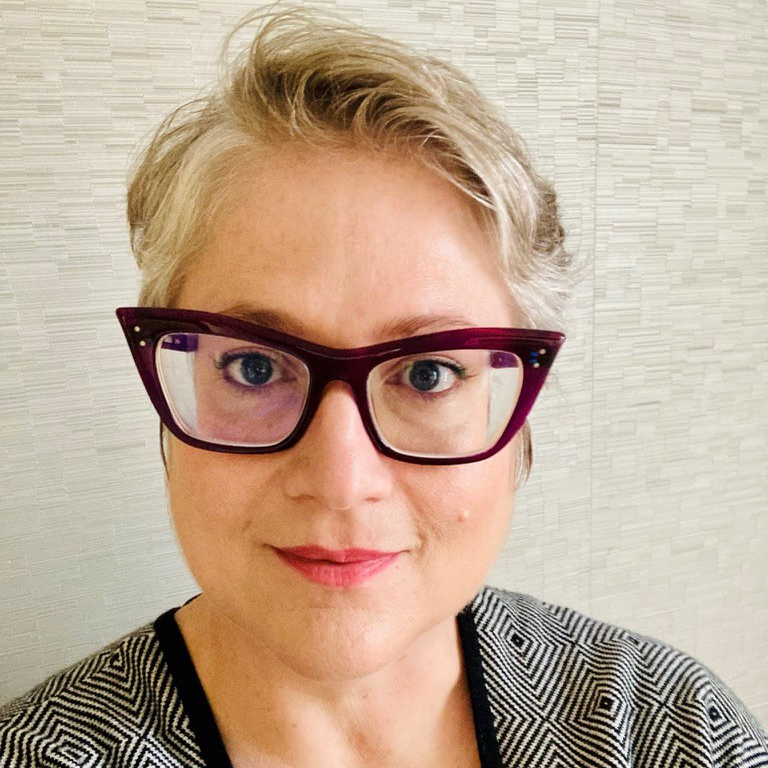
April Haynes
Professor of History
608.263.1823
Office: 3243 Levy Hall
Office Hours: TBA
I am a historian of women, gender, and sexuality in the early US. My research priorities include racialized gender, intimate labor, and women in social movements. I teach courses about labor and working-class history, women in early US/North American history, gender in world history, historiography and historical methods.
My first book, Riotous Flesh: Women, Physiology, and the Solitary Vice in Nineteenth-century America, unearths the surprising origins of a sex panic that ultimately prepared many Americans to accept heteronormativity.
My current book project, Tender Traffic: Intimate Labor Movements, 1790-1860, traces the roots of today’s service economy and recovers household and sex workers’ labor activism in the early republic.
I also lead a team of Undergraduate Research Scholars. Since 2024, we have been conducting a quantitative analysis of racialized gender in city jails, county prisons, and state penitentiaries across the northeastern US between 1825 and 1860.
Education
Ph.D., History, University of California, Santa Barbara: Doctoral Emphasis, Feminist Studies
M.A., History, University of California, Santa Barbara
B.A., History and Women’s Studies, San Francisco State University
Books

Riotous Flesh: Women, Physiology, and the Solitary Vice in Nineteenth-Century America
April Haynes. Riotous Flesh: Women, Physiology, and the Solitary Vice in Nineteenth-Century America. University of Chicago Press, 2015.
Nineteenth-century America saw numerous campaigns against masturbation, which was said to cause illness, insanity, and even death. Riotous Flesh explores women’s leadership of those movements, with a specific focus on their rhetorical, social, and political effects, showing how a desire to transform the politics of sex created unexpected alliances between groups that otherwise had very different goals. As April R. Haynes shows, the crusade against female masturbation was rooted in a generally shared agreement on some major points: that girls and women were as susceptible to masturbation as boys and men; that “self-abuse” was rooted in a lack of sexual information; and that sex education could empower women and girls to master their own bodies. Yet the groups who made this education their goal ranged widely, from “ultra” utopians and nascent feminists to black abolitionists. Riotous Flesh explains how and why diverse women came together to popularize, then institutionalize, the condemnation of masturbation, well before the advent of sexology or the professionalization of medicine.
Selected Publications
- “Nineteenth-century Feminist Historiography: Continuities, Intersections, and Breakthroughs,” American Nineteenth-Century History 26:2 (Aug 2025) 1-22. https://doi.org/10.1080/14664658.2025.2510717.
- “The Other Women’s Rights Movement: ‘Streetwalkers,’ Habeas Corpus, and Anticarceral Activism in New York City, 1830-1860,” Gender & History (Oct. 2024) https://onlinelibrary.wiley.com/doi/10.1111/1468-0424.12810.
- “From Magdalen Asylum to Labor Depot: The Panic of 1819 and Gendered Economies of Labor,” Journal of the Early Republic 40:4 (Winter 2020) 709-715.
- “Intimate Economies, 1790-1860” in A Companion to American Women’s History, 2nd edition, eds. Nancy Hewitt and Anne Valk, (New York: Blackwell-Wiley, 2020).
- “Radical Hospitality and Political Intimacy in Grahamite Boardinghouses, 1830-1850,” Journal of the Early Republic 39:3 (Fall 2019).
- “‘Sex-Ins, College-Style’: Black Feminism and Sexual Politics in the Student YWCA, 1968-1980,” in Women’s Activism and ‘Second-Wave’ Feminism: Transnational Histories, ed. Barbara Molony and Jennifer Nelson (London: Bloomsbury, 2017) 37-62.
- “The Trials of Frederick Hollick: Obscenity, Sex Education, and Medical Democracy in the Antebellum United States,” Journal of the History of Sexuality, Volume 12: Number 4 (October 2003), pp. 543-574.
Invited Talks & Research Presentations
- “Negotiation and Refusal: Intimate Labor Movements in the Early United States,” invited lecture, Carleton College Department of History, February 5, 2026.
- “‘I Determined to Get More for My Labor’: Nancy Gardner Prince and the Long History of Domestic Workers’ Unions,” Making Scholarship Matter: Capacious Geographies, Intimate Journeys Conference, University of California-Santa Barbara, Jan. 20, 2026.
- “Intimate Laborers and Social Movements, 1800-1860,” American Studies Association, San Juan, Puerto Rico, November 21, 2025.
- “‘They Know their Value and Take Advantage of It’: Household Workers’ Organizing at the Dawn of an American Service Economy,” invited lecture in University of Oregon History Speaker Series, March 18, 2025.
- “Engendering Carcerality: Authors in Conversation,” invited speaker with Anne Gray Fischer and Rachel Klein. American Society for Legal History: New Works in Legal History Series, Jan. 22, 2025.
- “Gender in 19th-century American History,” with Catherine Clinton and Jim Downs, 30th Anniversary British American Nineteenth-Century History (BrANCH) Conference, Queen’s College, Oxford University, United Kingdom, September 22-23, 2023.
- “An Intimate Labor Theory of Value: Household Workers and the Workingmen’s Movement in the United States, 1820-1850,” Berkshire Conference in the History of Women, Genders, and Sexualities, Santa Clara University, June 30, 2023.
- “The Other Women’s Rights Movement: Streetwalkers, Habeas Corpus, and Carceral Feminism in New York City, 1830-60,” Engendering Carcerality Symposium, sponsored by Gender & History and hosted by the University of California, Santa Barbara, June 15, 2023.
- “‘Where Ladies Procure Servants and Servants get Places’: female intelligence offices, racialized gender, and intimate labor markets in the early American republic,” American History Research Group, Queen Mary University, London, England, February 23, 2022.
- “Servants, Mistresses and Labour Brokers in Anglo-American Cities, 1650-1850,” Seminar in Economic History, London School of Economics and Political Science, November 18, 2021.
Advisor To
Selected Awards
- Mellon New Directions Fellowship
- James F. Broussard best first book prize, Society for Historians of the Early American Republic
- National Endowment for the Humanities-Massachusetts Historical Society Postdoctoral Fellowship
- Hench Postdoctoral Fellowship, American Antiquarian Society
History Courses Taught
- History 134 – Women and Gender in World History
- History 201 – US Labor and Working-Class History
- History 201 – Women and Gender in US History
- History/GWS 353: Women/Gender in the US/North America to 1870
- History/GWS 354: Women/Gender in the US/North America since 1870
- History 600 – Abolitionist Movements, 1619-present
- History 600 – Political Economy of the Early United States
- History 752 – Transnational Seminar in Gender and Women’s History
- History 936 – Gender in Colonial North America and the Early United States