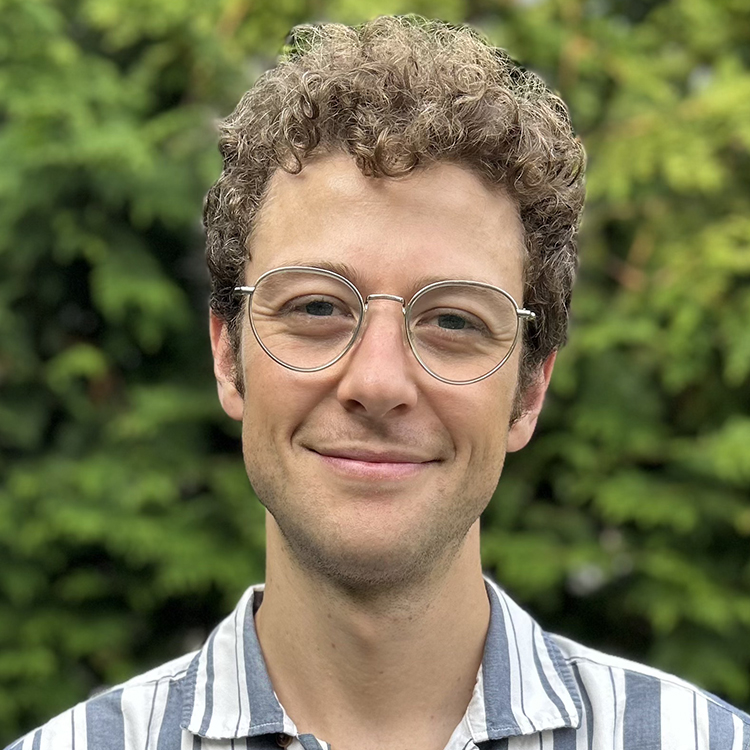
Geoffrey Durham
Assistant Professor of History
608.262.9016
Office: 5219 Levy Hall
Office Hours: TBA
I am a historian of modern Europe with a focus on imperial Russia and its international entanglements from the eighteenth century through the early twentieth. Two main concerns motivate my research and teaching. The first is to understand how the Russian empire incorporated vast and diverse territories, resources, and peoples into an imperial system of rights, obligations, and exchange. The second is to situate the Russian empire within its global context.
Imperial Russia and the Global Standardization of Weights and Measures, my first book project, pursues these commitments by reinterpreting the story of how the world came to use the metric system between the 1790s and 1920s. It argues that imperial expansion and resource extraction inflected social conflict that standardization promised to resolve for all manner of tsarist subjects, whether peasants, artisans, merchants, customs house clerks, elite officials, or scientists. The Russian empire adopted the metric system’s methodology for defining its own weights and measures without introducing meters, liters, and grams because officials feared disrupting social peace, commerce, and taxation. Although the tsarist government deferred the adoption of the metric system at home, the St. Petersburg Academy of Sciences played, as I show, an underappreciated but catalytic and leading role in its internationalization in the 1860s-70s. Ultimately, however, it was a Soviet campaign of the 1920s that brought the metric system to the peoples of Eurasia along with the revolution.
I have also started a second book-length project on the history of platinum. When tsarist officials discovered in the 1820s that western Siberia was the largest source of platinum on Earth, the ore was rare, useless, and even pernicious because it could pass for silver. But by the end of the nineteenth century, platinum had become a precious metal, minted into rubles, introduced into a variety of industrial applications, and shipped abroad in substantial quantities. This project charts platinum’s commodification by focusing on the laborers who mined and processed it, the nobles who owned the land it rested beneath, the scientists and engineers who experimented and worked with it, and the legions who encountered it in coins, catalytic converters, and dental prosthetics.
Education
Ph.D., University of Pennsylvania
M.A., Indiana University
B.A., Skidmore College
Selected Publications
“Georgian in Form, Tsarist in Content: Colonial Weights, Measures, and Money in the South Caucasus,” Kritika: Explorations in Russian and Eurasian History (forthcoming fall 2026).
History Courses
- History 201 – The Historian’s Craft: Global History of Unfree Labor in the Long Nineteenth Century
- History 201 – The Historian’s Craft: History of Money
- History 229 – Empires in Eurasia, from Chinggis Khan to Stalin
- History 418 – History of Imperial Russia, 1801-1917
- History 705 – Empire, Internationalism, and Global Europe in the Long Nineteenth Century
- History 708 – Introduction to Professional Research in History