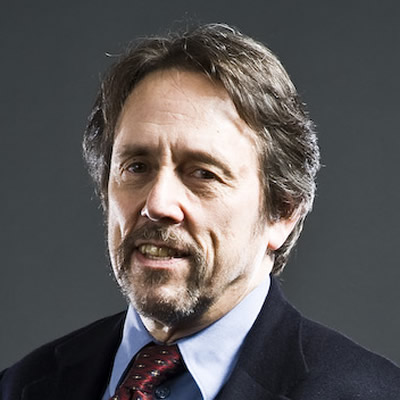
Biography
Biography
Trained as an historian of Anglo-America, I have become increasingly interested in American religious history and, as both former director of the UW–Madison Religious Studies Program and current director of the Lubar Institute for the Study of the Abrahamic Religions, comparative religion. At this point my projects are eclectic: at the moment, they include editing an English text of the Qur’an.
My research interests include American Religious History, Colonial America, Native Peoples of the Eastern Woodlands, 1500-1800.
Education
Ph.D., University of California – Berkeley
B.A., Yale
Books
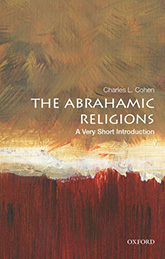
The Abrahamic Religions: A Very Short Introduction
Charles L. Cohen. The Abrahamic Religions: A Very Short Introduction. Oxford University Press, 2020.
In the book of Genesis, God bestows a new name upon Abram–Abraham, a father of many nations. With this name and his Covenant, Abraham would become the patriarch of three of the world’s major religions: Judaism, Christianity, and Islam. Connected by their mutual–if differentiated–veneration of the One God proclaimed by Abraham, these traditions share much beyond their origins in the ancient Israel of the Old Testament. This Very Short Introduction explores the intertwined histories of these monotheistic religions, from the emergence of Christianity and Islam to the violence of the Crusades and the cultural exchanges of al-Andalus. Each religion continues to be shaped by this history but has also reacted to the forces of modernity and politics. Movements such as the Reformation and that led by seventh-century Kharijites have emerged, intentioned to reform or restore traditional religious practice but quite different in their goals and effects. Relationships with states, among them Israel and Saudi Arabia, have also figured importantly in their development. The Abrahamic Religions: A Very Short Introduction brings these traditions together into a common narrative, lending much needed context to the story of Abraham and his descendants. ABOUT THE SERIES: The Very Short Introductions series from Oxford University Press contains hundreds of titles in almost every subject area. These pocket-sized books are the perfect way to get ahead in a new subject quickly. Our expert authors combine facts, analysis, perspective, new ideas, and enthusiasm to make interesting and challenging topics highly readable.
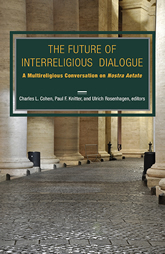
The Future of Interreligious Dialogue: A Multireligious Conversation on Nostra Aetate
Charles L. Cohen (Co-editor), Paul F. Knitter (Co-editor), and Ulrich Rosenhagen (Co-editor). The Future of Interreligious Dialogue: A Multireligious Conversation on Nostra Aetate. Orbis Books, 2017.
Drawn from a conference celebrating the 50th anniversary of the landmark Vatican II document, Nostra Aetate (“Declaration on the Relation of the Church to Non-Christian Religions”), this multi-perspective collection of essays by the world’s leading scholars of theology and interreligious dialogue brings new ferment to the field of interreligious understanding. In addition to the editors, contributors include (among others) John T. Thatamanil, John Borelli, Jeannine Hill Fletcher, Roger Haight, John Pawlikowski, Dwight Hopkins, Shira Lander, and Sallie B. King. Charles L. Cohen is E. Gordon Fox Professor of American Institutions at UW–Madison and former director of the Lubar Institute for the Study of the Abrahamic Religions. Paul F. Knitter is the Emeritus Paul Tillich Professor of Theology, World Religions, and Culture at Union Theological Seminary, New York. Ulrich Rosenhagen, formerly associate director of the Lubar Institute for the Study of the Abrahamic Religions, is a lecturer in religious studies at UW–Madison.
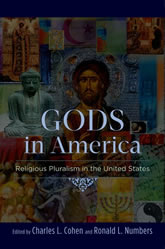
Gods in America: Religious Pluralism in the United States
Charles L. Cohen (Co-editor). Gods in America: Religious Pluralism in the United States. Oxford University Press, 2013.
Brings together leading scholars from a variety of disciplines to explain the historical roots of religious phenomena and assesses their impact on modern American society.
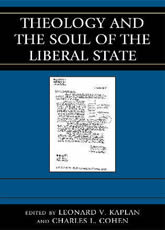
Theology and the Soul of the Liberal State
Leonard V. Kaplan, and Charles L. Cohen. Theology and the Soul of the Liberal State. Lexington Books, 2010.
Rising calls in both the United States and abroad for theologizing national agendas have renewed examinations about whether liberal states can accommodate such programs without either endangering citizens’ rights or trivializing religious concerns. Conventional wisdom suggests that theology is necessarily unfriendly to the liberal state, but neither philosophical analysis nor empirical argument has convincingly established that conclusion. Examining the problem from a variety of perspectives including law, philosophy, history, political theory, and religious studies, the essays in Theology and the Soul of the Liberal State suggest the possibilities for and limits on what theological reflection might contribute to liberal polities across the globe. Theology and the Soul of the Liberal State develops these issues under five headings. Part One explores “The Nature of Religious Argument” as it can inflect discussions of public policy, political theory, jurisprudence, and education. Part Two, “Theologies of the Marketplace,” notes that theology can by turns be highly critical, neutral, or even inordinately supportive of market operations. Part Three, “European Perspectives,” reviews and develops arguments from Abraham Kuyper, Karl Barth, and French post-modernists concerning how one might integrate theological discourse into the public sphere. Part Four offers Israel, Pakistan and Tibet as “Asian Perspectives” on how theology may comport with liberalism in recently created states (or, in the last case, a diasporic government-in-exile) where powerful religious constituencies make “secular” civil action extremely problematic. Finally, Part V, “Religion and Terror,” probes the vexed relationship between conceptions of divine and human justice, where the imperatives of theology and state confront each other most nakedly. Collectively, Theology and the Soul of the Liberal State suggests that the liberal state cannot keep theology out of public discourse and may even benefit from its intervention.
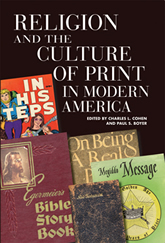
Religion and the Culture of Print in Modern America
Paul S. Boyer, and Charles L. Cohen. Religion and the Culture of Print in Modern America. University of Wisconsin Press, 2008.
Religion and the Culture of Print in Modern America explores how a variety of print media—religious tracts, newsletters, cartoons, pamphlets, self-help books, mass-market paperbacks, and editions of the Bible from the King James Version to contemporary “Bible-zines”—have shaped and been shaped by experiences of faith since the Civil War. Edited by Charles L. Cohen and Paul S. Boyer, whose comprehensive historical essays provide a broad overview to the topic, this book is the first on the history of religious print culture in modern America and a well-timed entry into the increasingly prominent contemporary debate over the role of religion in American public life.
God’s Caress: The Psychology of Puritan Religious Experience
Charles L. Cohen. God’S Caress: The Psychology of Puritan Religious Experience. Oxford University Press, 1988.
Although scripture demands rebirth for all of God’s chosen people, the actual experience of religious conversion is largely determined by the complex interaction between individuals and clergy. This book focuses on the Puritan experience of conversion, which culminated in the celebration of strength liberated for divine purposes, to examine how ministers elaborated the psychological imperatives of faith and their listeners modified and internalized them. Looking at firsthand accounts of personal conversion as well as at sermons and tracts, Cohen discusses how clergy and laity together defined the norms of religious experience, how the Bible influenced Puritan self-perception, and how theology molded the behavior of Saints in a covenanted community. Winner of the Allan Nevins Prize of the Society of American Historians, this study advances Max Weber’s discussion of the Saint’s psychology of work and illuminated the function of rebirth in Puritan culture as both a religious and a psychological phenomenon.
Selected Publications
- “The Construction of the Mormon People,” Journal of Mormon History 32 (2006): 25-64
- “Religion,” in James Ciment, ed., Colonial America: An Encyclopedia of Social, Political, Cultural, and Economic History, 5 vols. (Armonk, NY, 2006), 1.58-69.
- “No Man Knows My Psychology: Fawn Brodie, Joseph Smith, and Psychoanalysis,” BYU Studies, 44, 1 (2005), 55-78.
- “Max Weber in New England,” in David Libby and Paul Spickard, eds., Affect and Power: Essays on Sex, Slavery, Race, and Religion in Appreciation of Winthrop D. Jordan, (n.p., 2005), 170-82.
- “The Colonization of North America as an Episode in the History of Christianity,” Church History, 72 (September, 2003), 553-68.
- “A Middle Way for Religious Studies,” Bulletin of the Council of Societies for the Study of Religion, 32, 1 (February, 2003), 11-13.
- “Was the Great Awakening a factor leading to the American Revolution? – No,” in Keith Krawczynski, ed., History in Dispute, vol. 12: The American Revolution (Columbia, S.C., 2003), 149-53.
Selected Awards
- Distinguished Lecturer, Organization of American Historians, 2008-2014
- co-recipient, Metanexus Global Societies Initiative Grant, 2008-13
- co-recipient, Metanexus Local Societies Initiative Grant, 2005-08
- Joseph Fielding Smith Institute Research Fellowship, 2004
- Asia-Pacific Study Fund Short-Term Research Fellowship, Japan, 2004
- Osaka University of Foreign Studies International Academic Exchange Fellowship, 2004
- Phi Beta Kappa Distinguished Teaching Award, 2002
- Anonymous Fund, UW–Madison, 2002, 2006
- Emil H. Steiger Distinguished Teaching Award, 1997
- F.F. Johnson Teaching Award, History Department, 1995, 1996
- Elected UW–Madison Teaching Academy, 1996
- Karen F. F. Johnson Award (UW History Dept.), 1995, 1996
- N.E.H. Younger Scholars Award (faculty co-recipient), 1995
- UW Faculty/Student Hilldale Research Award, 1992, 1995
- Romnes Fellowship, UW–Madison, 1990-95
- Vilas Associateship, 1991-93
- Institute for Research in the Humanities, Visiting Fellow, 1986
- Allan Nevins Prize, Society of American Historians.
Advisor To
History Courses
- History 101 – American History to Civil War Era – Syllabus 2015 (pdf)
- History & Religious Studies 230/Jewish Studies 231, “Braided Histories: Judaism, Christianity, Islam” – Syllabus 2015 (pdf)
- History 343 – Colonial British North America – Syllabus 2009 (pdf)
- History 451 – American Religious History to the Mid-Nineteenth Century – Syllabus 2007 (pdf)
- History 500 – Reading Seminar in History
- History 600 – The American Revolutionary Settlement of Religion – Syllabus 2014 (pdf)
- History 910 – Colonial North America – Syllabus 2012 (pdf)
- History 963 – American Religious History to 1860 – Syllabus 2017 (pdf)
- Curriculum and Instruction 675 – The History of Mass Communication in America – Syllabus 2013 (pdf)