Faculty Books

Coding Capitalism: Computers and the Remaking of the Postwar US Economy
Devin Kennedy. Coding Capitalism: Computers and the Remaking of the Postwar US Economy. Columbia University Press, 2026.
Long before Google, Amazon, or Microsoft, computer technology shaped how people worked, how markets operated, and how businesses became big. After World War II, military officials and their partners in industry looked to the newly invented electronic computer as they sought to cut costs, speed up labor, manage supply chains, and—they hoped—bring stability to the postwar economy. Their efforts would shape early computer science and the first applications of computer technology in manufacturing and business, with profound consequences for workers and managers alike. By the 1960s, practices originally developed to improve industrial efficiency were being used by Wall Street, influencing how markets worked and even how traders thought. Digital technology became central to finance, tying together far-flung trading floors and automating decision making—with alarming consequences, including the 1987 Black Monday crash. Devin Kennedy offers a new history of the digital economy, showing how the computer emerged from—and transformed—capitalism in the United States. He traces how computer science and technology were made by industry, which molded computation to manage factories, financial markets, and entire firms. Drawing on the archives of businesses, computer researchers, regulators, and financial institutions, Coding Capitalism retells the story of the postwar economy and the computer, revealing how midcentury business laid the foundations of the digital world. Bridging business and economic history with the history of science and technology, this book uncovers the prehistory of big tech and demonstrates how capitalism has shaped computing since its invention.
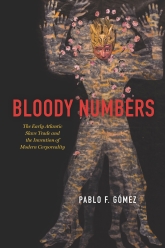
Bloody Numbers: The Early Atlantic Slave and the Invention of the Modern Corporeality
Pablo F. Gómez. Bloody Numbers: The Early Atlantic Slave and the Invention of the Modern Corporeality. University of Chicago Press, 2026.
Bloody Numbers is a provocative account of the violent world of the sixteenth and early seventeenth-century South Atlantic slave-trading societies, where traders, officials, notaries, and ship captains began thinking about human bodies as aggregate populations understood through numbers: measurements, averages, and calculations of risk and value assessed through the tabulation of heights, weights, tumors, scars, and other characteristics. Pablo F. Gómez explores how figures within the Spanish, Portuguese, and African slave trades used this model for understanding human bodies to generalize about behavior and disease in ways that foreshadowed the work of modern epidemiologists and public health officials—though they employed their probabilities with the brutal aim of protecting their financial interests rather than caring for enslaved people. The ruthlessness inherent in these practices became ingrained in the modern corporeal mathematics that emerged from the early slave trade and diffused through its vast political, financial, logistical, and intellectual networks. A pathbreaking work, Bloody Numbers reveals the historical actions that rendered populations quantifiable. In doing so, Gómez shows that confronting these origins is essential to understanding the violent political, legal, economic, and scientific practices that ascribe numbers to our own bodies.

Looking Through the Speculum: Examining the Women’s Health Movement
Judith A. Houck. Looking Through the Speculum: Examining the Women’s Health Movement. University of Chicago Press, 2024.
Highlights local history to tell a national story about the evolution of the women’s health movement, illuminating the struggles and successes of bringing feminist dreams into clinical spaces. The women’s health movement in the United States, beginning in 1969 and taking hold in the 1970s, was a broad-based movement seeking to increase women’s bodily knowledge, reproductive control, and well-being. It was a political movement that insisted that bodily autonomy provided the key to women’s liberation. It was also an institution-building movement that sought to transform women’s relationships with medicine; it was dedicated to increasing women’s access to affordable health care without the barriers of homophobia, racism, and sexism. But the movement did not only focus on women’s bodies. It also encouraged activists to reimagine their relationships with one another, to develop their relationships in the name of personal and political change, and, eventually, to discover and confront the limitations of the bonds of womanhood. This book examines historically the emergence, development, travails, and triumphs of the women’s health movement in the United States. By bringing medical history and the history of women’s bodies into our emerging understandings of second-wave feminism, the author sheds light on the understudied efforts to shape health care and reproductive control beyond the hospital and the doctor’s office—in the home, the women’s center, the church basement, the bookshop, and the clinic. Lesbians, straight women, and women of color all play crucial roles in this history. At its center are the politics, institutions, and relationships created by and within the women’s health movement, depicted primarily from the perspective of the activists who shaped its priorities, fought its battles, and grappled with its shortcomings.
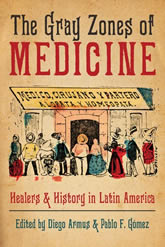
The Gray Zones of Medicine: Healers and History in Latin America
Pablo F. Gómez (Editor), and Diego Armus (Editor). The Gray Zones of Medicine: Healers and History in Latin America. University of Pittsburgh Press, 2021.
Health practitioners working in gray zones, or between official and unofficial medicines, played a fundamental role in shaping Latin America from the colonial period onward. The Gray Zones of Medicine offers a human, relatable, complex examination of the history of health and healing in Latin America across five centuries. Contributors uncover how biographical narratives of individual actors—outside those of hegemonic biomedical knowledge, careers of successful doctors, public health initiatives, and research and medical institutions—can provide a unique window into larger social, cultural, political, and economic historical changes and continuities in the region. They reveal the power of such stories to illuminate intricacies and resilient features of the history of health and disease, and they demonstrate the importance of escaping analytical constraints posed by binary frameworks of legality/illegality, learned/popular, and orthodoxy/heterodoxy when writing about the past. Through an accessible and story-like format, this book unlocks the potential of historical narratives of healings to understand and give nuance to processes too frequently articulated through intellectual medical histories or the lenses of empires, nation-states, and their institutions.

On the Backs of Tortoises: Darwin, the Galapagos, and the Fate of an Evolutionary Eden
Elizabeth Hennessy. On the Backs of Tortoises: Darwin, the Galapagos, and the Fate of an Evolutionary Eden. Yale University Press, 2019.
An insightful exploration of the iconic Galápagos tortoises, and how their fate is inextricably linked to our own in a rapidly changing world The Galápagos archipelago is often viewed as a last foothold of pristine nature. For sixty years, conservationists have worked to restore this evolutionary Eden after centuries of exploitation at the hands of pirates, whalers, and island settlers. This book tells the story of the islands’ namesakes—the giant tortoises—as coveted food sources, objects of natural history, and famous icons of conservation and tourism. By doing so, it brings into stark relief the paradoxical, and impossible, goal of conserving species by trying to restore a past state of prehistoric evolution. The tortoises, Elizabeth Hennessy demonstrates, are not prehistoric, but rather microcosms whose stories show how deeply human and nonhuman life are entangled. In a world where evolution is thoroughly shaped by global history, Hennessy puts forward a vision for conservation based on reckoning with the past, rather than trying to erase it.
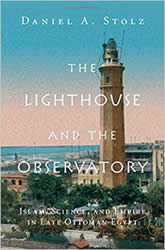
The Lighthouse and the Observatory: Islam, Science, and Empire in Late Ottoman Egypt
Daniel Stolz. The Lighthouse and the Observatory: Islam, Science, and Empire in Late Ottoman Egypt. Cambridge University Press, 2018.
An observatory and a lighthouse form the nexus of this major new investigation of science, religion, and the state in late Ottoman Egypt. Astronomy, imperial bureaucrats, traditionally educated Muslim scholars, and reformist Islamic publications, such as The Lighthouse, are linked to examine the making of knowledge, the performance of piety, and the operation of political power through scientific practice. Contrary to ideas of Islamic scientific decline, Muslim scholars in the nineteenth century used a dynamic tradition of knowledge to measure time, compute calendars, and predict planetary positions. The rise of a ‘new astronomy’ is revealed to owe much to projects of political and religious reform: from the strengthening of the multiple empires that exercised power over the Nile Valley; to the ‘modernization’ of Islamic centers of learning; to the dream of a global Islamic community that would rely on scientific institutions to coordinate the timing of major religious duties.
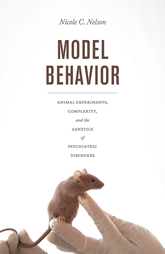
Model Behavior: Animal Experiments, Complexity, and the Genetics of Psychiatric Disorders
Nicole C. Nelson. Model Behavior: Animal Experiments, Complexity, and the Genetics of Psychiatric Disorders. University of Chicago Press, 2018.
Mice are used as model organisms across a wide range of fields in science today—but it is far from obvious how studying a mouse in a maze can help us understand human problems like alcoholism or anxiety. How do scientists convince funders, fellow scientists, the general public, and even themselves that animal experiments are a good way of producing knowledge about the genetics of human behavior? In Model Behavior, Nicole C. Nelson takes us inside an animal behavior genetics laboratory to examine how scientists create and manage the foundational knowledge of their field. Behavior genetics is a particularly challenging field for making a clear-cut case that mouse experiments work, because researchers believe that both the phenomena they are studying and the animal models they are using are complex. These assumptions of complexity change the nature of what laboratory work produces. Whereas historical and ethnographic studies traditionally portray the laboratory as a place where scientists control, simplify, and stabilize nature in the service of producing durable facts, the laboratory that emerges from Nelson’s extensive interviews and fieldwork is a place where stable findings are always just out of reach. The ongoing work of managing precarious experimental systems means that researchers learn as much—if not more—about the impact of the environment on behavior as they do about genetics. Model Behavior offers a compelling portrait of life in a twenty-first-century laboratory, where partial, provisional answers to complex scientific questions are increasingly the norm.
The Experiential Caribbean: Creating Knowledge and Healing in the Early Modern Atlantic
Pablo F. Gómez. The Experiential Caribbean: Creating Knowledge and Healing in the Early Modern Atlantic. University of North Carolina Press, 2018.
Opening a window on a dynamic realm far beyond imperial courts, anatomical theaters, and learned societies, Pablo F. Gómez examines the strategies that Caribbean people used to create authoritative, experientially based knowledge about the human body and the natural world during the long seventeenth century. Gómez treats the early modern intellectual culture of these mostly black and free Caribbean communities on its own merits and not only as it relates to well-known frameworks for the study of science and medicine. Drawing on an array of governmental and ecclesiastical sources—notably Inquisition records—Gómez highlights more than one hundred black ritual practitioners regarded as masters of healing practices and as social and spiritual leaders. He shows how they developed evidence-based healing principles based on sensorial experience rather than on dogma. He elucidates how they nourished ideas about the universality of human bodies, which contributed to the rise of empirical testing of disease origins and cures. Both colonial authorities and Caribbean people of all conditions viewed this experiential knowledge as powerful and competitive. In some ways, it served to respond to the ills of slavery. Even more crucial, however, it demonstrates how the black Atlantic helped creatively to fashion the early modern world.

Fatal Isolation: The Devastating Paris Heat Wave of 2003
Richard C. Keller. Fatal Isolation: The Devastating Paris Heat Wave of 2003. University of Chicago Press, 2015.
Shortlisted for the American Library in Paris Book Award, 2015 In a cemetery on the southern outskirts of Paris lie the bodies of nearly a hundred of what some have called the first casualties of global climate change. They were the so-called abandoned victims of the worst natural disaster in French history, the devastating heat wave that struck in August 2003, leaving 15,000 dead. They died alone in Paris and its suburbs, and were then buried at public expense, their bodies unclaimed. They died, and to a great extent lived, unnoticed by their neighbors–their bodies undiscovered in some cases until weeks after their deaths. Fatal Isolation tells the stories of these victims and the catastrophe that took their lives. It explores the multiple narratives of disaster–the official story of the crisis and its aftermath, as presented by the media and the state; the life stories of the individual victims, which both illuminate and challenge the ways we typically perceive natural disasters; and the scientific understandings of disaster and its management. Fatal Isolation is both a social history of risk and vulnerability in the urban landscape and a story of how a city copes with emerging threats and sudden, dramatic change.

Unconscious Dominions: Psychoanalysis, Colonial Trauma, and Global Sovereignties
Warwick Anderson (Co-editor), Deborah Jenson (Co-editor), and Richard C. Keller (Co-editor). Unconscious Dominions: Psychoanalysis, Colonial Trauma, and Global Sovereignties. Duke University Press, 2011.
By the 1920s, psychoanalysis was a technology of both the late-colonial state and anti-imperialism. Insights from psychoanalysis shaped European and North American ideas about the colonial world and the character and potential of native cultures. Psychoanalytic discourse, from Freud’s description of female sexuality as a “dark continent” to his conceptualization of primitive societies and the origins of civilization, became inextricable from the ideologies underlying European expansionism. But as it was adapted in the colonies and then the postcolonies, psychoanalysis proved surprisingly useful for theorizing anticolonialism and postcolonial trauma. Our understandings of culture, citizenship, and self have a history that is colonial and psychoanalytic, but, until now, this intersection has scarcely been explored, much less examined in comparative perspective. Taking on that project, Unconscious Dominions assembles essays based on research in Australia, Brazil, France, Haiti, and Indonesia, as well as India, North Africa, and West Africa. Even as they reveal the modern psychoanalytic subject as constitutively colonial, they shed new light on how that subject went global: how people around the world came to recognize the hybrid configuration of unconscious, ego, and superego in themselves and others. Contributors Warwick Anderson Alice Bullard John Cash Joy Damousi Didier Fassin Christiane Hartnack Deborah Jenson Richard C. Keller Ranjana Khanna Mariano Plotkin Hans Pols

Enregistrer les morts, identifier les surmortalités Une comparaison Angleterre, États-Unis et France
Richard C. Keller (Editor), Robert Dingwall (Editor), and Carine Vassy (Editor). Enregistrer Les Morts, Identifier Les surmortalités Une Comparaison Angleterre, États-Unis Et France. Presses de l’EHESP, l’Ecole des Hautes Etudes en Santé Publique, 2010.
La canicule de 2003, qui a tué 15 000 personnes en France sans que cette surmortalité ait été identifiée rapidement, a suscité des interrogations sur la capacité des pouvoirs publics à dénombrer les morts avec exactitude, à détecter les crises sanitaires et à prévenir l’apparition de drames semblables. Comment enregistre-t-on les morts ? Quelles sont les informations que l’on cherche ainsi à obtenir et dans quels buts ?Pour répondre à ces questions, qui se posent dans tous les pays industrialisés, quatre sociologues et un historien se sont intéressés aux modalités d’enregistrement de la mortalité en Angleterre, aux États-Unis et en France. Leur étude montre que ces modalités reflètent des choix de société, plus ou moins anciens, qui diffèrent d’un pays à l’autre. Pourquoi les Français sont-ils obsédés par la confidentialité des causes de la mort ? Pourquoi les Anglais pratiquent-ils vingt fois plus d’autopsies qu’en France ? Comment les Américains inscrivent-ils l’enregistrement des morts dans la lutte contre le terrorisme ? En principe, les trois pays produisent des données de mortalité similaires, susceptibles de faire l’objet de comparaisons internationales. En pratique, les modes de construction de l’information sont très variables, et les préoccupations de santé publique sont loin d’être prioritaires.
Sojourners in a Strange Land: Jesuits and Their Scientific Missions in Late Imperial China
Florence C. Hsia. Sojourners in a Strange Land: Jesuits and Their Scientific Missions in Late Imperial China. University of Chicago Press, 2009.
Though Jesuits assumed a variety of roles as missionaries in late imperial China, their most memorable guise was that of scientific expert, whose maps, clocks, astrolabes, and armillaries reportedly astonished the Chinese. But the icon of the missionary-scientist is itself a complex myth. Masterfully correcting the standard story of China Jesuits as simple conduits for Western science, Florence C. Hsia shows how these missionary-scientists remade themselves as they negotiated the place of the profane sciences in a religious enterprise. Sojourners in a Strange Land develops a genealogy of Jesuit conceptions of scientific life within the Chinese mission field from the sixteenth through eighteenth centuries. Analyzing the printed record of their endeavors in natural philosophy and mathematics, Hsia identifies three models of the missionary man of science by their genres of writing: mission history, travelogue, and academic collection. Drawing on the history of early modern Europe’s scientific, religious, and print culture, she uses the elaboration and reception of these scientific personae to construct the first collective biography of the Jesuit missionary-scientist’s many incarnations in late imperial China.
Flesh and Blood: Organ Transplantation and Blood Transfusion in 20th Century America
Susan E. Lederer. Flesh and Blood: Organ Transplantation and Blood Transfusion in 20th Century America. Oxford University Press, 2008.
Organ transplantation is one of the most dramatic interventions in modern medicine. Since the 1950s thousands of people have lived with ‘new’ hearts, kidneys, lungs, corneas, and other organs and tissues transplanted into their bodies. From the beginning, though, there was simply a problem: surgeons often encountered shortages of people willing and able to give their organs and tissues. To overcome this problem, they often brokered financial arrangements. Yet an ethic of gift exchange coexisted with the ‘commodification of the body’. The same duality characterized the field of blood transfusion, which was essential to the development of modern surgery.

Hot and Bothered: Women, Medicine, and Menopause in Modern America
Judith A. Houck. Hot and Bothered: Women, Medicine, and Menopause in Modern America. Harvard University Press, 2008.
How did menopause change from being a natural (and often welcome) end to a woman’s childbearing years to a deficiency disease in need of medical and pharmacological intervention? As she traces the medicalization of menopause over the last 100 years, historian Judith Houck challenges some widely held assumptions. Physicians hardly foisted hormones on reluctant female patients; rather, physicians themselves were often reluctant to claim menopause as a medical problem and resisted the widespread use of hormone therapy for what was, after all, a normal transition in a woman’s lifespan. Houck argues that the medical and popular understandings of menopause at any given time depended on both pharmacological options and cultural ideas and anxieties of the moment. As women delayed marriage and motherhood and entered the workforce in greater numbers, the medical understanding, cultural meaning, and experience of menopause changed. By examining the history of menopause over the course of the twentieth century, Houck shows how the experience and representation of menopause has been profoundly influenced by biomedical developments and by changing roles for women and the changing definition of womanhood.

Colonial Madness: Psychiatry in French North Africa
Richard C. Keller. Colonial Madness: Psychiatry in French North Africa. University of Chicago Press, 2007.
Nineteenth-century French writers and travelers imagined Muslim colonies in North Africa to be realms of savage violence, lurid sexuality, and primitive madness. Colonial Madness traces the genealogy and development of this idea from the beginnings of colonial expansion to the present, revealing the ways in which psychiatry has been at once a weapon in the arsenal of colonial racism, an innovative branch of medical science, and a mechanism for negotiating the meaning of difference for republican citizenship. Drawing from extensive archival research and fieldwork in France and North Africa, Richard Keller offers much more than a history of colonial psychology. Colonial Madness explores the notion of what French thinkers saw as an inherent mental, intellectual, and behavioral rift marked by the Mediterranean, as well as the idea of the colonies as an experimental space freed from the limitations of metropolitan society and reason. These ideas have modern relevance, Keller argues, reflected in French thought about race and debates over immigration and France’s postcolonial legacy.
An Element of Controversy: The Life of Chlorine in Science, Medicine, Technology and War
Hasok Chang (Co-editor), and Catherine M. Jackson (Co-editor). An Element of Controversy: The Life of Chlorine in Science, Medicine, Technology and War. British Society for the History of Science, 2007.
“This book is more than an excellent discussion of the various controversies that have surrounded the element chlorine since it was discovered in the 18th century. … Beyond serving as a historical analysis, the book deserves attention because it was created by groups of undergraduate students in a series of classes at University College, London, from 2000 to 2005. Each year the students passed their work along to the next group, so that the final version was a collaborative effort. The result demonstrates not just an excellent historical resource but also a highly successful educational experiment.” –Choice (May 2008)
Subjected to Science: Human Experimentation in America before the Second World War
Susan E. Lederer. Subjected to Science: Human Experimentation in America before the Second World War. Johns Hopkins University Press, 1995.
Long before the U.S. government began conducting secret radiation and germ-warfare experiments, and long before the Tuskegee syphilis experiments, medical professionals had introduced—and hotly debated the ethics of—the use of human subjects in medical experiments. In Subjected to Science, Susan Lederer provides the first full-length history of biomedical research with human subjects in the earlier period, from 1890 to 1940. Lederer offers detailed accounts of experiments—benign and otherwise—conducted on both healthy and unhealthy men, women, and children, including the yellow fever experiments (which ultimately became the subject of a Broadway play and Hollywood film), Udo Wile’s “dental drill” experiments on insane patients, and Hideyo Noguchi’s syphilis experiments, which involved injecting a number of healthy children and adults with the syphilis germ, luetin.