2026 Karpat Lecture: “Managing Byzantine Heritage in the Modern World: The Development of Byzantine Studies in Turkey”
Koray Durak (Boğaziçi University)
Curti Lounge — 5233 Mosse Humanities
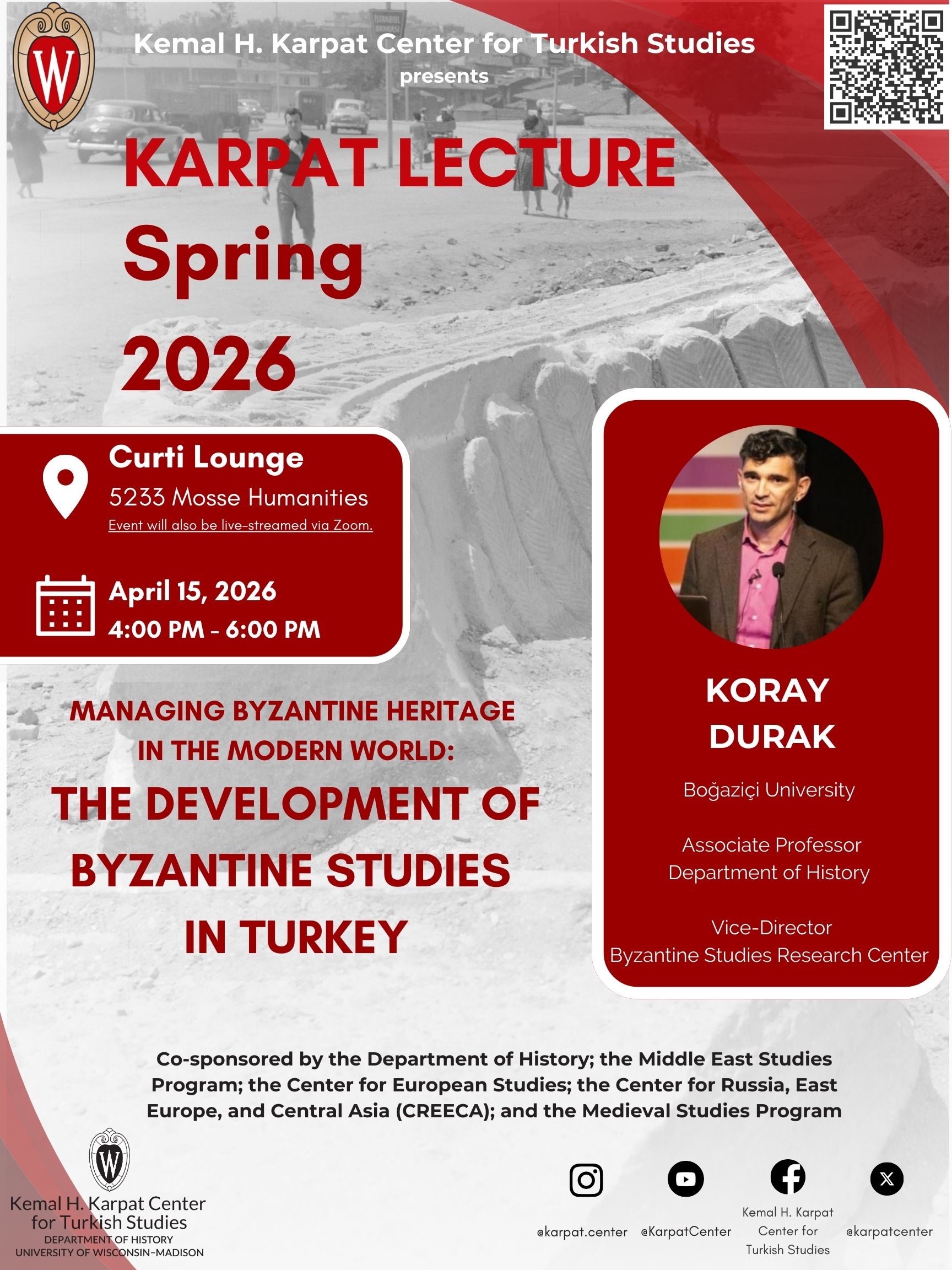
This lecture traces the evolution of Byzantine studies in Turkey from the late Ottoman period to the present, with particular emphasis on the roles played by both state and non-state actors, as well as local and foreign contributors. It examines how shifting political ideologies—including Kemalism, nationalism, Westernism, and religious conservatism—have shaped and reshaped the study of Byzantium time. The talk explores the ways in which Byzantine heritage has been reinterpreted and often instrumentalized across different historical moments. Special attention is given to the domains of education, historiography, and archaeology. The Turkish experience is further contextualized through comparative perspectives, particularly with Eastern and Southeastern Europe, highlighting how modernizing and secularizing nation-states in the 20th century have engaged with the Byzantine past.
Organized by the Kemal H. Karpat Center for Turkish Studies
Co-sponsored by: Department of History · Middle East Studies Program · Center for European Studies · Center for Russia, East Europe, and Central Asia (CREECA) · Medieval Studies Program