Biography
Biography
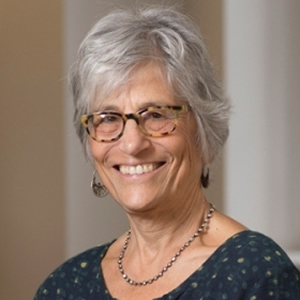
I am currently a professor of history and University Professor of the Humanities at New York University. My early books focused on the historical roots of social policy issues, particularly as they concern gender and family issues. In my later books, I explored other genres of history. My recent books include: The Great Arizona Orphan Abduction (1999) and the biography of great photographer Dorothea Lange (2009), both of which won the Bancroft Prize for best book in US history; Impounded (2008); Feminism Unfinished (2015); The Second Coming of the KKK (2017). My most recent book is another biography of a photographer, Inge Morath: An Illustrated Biography (2018).
Books
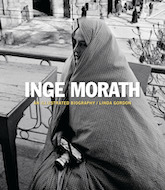
Inge Morath: An Illustrated Biography
Linda Gordon. Inge Morath: An Illustrated Biography. Prestel Publishing, 2018.
An illustrated biography of one of the 20th century’s greatest photographers, this book looks at the life and work of Inge Morath. The late playwright Arthur Miller, speaking of his wife Inge Morath, said “She made poetry out of people and their places over half a century.” Morath’s curiosity, compassion, and bravery show vividly in this biography featuring stunning images from every stage of her career. Biographer Linda Gordon presents Morath traveling across the globe, often as a woman alone, quietly but firmly defying the conventions for what was appropriate for women at the time. Her photographs show her cosmopolitanism, which arose from her love of literature, her fluency in many languages, and her revulsion against Hitler’s Germany, where she spent her teenage years. Her respect for all the world’s cultures, from Spain to Iran to China, made her a kind of visual ethnographer. One of the first women to join the Magnum collective, Morath was a superb portraitist, particularly drawn to artists, such as painter Saul Steinberg, sculptor Louise Bourgeois, and writer Boris Pasternak. She worked mainly in black-and-white but also used color film exquisitely, even early in her career. Through Magnum assignments to document film sets she met Arthur Miller and their subsequent marriage lasted for forty years. Despite a variety of subject matter, Morath’s work is unified by an intimacy and comfort with the world’s many cultures. Truly a citizen of the world, her images are simultaneously universal and personal.
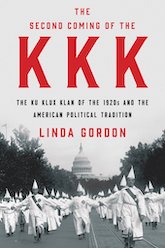
The Second Coming of the KKK: The Ku Klux Klan of the 1920s and the American Political Tradition
Linda Gordon. The Second Coming of the KKK: The Ku Klux Klan of the 1920s and the American Political Tradition. Liveright, 2017.
Extraordinary national acclaim accompanied the publication of award-winning historian Linda Gordon’s disturbing and markedly timely history of the reassembled Ku Klux Klan of the 1920s. Dramatically challenging our preconceptions of the hooded Klansmen responsible for establishing a Jim Crow racial hierarchy in the 1870s South, this “second Klan” spread in states principally above the Mason-Dixon line by courting xenophobic fears surrounding the flood of immigrant “hordes” landing on American shores. “Part cautionary tale, part expose” (Washington Post), The Second Coming of the KKK “illuminates the surprising scope of the movement” (The New Yorker); the Klan attracted four-to-six-million members through secret rituals, manufactured news stories, and mass “Klonvocations” prior to its collapse in 1926—but not before its potent ideology of intolerance became part and parcel of the American tradition. A “must-read” (Salon) for anyone looking to understand the current moment, The Second Coming of the KKK offers “chilling comparisons to the present day” (New York Review of Books).
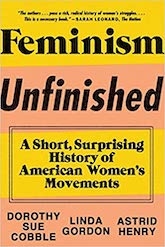
Feminism Unfinished A Short, Surprising History of American Women’s Movements
Dorothy Sue Cobble, Linda Gordon, and Astrid Henry. Feminism Unfinished A Short, Surprising History of American Women’S Movements. Liveright, 2015.
Eschewing the conventional wisdom that places the origins of the American women’s movement in the nostalgic glow of the late 1960s, Feminism Unfinished traces the beginnings of this seminal American social movement to the 1920s, in the process creating an expanded, historical narrative that dramatically rewrites a century of American women’s history. Also challenging the contemporary “lean-in,” trickle-down feminist philosophy and asserting that women’s histories all too often depoliticize politics, labor issues, and divergent economic circumstances, Dorothy Sue Cobble, Linda Gordon, and Astrid Henry demonstrate that the post-Suffrage women’s movement focused on exploitation of women in the workplace as well as on inherent sexual rights. The authors carefully revise our “wave” vision of feminism, which previously suggested that there were clear breaks and sharp divisions within these media-driven “waves.” Showing how history books have obscured the notable activism by working-class and minority women in the past, Feminism Unfinished provides a much-needed corrective.
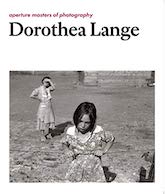
Dorothea Lange: Aperture Masters of Photography
Linda Gordon, and Dorothea Lange. Dorothea Lange: Aperture Masters of Photography. Aperture Publishing, 2014.
The Aperture Masters of Photography Series has become a touchstone of Aperture’s longstanding commitment to introducing the history and art of photography to a broader public. Each volume provides an ongoing comprehensive view of the artists who have helped shape the medium. Initially presented as the History of Photography Series in 1976, the first volume featured Henri Cartier-Bresson and was edited by legendary French publisher Robert Delpire, who cofounded the series with Aperture’s own Michael Hoffman. Twenty volumes have been published in total, each of them devoted to an image-maker whose achievements have accorded them vital importance in the history of photography. Each volume presents an evocative selection of the photographer’s life’s work, introduced with a foreword by a notable curator or historian of each artist. The series will be relaunched in Fall 2014, beginning with books on Paul Strand and Dorothea Lange, elegantly updated and refreshed for today’s photography-hungry audiences, and introducing new, image-by-image commentary and chronologies of the artists’ lives for each of the previously published titles. The series will also include entirely new titles on individual artists. The Aperture Masters of Photography Series is an unparalleled library of both historical and contemporary photographers, and serves as an accessible compilation for anyone studying the history of photography.
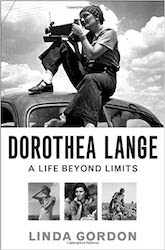
Dorothea Lange: A Life Beyond Limits
Linda Gordon. Dorothea Lange: A Life Beyond Limits. W. W. Norton & Company, 2010.
We all know Dorothea Lange’s iconic photos—the Migrant Mother holding her child, the shoeless children of the Dust Bowl—but now renowned American historian Linda Gordon brings them to three-dimensional life in this groundbreaking exploration of Lange’s transformation into a documentarist. Using Lange’s life to anchor a moving social history of twentieth-century America, Gordon masterfully re-creates bohemian San Francisco, the Depression, and the Japanese-American internment camps. Accompanied by more than one hundred images—many of them previously unseen and some formerly suppressed—Gordon has written a sparkling, fast-moving story that testifies to her status as one of the most gifted historians of our time. Finalist for the Los Angeles Times Book Prize; a New York Times Notable Book; New Yorker’s A Year’s Reading; and San Francisco Chronicle Best Book.

The Moral Property of Women: The History of Birth Control Politics in America
Linda Gordon. The Moral Property of Women: The History of Birth Control Politics in America. University of Illinois Press, 2007.
Linda Gordon’s classic study, The Moral Property of Women, is the most complete history of birth control ever written. It covers the entire history of the intense controversies about reproductive rights that have raged in the United States for more than 150 years, from the earliest attempts of women to organize for the legal control of their bodies to the effects of second-wave feminism. Gordon defines the role that birth control has played in society’s attitudes toward women, sexuality, and gender equality, arguing that reproductive control has always been central to women’s status. She shows how opposition to it has long been part of the conservative opposition to gender equality.
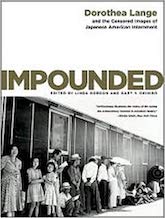
Impounded Dorothea Lange and the Censored Images of Japanese American Internment
Linda Gordon (Editor), and Gary Y Okihiro (Editor). Impounded Dorothea Lange and the Censored Images of Japanese American Internment. W. W. Norton & Company, 2006.
Censored by the U.S. Army, Dorothea Lange’s unseen photographs are the extraordinary photographic record of the Japanese American internment saga. This indelible work of visual and social history confirms Dorothea Lange’s stature as one of the twentieth century’s greatest American photographers. Presenting 119 images originally censored by the U.S. Army—the majority of which have never been published—Impounded evokes the horror of a community uprooted in the early 1940s and the stark reality of the internment camps. With poignancy and sage insight, nationally known historians Linda Gordon and Gary Okihiro illuminate the saga of Japanese American internment: from life before Executive Order 9066 to the abrupt roundups and the marginal existence in the bleak, sandswept camps. In the tradition of Roman Vishniac’s A Vanished World, Impounded, with the immediacy of its photographs, tells the story of the thousands of lives unalterably shattered by racial hatred brought on by the passions of war. A San Francisco Chronicle Best Book of 2006.
Heroes of Their Own Lives: The Politics and History of Family Violence–Boston, 1880-1960
Linda Gordon. Heroes of Their Own Lives: The Politics and History of Family Violence–Boston, 1880-1960. University of Illinois Press, 2002.
In this unflinching history of family violence, the historian Linda Gordon traces policies on child abuse and neglect, wife-beating, and incest from 1880 to 1960. Drawing on hundreds of case records from social agencies devoted to dealing with the problem, Gordon chronicles the changing visibility of family violence as gender, family, and political ideologies shifted. From the “discovery” of family violence in the 1870s–-when it was first identified as a social, rather than personal, problem–-to the women’s and civil rights movements of the twentieth century, Heroes of Their Own Lives illustrates how public perceptions of marriage, poverty, alcoholism, mental illness, and responsibility worked for and against the victims of family violence. Powerful, moving, and tightly argued, Heroes of Their Own Lives shows family violence to be an indicator of larger social problems. Examining its sources as well as its treatment, Gordon offers both an honest understanding of the problem and an unromantic view of the difficulties in stopping it.
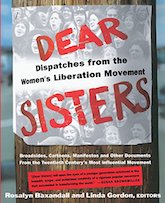
Dear Sisters: Dispatches from the Women’s Liberation Movement
Rosalyn Baxandall (Editor), and Linda Gordon (Editor). Dear Sisters: Dispatches from the Women’S Liberation Movement. Basic Books Publishing, 2001.
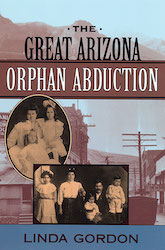
The Great Arizona Orphan Abduction
Linda Gordon. The Great Arizona Orphan Abduction. Harvard University Press, 2001.
In 1904, New York nuns brought forty Irish orphans to a remote Arizona mining camp, to be placed with Catholic families. The Catholic families were Mexican, as was the majority of the population. Soon the town’s Anglos, furious at this “interracial” transgression, formed a vigilante squad that kidnapped the children and nearly lynched the nuns and the local priest. The Catholic Church sued to get its wards back, but all the courts, including the U.S. Supreme Court, ruled in favor of the vigilantes. The Great Arizona Orphan Abduction tells this disturbing and dramatic tale to illuminate the creation of racial boundaries along the Mexican border. Clifton/Morenci, Arizona, was a “Wild West” boomtown, where the mines and smelters pulled in thousands of Mexican immigrant workers. Racial walls hardened as the mines became big business and whiteness became a marker of superiority. These already volatile race and class relations produced passions that erupted in the “orphan incident.” To the Anglos of Clifton/Morenci, placing a white child with a Mexican family was tantamount to child abuse, and they saw their kidnapping as a rescue. Women initiated both sides of this confrontation. Mexican women agreed to take in these orphans, both serving their church and asserting a maternal prerogative; Anglo women believed they had to “save” the orphans, and they organized a vigilante squad to do it. In retelling this nearly forgotten piece of American history, Linda Gordon brilliantly recreates and dissects the tangled intersection of family and racial values, in a gripping story that resonates with today’s conflicts over the “best interests of the child.”
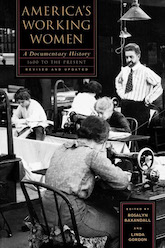
America’s Working Women: A Documentary History, 1600 to the Present
Rosalyn Baxandall (Editor), and Linda Gordon (Editor). America’S Working Women: A Documentary History, 1600 to the Present. W. W. Norton & Company, 1996.
A landmark work when it appeared in 1976, America’s Working Women helped form the field of women’s studies and transform labor history. Now the authors have enlarged the dimensions of this important anthology; more than half the selections and all the introductory material are new. Spanning the years from 1600 to the present, selections from diaries, popular magazines, historical works, oral histories, letters, songs, poetry, and fiction show women’s creativity in supporting themselves, their families, and organizations or associations. Slave women recall their field work, family work, and sabotage. We see Indian women farming, and we also see the white culture coercing Indian women to give up farming. We see women in industry playing a central part in the union movement while facing the particular hazards of women’s jobs and working conditions. New selections show the historical origins of today’s important issues: sexual harassment, equal pay, “sex work,” work in the underground economy, work in the home, and shift work. With an expanded focus on women from all racial and ethnic backgrounds and regions, America’s Working Women grounds us in the battles women have fought and the ones they are in the process of winning.