Alumni Bookshelf
Submit a book to the Alumni Bookshelf

Power and the Politics of Oil in the Soviet South Caucasus: Periphery Unbound, 1920-29
Sara Brinegar. Power and the Politics of Oil in the Soviet South Caucasus: Periphery Unbound, 1920-29. Bloomsbury Academic, 2024.
Sara G. Brinegar’s book is the first to show how the politics of oil intersected with the establishment of Soviet power in the Caucasus; it reveals how the Soviets cooperated and negotiated with the local elite, rather than merely subsuming them. More broadly, Power and the Politics of Oil in the Soviet South Caucasus demonstrates not only how the Bolsheviks understood and exploited oil, but how the needs of the industry shaped Bolshevik policy. Brinegar reflects on the huge geopolitical importance of oil at the end of World War I and the Russian Civil War. She discusses how the reserves sitting idle in the oil fields of Baku, the capital of the newly independent Azerbaijan Democratic Republic, and the center of the fallen empire’s oil reserves were no exception to this. With the Soviet leadership in Moscow intent on capturing the fields in the first few months of 1920, this book examines the Soviet project to rebuild Baku’s oil industry in the aftermath of these wars and the political significance of oil in the formation of the Soviet Union.
Raising the Living Dead: Rehabilitative Corrections in Puerto Rico and the Caribbean
Alberto Ortiz. Raising the Living Dead: Rehabilitative Corrections in Puerto Rico and the Caribbean. The University of Chicago Press, 2023.
An eye-opening look at how incarcerated people, health professionals, and others behind and beyond bars came together to problem-solve incarceration. Raising the Living Dead is a history of Puerto Rico’s carceral rehabilitation system that brings to life the interactions of incarcerated people, their wider social networks, and health care professionals. Alberto Ortiz Díaz describes the ways that multiple communities of care came together both inside and outside of prisons to imagine and enact solution-oriented cultures of rehabilitation from the 1930s to the 1960s. Scientific and humanistic approaches to well-being were deliberately fused to raise the “living dead,” an expression that reemerged in the modern Caribbean to refer to prisoners. These reform groups sought to raise incarcerated people physically, mentally, socially, spiritually, and civically. The book is based on deep, original archival research into the Oso Blanco (White Bear) penitentiary in Puerto Rico, yet it situates its study within Puerto Rico’s broader carceral archipelago and other Caribbean prisons. The agents of this history include not only physical health professionals, but also psychologists and psychiatrists, social workers, spiritual and religious practitioners, and, of course, the prisoners and their families. By following all these groups and emphasizing the interpersonal exercise of power, Ortiz Díaz tells a story that goes beyond debates about structural and social control. The book addresses key issues in the history of prisons and the histories of medicine and belief, including how prisoners’ different racial, class, and cultural identities shaped their incarceration and how professionals living in a colonial society dealt with the challenge of rehabilitating prisoners for citizenship. Raising the Living Dead is not just about convicts, their immediate interlocutors, and their contexts, however, but about how together these open a window into the history of social uplift projects within the (neo)colonial societies of the Caribbean. There is no book like this in Caribbean historiography; few examine these themes in the larger literature on the history of prisons.
La politique sur les marchés. Travail, genre et citoyenneté dans la France révolutionnaire
Katie Jarvis. La Politique Sur Les marchés. Travail, Genre Et Citoyenneté Dans La France révolutionnaire. Presses Universitaires de Rennes, 2023.
This book mobilizes politics, economics and gender studies to examine in all its diversity the notion of citizenship founded by the Dames des Halles during the French Revolution through everyday commerce. Essential retailers, traditional representatives of the Third Estate, leaders of the famous march on Versailles, these women of the Parisian markets are at the heart of revolutionary politics. This innovative book explores the political activism and economic practices of the Dames des Halles from 1789 to 1799. It shows how certain market actors shape nascent democracy and capitalism through the most ordinary transactions. Tracing their struggles around commercial space, paper money, price controls, taxes, and literary stereotypes, the book presents the enterprise of the Dames des Halles and their revolutionary companions to erect contribution through work as a cornerstone of civic legitimacy. In doing so, it challenges the narrative that the Revolution inaugurates an inherently masculine citizenship. With the support of the Institute for Scholarship in the Liberal Arts, University of Notre Dame (Indiana, USA).
The Fate of Peruvian Democracy: Political Violence, Human Rights, and the Legal Left
Tamara Feinstein. The Fate of Peruvian Democracy: Political Violence, Human Rights, and the Legal Left. University of Notre Dame, 2023.
Tamara Feinstein investigates the bloody Shining Path conflict’s effect on the legal Left in late-twentieth-century Peru, illustrating the catastrophic impact state and insurgent violence can have on the growth and resilience of democratic political actors during times of war. In this engaging historical study, Tamara Feinstein chronicles the late-twentieth-century Shining Path conflict and argues that it significantly contributed to the rupture and disintegration of the noninsurgent legal Left in Peru by deepening preexisting divisions and eradicating an entire generation of leaders. Using a combination of oral histories, archival documents, contemporary media accounts, and participant observation of commemorations, Feinstein maps the trajectory of the Peruvian Left’s rise and fall by analyzing two emblematic human rights cases that occurred at the Left’s zenith and nadir: the state-based violence of the 1986 Lima prison massacres and the 1992 Shining Path assassination of leftist shantytown leader María Elena Moyano. The lessons found in The Fate of Peruvian Democracy reach beyond Peru to connect with other Latin American countries. Peru’s story illustrates the difficulties of accumulating political force during times of violence, underscores how struggles for self-defense can complicate ideological stances on violence, and helps explain the unevenness of the resurgence of the Left (the so-called “pink tide”) in Latin America in the twenty-first century. The book contributes to debates on memory and human rights in Peru and Latin America where divisions over how to remember the war retraced the fault lines of earlier debates over democracy and violence.
Tōhoku Unbounded: Regional Identity and the Mobile Subject in Prewar Japan
Anne Giblin Gedacht. Tōhoku Unbounded: Regional Identity and the Mobile Subject in Prewar Japan. Brill, 2023.
In 1870, a prominent samurai from Tōhoku sells his castle to become an agrarian colonist in Hokkaidō. Decades later, a man also from northeast Japan stows away on a boat to Canada and establishes a salmon roe business. By 1930, an investigative journalist travels to Brazil and writes a book that wins the first-ever Akutagawa Prize. In the 1940s, residents from the same area proclaim that they should lead Imperial Japan in colonizing all of Asia. Across decades and oceans, these fractured narratives seem disparate, but show how mobility is central to the history of Japan’s Tōhoku region, a place often stereotyped as a site of rural stasis and traditional immobility, thereby collapsing boundaries between local, national, and global studies of Japan. This book examines how multiple mobilities converge in Japan’s supposed hinterland. Drawing on research from three continents, this monograph demonstrates that Tohoku’s regional identity is inextricably intertwined with Pacific migrations.
The Rise and Fall of Dispensationalism: How the Evangelical Battle over the End Times Shaped a Nation
Daniel G. Hummel. The Rise and Fall of Dispensationalism: How the Evangelical Battle over the End Times Shaped a Nation. Wm. B. Eerdmans Publishing Company, 2023.
A fascinating history of dispensationalism and its influence on popular culture, politics, and religion. In The Rise and Fall of Dispensationalism, Daniel G. Hummel illuminates how dispensationalism, despite often being dismissed as a fringe end-times theory, shaped Anglo-American evangelicalism and the larger American cultural imagination. Hummel locates dispensationalism’s origin in the writings of the nineteenth-century Protestant John Nelson Darby, who established many of the hallmarks of the movement, such as premillennialism and belief in the rapture. Though it consistently faced criticism, dispensationalism held populist, and briefly scholarly, appeal—visible in everything from turn-of-the-century revivalism to apocalyptic bestsellers of the 1970s to current internet conspiracy theories. Measured and irenic, Hummel objectively evaluates evangelicalism’s most resilient and contentious popular theology. As the first comprehensive intellectual-cultural history of its kind, The Rise and Fall of Dispensationalism is a must-read for students and scholars of American religion.

Indigenizing the Cold War: The Border Patrol Police and Nation-Building in Thailand
Sinae Hyun. Indigenizing the Cold War: The Border Patrol Police and Nation-Building in Thailand. University of Hawaii Press, 2023.
The Border Patrol Police (BPP) of Thailand was formed as a United States CIA’s paramilitary intelligence force in the early 1950s. In the early 1960s, changes in Thailand’s political leadership and the US government’s strategies for fighting the spread of communism in Southeast Asia led to a transformation of the BPP. The organization became a civic action agency supported by the US Agency for International Development and the Thai monarchy. Its civic actions, pinned on advancing anticommunist modernization, civilian counterinsurgency, and royalist nationalism, soon extended from the margins to the center of Thailand, and contributed to building the border of “Thainess” (khwam pen thai). The growing tension between the royalist network, consisting of military and rightwing groups, and the democratization movements culminated in a massacre. On October 6, 1976, the Village Scout, a rural vigilante group that the BPP created through its civic actions, and the Police Aerial Reinforcement Unit (PARU), a subunit of the BPP, attacked peaceful protesters at Thammasat University. The success of a military coup on the same day solidified the victory of the royalist network, and it would continue to dominate Thai politics and society into the post–Cold War era. Through a study of the Border Patrol Police’s transformations, Indigenizing the Cold War shows how the Thai ruling elite unfailingly pursued their nation-building. With an introduction of the “indigenization” concept and an in-depth analysis of postcolonial nation-building, this work challenges conventional Cold War studies. The Cold War in Thailand was not always and only about an ideological conflict between the communist and anticommunist. It was a war between the local ruling elite and the people, each pushing forward their visions for constructing a new nation-state. The “indigenization” framework helps one to see the nature and impacts of the collaboration between global superpowers and the Asian local ruling elite; it exposes an arrangement that took advantage of the American Cold War to legitimize and continue their authoritarian regimes.
Europe’s Welfare Traditions Since 1500 Reform Without End
Thomas McStay Adams. Europe’s Welfare Traditions Since 1500 Reform Without End. Bloomsbury, 2023.
Tracing the interwoven traditions of modern welfare states in Europe over five centuries, Thomas McStay Adams explores social welfare from Portugal, France, and Italy to Britain, Belgium and Germany. He shows that the provision of assistance to those in need has faced recognizably similar challenges from the 16th century through to the present: how to allocate aid equitably (and with dignity); how to give support without undermining autonomy (and motivation); and how to balance private and public spheres of action and responsibility. Across two authoritative volumes, Adams reveals how social welfare administrators, critics, and improvers have engaged in a constant exchange of models and experience locally and across Europe. The narrative begins with the founding of the Casa da Misericordia of Lisbon in 1498, a model replicated throughout Portugal and its empire, and ends with the relaunch of a social agenda for the European Union at the meeting of the Council of Europe in Lisbon in 2000. Volume 1, which focuses on the period from 1500 to 1700, discusses the concepts of ‘welfare’ and ‘tradition’. It looks at how 16th-century humanists joined with merchants and lawyers to renew traditional charity in distinctly modern forms, and how the discipline of religious reform affected the exercise of political authority and the promotion of economic productivity. Volume 2 examines 18th-century bienfaisance which secularized a Christian humanist notion of beneficence, producing new and sharply contested assertions of social citizenship. It goes on to consider how national struggles to establish comprehensive welfare states since the second half of the 19th century built on the power of the vote as politicians, pushed by activists and advised by experts, appealed to a growing class of industrial workers. Lastly, it looks at how 20th-century welfare states addressed aspirations for social citizenship while the institutional framework for European economic cooperation came to fruition
Continually Working: Black Women, Community Intellectualism, and Economic Justice in Postwar Milwaukee
Crystal Moten. Continually Working: Black Women, Community Intellectualism, and Economic Justice in Postwar Milwaukee. Vanderbilt University Press, 2023.
Continually Working tells the stories of Black working women who resisted employment inequality in Milwaukee, Wisconsin, from the 1940s to the 1970s. The book explores the job-related activism of Black Midwestern working women and uncovers the political and intellectual strategies they used to critique and resist employment discrimination, dismantle unjust structures, and transform their lives and the lives of those in their community. Moten emphasizes the ways in which Black women transformed the urban landscape by simultaneously occupying spaces from which they had been historically excluded and creating their own spaces. Black women refused to be marginalized within the historically white and middle‑class Milwaukee Young Women’s Christian Association (MYWCA), an association whose mission centered on supporting women in urban areas. Black women forged interracial relationships within this organization and made it, not without much conflict and struggle, one of the most socially progressive organizations in the city. When Black women could not integrate historically white institutions, they created their own. They established financial and educational institutions, such as Pressley School of Beauty Culture, which beautician Mattie Pressley DeWese opened in 1946 as a result of segregation in the beauty training industry. This school served economic, educational, and community development purposes as well as created economic opportunities for Black women. Historically and contemporarily, Milwaukee has been and is still known as one of the most segregated cities in the nation. Black women have always contested urban inequality, by making space for themselves and others on the margins. In so doing, they have transformed both the urban landscape and urban history.

Of Light and Struggle: Social Justice, Human Rights, and Accountability in Uruguay
Debbie Sharnak. Of Light and Struggle: Social Justice, Human Rights, and Accountability in Uruguay. University of Pennsylvania Press, 2023.
During the country’s dictatorship from 1973 to 1985, Uruguayans suffered under crushing repression, which included the highest rate of political incarceration in the world. In Of Light and Struggle, Debbie Sharnak explores how activists, transnational social movements, and international policymakers collaborated and clashed in response to this era and during the country’s transition back to democratic rule. At the heart of the book is an examination of how the language and politics of human rights shifted over time as a result of conflict and convergence between local, national, and global dynamics. Sharnak examines the utility and limits of human rights language used by international NGOs, such as Amnesty International, and foreign governments, such as the Carter administration. She does so by exploring tensions between their responses to the dictatorship’s violations and the grassroots struggle for socioeconomic rights as well as new social movements around issues of race, gender, religion, and sexuality in Uruguay. Sharnak exposes how international activists used human rights language to combat repression in foreign countries, how local politicians, unionists, and students articulated more expansive social justice visions, how the military attempted to coopt human rights language for its own purposes, and how broader debates about human rights transformed the fight over citizenship in renewed democratic societies. By exploring the interplay between debates taking place in activists’ living rooms, presidential administrations, and international halls of power, Sharnak uncovers the messy and contingent process through which human rights became a powerful discourse for social change, and thus contributes to a new method for exploring the history of human rights. By looking at this pivotal period in international history, Of Light and Struggle suggests that discussions around the small country on the Río de la Plata had global implications for the possibilities and constraints of human rights well beyond Uruguay’s shores.
Uruguay in Transnational Perspective
Pedro Cameselle-Pesce (Co-editor), and Debbie Sharnak (Co-editor). Uruguay in Transnational Perspective. Routledge, 2023.
Most of the world knows Uruguay only for its soccer team, or its vaunted title as the “Switzerland of South America,” an enduring moniker given to the country for its earlier social welfare policies and relative stability. Even many scholarly narratives of Latin America fail to integrate the country into historical accounts, reducing the country to, as one historian has explained, “a periphery within the periphery that is Latin America.” This volume challenges that characterization, taking one of the most innovative small states in the region and analyzing its transnational influence on the world. Uruguay in Transnational Perspective takes a broad look at the country’s three-hundred-year history, connecting imperial practices and resistance, Afro-Latin movements, and feminist firebrands, among others to understand how the country and its citizens have influenced and shaped regional and global historical narratives in a way that has thus far been overlooked. With a true collaboration between scholars of the Global North and Global South, the volume is both transnational in its scholarly focus and its production. Its interdisciplinary nature offers a broad range of perspectives from leading scholars in the field to re-evaluate Uruguay’s impact on the global stage.
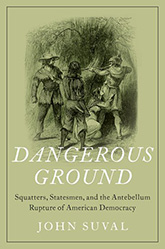
Dangerous Ground: Squatters, Statesmen, and the Antebellum Rupture of American Democracy
John Suval. Dangerous Ground: Squatters, Statesmen, and the Antebellum Rupture of American Democracy. Oxford University Press, 2022.
The squatter–defined by Noah Webster as “one that settles on new land without a title”–had long been a fixture of America’s frontier past. In the antebellum period, white squatters propelled the Jacksonian Democratic Party to dominance and the United States to the shores of the Pacific. In a bold reframing of the era’s political history, John Suval explores how Squatter Democracy transformed the partisan landscape and the map of North America, hastening clashes that ultimately sundered the nation. With one eye on Washington and the other on flashpoints across the West, Dangerous Ground tracks squatters from the Mississippi Valley and cotton lands of Texas, to Oregon, Gold Rush-era California, and, finally, Bleeding Kansas. The sweeping narrative reveals how claiming western domains became stubbornly intertwined with partisan politics and fights over the extension of slavery. While previous generations of statesmen had maligned and sought to contain illegal squatters, Democrats celebrated squatters as pioneering yeomen and encouraged their land grabs through preemption laws, Indian removal, and hawkish diplomacy. As America expanded, the party’s power grew. The US-Mexican War led many to ask whether these squatters were genuine yeomen or forerunners of slavery expansion. Some northern Democrats bolted to form the Free Soil Party, while southerners denounced any hindrance to slavery’s spread. Faced with a fracturing party, Democratic leaders allowed territorial inhabitants to determine whether new lands would be slave or free, leading to a destabilizing transfer of authority from Congress to frontier settlers. Squatters thus morphed from agents of Manifest Destiny into foot soldiers in battles that ruptured the party and the country. Deeply researched and vividly written, Dangerous Ground illuminates the overlooked role of squatters in the United States’ growth into a continent-spanning juggernaut and in the onset of the Civil War, casting crucial light on the promises and vulnerabilities of American democracy.
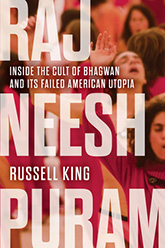
Rajneeshpuram: Inside the Cult of Bhagwan and Its Failed American Utopia
Russell King. Rajneeshpuram: Inside the Cult of Bhagwan and Its Failed American Utopia. Chicago Review Press, 2022.
In 1981, ambitious young Ma Anand Sheela transported the Indian guru Bhagwan Shree Rajneesh to the United States to fulfill his dream of creating a utopia for his thousands of disciples. Four years later, the incendiary Rajneeshpuram commune in Oregon collapsed under the weight of audacious criminal conspiracies hatched in its inner sanctum, including the largest bioterrorism attack in US history, an unprecedented election fraud scheme, and multiple attempted murders. Rajneeshpuram explores how this extraordinary spiritual community, featured in the Netflix docuseries Wild Wild Country, went so wrong. Drawing from extensive interviews with former disciples and an exhaustive review of commune records, government and police files, and archival materials, author Russell King probes the charismatic power that Bhagwan (later known as Osho) and Sheela exercised over the community and the turbulent legal and political environment that left commune leaders ready to deceive, poison, and even murder to preserve their home and their master. Rajneeshpuram is a fresh examination of the Rajneesh story, using newly available information and interviews with high-ranking disciples who have never before shared their stories.
Poland in a Colonial World Order: Adjustments and Aspirations, 1918–1939
Piotr Puchalski. Poland in a Colonial World Order: Adjustments and Aspirations, 1918–1939. Routledge, 2022.
Poland in a Colonial World Order is a study of the interwar Polish state and empire building project in a changing world of empires, nation-states, dominions, protectorates, mandates, and colonies. Drawing from a wide range of sources spanning two continents and five countries, Piotr Puchalski examines how Polish elites looked to expansion in South America and Africa as a solution to both real problems, such as industrial backwardness, and perceived issues, such as the supposed overrepresentation of Jews in “liberal professions.” He charts how, in partnership with other European powers and international institutions such as the League of Nations, Polish leaders made attempts to channel emigration to South America, to establish direct trade with Africa, to expedite national minorities to far-away places, and to tap into colonial resources around the globe. Puchalski demonstrates the intersection between such national policies and larger processes taking place at the time, including the internationalist turn of colonialism and the global fascination with technocratic solutions. Carefully researched, the volume is key reading for scholars and advanced students of twentieth-century European history.
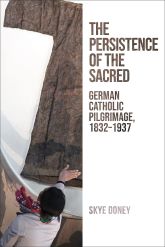
The Persistence of the Sacred: German Catholic Pilgrimage, 1832–1937
Skye Doney. The Persistence of the Sacred: German Catholic Pilgrimage, 1832–1937. University of Toronto Press, 2022.
For millions of Catholic believers, pilgrimage has offered possible answers to the mysteries of sickness, life, and death. The Persistence of the Sacred explores the religious worldviews of Europeans who travelled to Trier and Aachen, two cities in Western Germany, to view the sacred relics in their cathedrals. The Persistence of the Sacred challenges the narrative of widespread secularization in Europe during the long nineteenth century and reveals that religious practices thrived well into the modern period. It shows both that men were more active in their faith than historians have realized and how clergy and pilgrims did not always agree about the meaning of relics. Drawing on private ephemeral and material sources including films, photographs, postcards, correspondence, and souvenirs, Skye Doney uncovers the enduring and diverse sacred worldview of German Catholics and argues that laity and clergy had very different perspectives on the meaning of pilgrimage. Recovering the history of Catholic pilgrimage, The Persistence of the Sacred aims to understand the relationship between relics and religiosity, between modernity and faith, and between humanity and God.
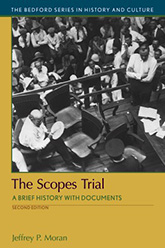
The Scopes Trial: A Brief History with Documents
Jeffrey Moran. The Scopes Trial: A Brief History With Documents. Bedford Books, 2021.
The Scopes trial shocked America. Tennessee school teacher John Scopes brought the question of teaching evolution in schools to every dinner table, and it remains an essential topic in any course on American History, the History of Education, and Religious History. The second edition features a lively interpretative introduction that provides an accessible analysis of the trial and its impact on the moral fiber of the country and the educational system, and examines the race and gender issues that shook out of the debate. The new edition includes scholarship updates throughout as well as a new section analyzing the relationship between teaching evolution, creationism, and intelligent design in the decades following the trial. The author has excerpted the crucial exchanges from the trial transcript itself, and includes these along with reactions to the trial, taken from newspaper reports, letters, and magazine articles. Telling political cartoons and evocative photographs add a colorful dimension to this collection. New images include a cartoon of Clarence Darrow and a photograph of evangelical preachers touring Dayton while new text documents on the New Woman and religious alternatives in the 1920s offer exciting opportunities for students seeking to understand the culture of the Jazz Age. Updated pedagogical support in the new edition includes expanded headnotes, revised questions for consideration, and an updated bibliography. Available in print and e-book formats.
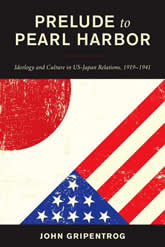
Prelude to Pearl Harbor: Ideology and Culture in US-Japan Relations, 1919–1941
John Gripentrog. Prelude to Pearl Harbor: Ideology and Culture in US-Japan Relations, 1919–1941. Rowman & Littlefield Publishers, 2021.
Reconsidering the origins of World War II in Asia and the Pacific, this book focuses on the diplomatic and cultural interactions between the United States and Japan in the interwar period. Challenging as well as amplifying accepted interpretations, historian John Gripentrog argues that competing ideologies of world order—particularly the rift between liberal internationalism and Pan-Asianism—was at the heart of the conflict between the two powers. He also explores the US reception of the Japanese government’s efforts to legitimize its regionalist aspirations through soft power, and how these efforts ended up backfiring.
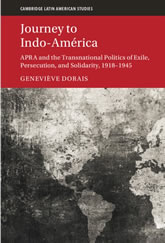
Journey to Indo-América: APRA and the Transnational Politics of Exile, Persecution, and Solidarity, 1918–1945
Geneviève Dorais. Journey to Indo-América: APRA and the Transnational Politics of Exile, Persecution, and Solidarity, 1918–1945. Cambridge University Press, 2021.
The American Popular Revolutionary Alliance (APRA) was a Peruvian political party that played an important role in the development of the Latin American left during the first half of the 1900s. In Journey to Indo-América, GenevieÌve Dorais examines how and why the anti-imperialist project of APRA took root outside of Peru as well as how APRA’s struggle for political survival in Peru shaped its transnational consciousness. Dorais convincingly argues that APRA’s history can only be understood properly within this transnational framework, and through the collective efforts of transnational organization rather than through an exclusive emphasis on political figures like APRA leader, Víctor Raúl Haya de la Torre. Tracing circuits of exile and solidarity through Latin America, the United States, and Europe, Dorais seeks to deepen our appreciation of APRA’s ideological production through an exploration of the political context in which its project of hemispheric unity emerged.
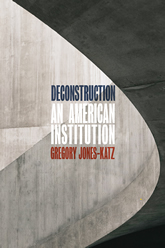
Deconstruction: An American Institution
Gregory Jones-Katz. Deconstruction: An American Institution. University of Chicago Press, 2021.
The basic story of the rise, reign, and fall of deconstruction as a literary and philosophical groundswell is well known among scholars. In this intellectual history, Gregory Jones-Katz aims to transform the broader understanding of a movement that has been frequently misunderstood, mischaracterized, and left for dead—even as its principles and influence transformed literary studies and a host of other fields in the humanities. Deconstruction begins well before Jacques Derrida’s initial American presentation of his deconstructive work in a famed lecture at Johns Hopkins University in 1966 and continues through several decades of theoretic growth and tumult. While much of the subsequent story remains focused, inevitably, on Yale University and the personalities and curriculum that came to be lumped under the “Yale school” umbrella, Deconstruction makes clear how crucial feminism, queer theory, and gender studies also were to the lifeblood of this mode of thought. Ultimately, Jones-Katz shows that deconstruction in the United States—so often caricatured as a French infection—was truly an American phenomenon, rooted in our preexisting political and intellectual tensions, that eventually came to influence unexpected corners of scholarship, politics, and culture.
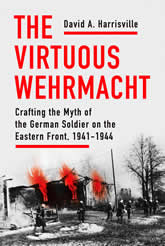
The Virtuous Wehrmacht
David Harrisville. The Virtuous Wehrmacht. Cornell University Press, 2021.
The Virtuous Wehrmacht explores the myth of the German armed forces’ innocence during World War II by reconstructing the moral world of German soldiers on the Eastern Front. How did they avoid feelings of guilt about the many atrocities their side committed? David A. Harrisville compellingly demonstrates that this myth of innocence was created during the course of the war itself—and did not arise as a postwar whitewashing of events. In 1941 three million Wehrmacht troops overran the border between German- and Soviet-occupied Poland, racing toward the USSR in the largest military operation in modern history. Over the next four years, they embarked on a campaign of wanton brutality, murdering countless civilians, systemically starving millions of Soviet prisoners of war, and actively participating in the genocide of Eastern European Jews. After the war, however, German servicemen insisted that they had fought honorably and that their institution had never involved itself in Nazi crimes. Drawing on more than two thousand letters from German soldiers, contextualized by operational and home front documents, Harrisville shows that this myth was the culmination of long-running efforts by the army to preserve an illusion of respectability in the midst of a criminal operation. The primary authors of this fabrication were ordinary soldiers cultivating a decent self-image and developing moral arguments to explain their behavior by drawing on a constellation of values that long preceded Nazism. The Virtuous Wehrmacht explains how the army encouraged troops to view themselves as honorable representatives of a civilized nation, not only racially but morally superior to others.
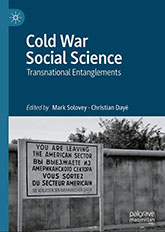
Cold War Social Science: Transnational Entanglements
Christian Daye (Co-editor), and Mark Solovey (Co-editor). Cold War Social Science: Transnational Entanglements. Palgrave Macmillan, 2021.
This book explores how the social sciences became entangled with the global Cold War. While duly recognizing the realities of nation states, national power, and national aspirations, the studies gathered here open up new lines of transnational investigation. Considering developments in a wide array of fields – anthropology, development studies, economics, education, political science, psychology, science studies, and sociology – that involved the movement of people, projects, funding, and ideas across diverse national contexts, this volume pushes scholars to rethink certain fundamental points about how we should understand – and thus how we should study – Cold War social science itself.
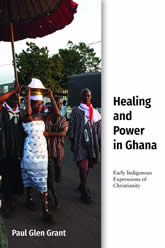
Healing and Power in Ghana: Early Indigenous Expressions of Christianity
Paul Grant. Healing and Power in Ghana: Early Indigenous Expressions of Christianity. Baylor University Press, 2020.
In nineteenth-century Ghana, regional warfare rooted in profound social and economic transformations led thousands of displaced people to seek refuge in the small mountain kingdom of Akuapem. There they encountered missionaries from Germany whose message of sin and forgiveness struck many of these newcomers as irrelevant to their needs. However, together with Akuapem’s natives, these newcomers began reformulating Christianity as a ritual tool for social and physical healing, as well as power, in a dangerous spiritual and human world. The result was Ghana’s oldest African-initiated variant of Christianity: a homegrown expression of unbroken moral, political, and religious priorities. Focusing on the southeastern Gold Coast in the middle of the nineteenth century, Healing and Power in Ghana identifies patterns of indigenous reception, rejection, and reformulation of what had initially arrived, centuries earlier, as a European trade religion. Paul Grant draws on a mixture of European and indigenous sources in several languages, building on recent scholarship in world Christianity to address the question of conversion through the lens of the indigenous moral imagination. This approach considers, among other things, the conditions in which Akuapem locals and newly arrived displaced persons might find Christianity useful or applicable to their needs. This is no traditional history of the European-African religious encounter. Ghanaian Christians identified the missionaries according to preexisting political and religious categories—as a new class of shrine priests. They resolved their own social crises in ways the missionaries were unable to understand. In effect, Christianity became an indigenous religion years before indigenous people converted in any appreciable numbers. By foregrounding the sacrificial idiom shared by locals, missionaries, and native thinkers, Healing and Power in Ghana presents a new model of scholarship for both West African history and world Christianity.

Social Science for What? Battles Over Public Funding for the “Other Sciences” at the National Science Foundation
Mark Solovey. Social Science for What? Battles Over Public Funding for the “Other Sciences” At the National Science Foundation. MIT Press, 2020.
In the early Cold War years, the U.S. government established the National Science Foundation (NSF), a civilian agency that soon became widely known for its dedication to supporting first-rate science. The agency’s 1950 enabling legislation made no mention of the social sciences, although it included a vague reference to “other sciences.” Nevertheless, as Mark Solovey shows in this book, the NSF also soon became a major—albeit controversial—source of public funding for them. Solovey’s analysis underscores the long-term impact of early developments, when the NSF embraced a “scientistic” strategy wherein the natural sciences represented the gold standard, and created a social science program limited to “hard-core” studies. Along the way, Solovey shows how the NSF’s efforts to support scholarship, advanced training, and educational programs were shaped by landmark scientific and political developments, including McCarthyism, Sputnik, reform liberalism during the 1960s, and a newly energized conservative movement during the 1970s and 1980s. Finally, he assesses the NSF’s relevance in a “post-truth” era, questions the legacy of its scientistic strategy, and calls for a separate social science agency—a National Social Science Foundation. Solovey’s study of the battles over public funding is crucial for understanding the recent history of the social sciences as well as ongoing debates over their scientific status and social value. The open access edition of this book was made possible by generous funding from the MIT Libraries.
Making a Mass Institution: Indianapolis and the American High School
Kyle P. Steele. Making a Mass Institution: Indianapolis and the American High School. Rutgers University Press, 2020.
Making a Mass Institution describes how Indianapolis, Indiana created a divided and unjust system of high schools over the course of the twentieth century, one that effectively sorted students geographically, economically, and racially. Like most U.S. cities, Indianapolis began its secondary system with a singular, decidedly academic high school, but ended the 1960s with multiple high schools with numerous paths to graduation. Some of the schools were academic, others vocational, and others still for what was eventually called “life adjustment.” This system mirrored the multiple forces of mass society that surrounded it, as it became more bureaucratic, more focused on identifying and organizing students based on perceived abilities, and more anxious about teaching conformity to middle-class values. By highlighting the experiences of the students themselves and the formation of a distinct, school-centered youth culture, Kyle P. Steele argues that high school, as it evolved into a mass institution, was never fully the domain of policy elites, school boards and administrators, or students, but a complicated and ever-changing contested meeting place of all three.
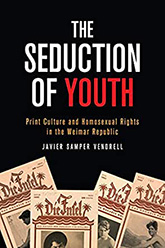
The Seduction of Youth: Print Culture and Homosexual Rights in the Weimar Republic
Javier Samper Vendrell. The Seduction of Youth: Print Culture and Homosexual Rights in the Weimar Republic. University of Toronto Press, 2020.
A simple man from the provinces, Friedrich Radszuweit merged popular culture, consumerism, and politics as the leader of the League for Human Rights, Germany’s first mass homosexual organization. The Seduction of Youth is the first study to focus on the League and its leader, using his position at the centre of the Weimar-era gay rights movement to tease out the diverging political strategies and contradictory tactics that distinguished the movement. By examining news articles and opinion pieces, as well as literary texts and photographs in the League’s numerous pulp magazines for homosexuals, Javier Samper Vendrell reconstructs forgotten aspects of the history of same-sex desire and subjectivity. While recognizing the possibilities of liberal rights for sexual freedom during the Weimar Republic, the League’s “respectability politics” failed in part because Radszuweit’s own publications contributed to the idea that homosexual men were considered a threat to youth, doing little to change the views of the many people who believed in homosexual seduction – a homophobic trope that endured well into the twentieth century.

Tiny You: A Western History of the Anti-Abortion Movement
Jennifer Holland. Tiny You: A Western History of the Anti-Abortion Movement. University of California Press, 2020.
Caroline Bancroft History Prize 2021, Denver Public Library Armitage-Jameson Prize 2021, Coalition of Western Women’s History David J. Weber Prize 2021, Western History Association W. Turrentine Jackson Prize 2021, Western History Association Tiny You tells the story of one of the most successful political movements of the twentieth century: the grassroots campaign against legalized abortion. While Americans have rapidly changed their minds about sex education, pornography, arts funding, gay teachers, and ultimately gay marriage, opposition to legalized abortion has only grown. As other socially conservative movements have lost young activists, the pro-life movement has successfully recruited more young people to its cause. Jennifer L. Holland explores why abortion dominates conservative politics like no other cultural issue. Looking at anti-abortion movements in four western states since the 1960s—turning to the fetal pins passed around church services, the graphic images exchanged between friends, and the fetus dolls given to children in school—she argues that activists made fetal life feel personal to many Americans. Pro-life activists persuaded people to see themselves in the pins, images, and dolls they held in their hands and made the fight against abortion the primary bread-and-butter issue for social conservatives. Holland ultimately demonstrates that the success of the pro-life movement lies in the borrowed logic and emotional power of leftist activism.
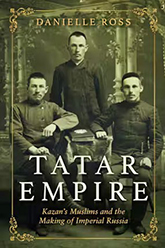
Tatar Empire: Kazan’s Muslims and the Making of Imperial Russia
Danielle Ross. Tatar Empire: Kazan’S Muslims and the Making of Imperial Russia. Indiana University Press, 2020.
In the 1700s, Kazan Tatar (Muslim scholars of Kazan) and scholarly networks stood at the forefront of Russia’s expansion into the South Urals, western Siberia, and the Kazakh steppe. It was there that the Tatars worked with Russian agents, established settlements, and spread their own religious and intellectual cuture that helped shaped their identity in the 19th and early 20th centuries. Kazan Tatars profited economically from Russia’s commercial and military expansion to Muslim lands and began to present themselves as leaders capable of bringing Islamic modernity to the rest of Russia’s Muslim population. Danielle Ross bridges the history of Russia’s imperial project with the history of Russia’s Muslims by exploring the Kazan Tatars as participants in the construction of the Russian empire. Ross focuses on Muslim clerical and commercial networks to reconstruct the ongoing interaction among Russian imperial policy, nonstate actors, and intellectual developments within Kazan’s Muslim community and also considers the evolving relationship with Central Asia, the Kazakh steppe, and western China. Tatar Empire offers a more Muslim-centered narrative of Russian empire building, making clear the links between cultural reformism and Kazan Tatar participation in the Russian eastward expansion.
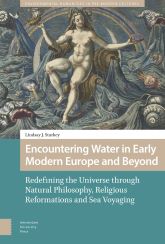
Encountering Water in Early Modern Europe and Beyond: Redefining the Universe through Natural Philosophy, Religious Reformations, and Sea Voyaging
Lindsay Starkey. Encountering Water in Early Modern Europe and Beyond: Redefining the Universe through Natural Philosophy, Religious Reformations, and Sea Voyaging. Amsterdam University Press, 2020.
Both the Christian Bible and Aristotle’s works suggest that water should entirely flood the earth. Though many ancient, medieval, and early modern Europeans relied on these works to understand and explore the relationships between water and earth, sixteenth-century Europeans particularly were especially concerned with why dry land existed. This book investigates why they were so interested in water’s failure to submerge the earth when their predecessors had not been. Analyzing biblical commentaries as well as natural philosophical, geographical, and cosmographical texts from these periods, Lindsay Starkey shows that European sea voyages to the southern hemisphere combined with the traditional methods of European scholarship and religious reformations led sixteenth-century Europeans to reinterpret water and earth’s ontological and spatial relationships. The manner in which they did so also sheds light on how we can respond to our current water crisis before it is too late.

Principles in Power: Latin America and the Politics of U.S. Human Rights Diplomacy
Vanessa Walker. Principles in Power: Latin America and the Politics of U.S. Human Rights Diplomacy. Cornell University Press, 2020.
Vanessa Walker’s Principles in Power explores the relationship between policy makers and nongovernment advocates in Latin America and the United States government in order to explain the rise of anti-interventionist human rights policies uniquely critical of U.S. power during the Cold War. Walker shows that the new human rights policies of the 1970s were based on a complex dynamic of domestic and foreign considerations that was rife with tensions between the seats of power in the United States and Latin America, and the growing activist movement that sought to reform them. By addressing the development of U.S. diplomacy and politics alongside that of activist networks, especially in Chile and Argentina, Walker shows that Latin America was central to the policy assumptions that shaped the Carter administration’s foreign policy agenda. The coup that ousted the socialist president of Chile, Salvador Allende, sparked new human rights advocacy as a direct result of U.S. policies that supported authoritarian regimes in the name of Cold War security interests. From 1973 onward, the attention of Washington and capitals around the globe turned to Latin America as the testing ground for the viability of a new paradigm for U.S. power. This approach, oriented around human rights, required collaboration among activists and state officials in places as diverse as Buenos Aires, Santiago, and Washington, DC. Principles in Power tells the complicated story of the potentials and limits of partnership between government and nongovernment actors. Analyzing how different groups deployed human rights language to reform domestic and international power, Walker explores the multiple and often conflicting purposes of U.S. human rights policy.
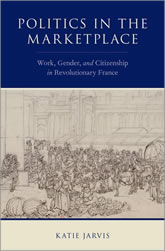
Politics in the Marketplace: Work, Gender, and Citizenship in Revolutionary France
Katie Jarvis. Politics in the Marketplace: Work, Gender, and Citizenship in Revolutionary France. Oxford University Press, 2019.
One of the most dramatic images of the French Revolution is of Parisian market women sloshing through mud and dragging cannons as they marched on Versailles and returned with bread and the king. These market women, the Dames des Halles, sold essential foodstuffs to the residents of the capital but, equally important, through their political and economic engagement, held great revolutionary influence. Politics in the Marketplace examines how the Dames des Halles invented notions of citizenship through everyday trade. It innovatively interweaves the Dames’ political activism and economic practices to reveal how marketplace actors shaped the nature of nascent democracy and capitalism through daily commerce. While haggling over price controls, fair taxes, and acceptable currency, the Dames and their clients negotiated tenuous economic and social contracts in tandem, remaking longstanding Old Regime practices. In this environment, the Dames conceptualized a type of economic citizenship in which individuals’ activities such as buying goods, selling food, or paying taxes positioned them within the body politic and enabled them to make claims on the state. They insisted that their work as merchants served society and demanded that the state pass favorable regulations for them in return. In addition, they drew on their patriotic work as activists and their gendered work as republican mothers to compel the state to provide practical currency and assist indigent families. Thus, their notion of citizenship portrayed useful work, rather than gender, as the cornerstone of civic legitimacy. In this original work, Katie Jarvis challenges the interpretation that the Revolution launched an inherently masculine trajectory for citizenship and reexamines work, gender, and citizenship at the cusp of modern democracy.
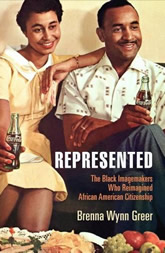
Represented: The Black Imagemakers Who Reimagined African American Citizenship
Brenna Wynn Greer. Represented: The Black Imagemakers Who Reimagined African American Citizenship. University of Pennsylvania Press, 2019.
In 1948, Moss Kendrix, a former New Deal public relations officer, founded a highly successful, Washington, D.C.-based public relations firm, the flagship client of which was the Coca-Cola Company. As the first black pitchman for Coca-Cola, Kendrix found his way into the rarefied world of white corporate America. His personal phone book also included the names of countless black celebrities, such as bandleader Duke Ellington, singer-actress Pearl Bailey, and boxer Joe Louis, with whom he had built relationships in the course of developing marketing campaigns for his numerous federal and corporate clients. Kendrix, along with Ebony publisher John H. Johnson and Life photographer Gordon Parks, recognized that, in the image-saturated world of postwar America, media in all its forms held greater significance for defining American citizenship than ever before. For these imagemakers, the visual representation of African Americans as good citizens was good business. In Represented, Brenna Wynn Greer explores how black entrepreneurs produced magazines, photographs, and advertising that forged a close association between blackness and Americanness. In particular, they popularized conceptions of African Americans as enthusiastic consumers, a status essential to postwar citizenship claims. But their media creations were complicated: subject to marketplace dictates, they often relied on gender, class, and family stereotypes. Demand for such representations came not only from corporate and government clients to fuel mass consumerism and attract support for national efforts, such as the fight against fascism, but also from African Americans who sought depictions of blackness to counter racist ideas that undermined their rights and their national belonging as citizens. The story of how black capitalists made the market work for racial progress on their way to making money reminds us that the path to civil rights involved commercial endeavors as well as social and political activism.
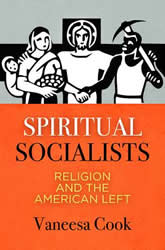
Spiritual Socialists: Religion and the American Left
Vaneesa Cook. Spiritual Socialists: Religion and the American Left. University of Pennsylvania Press, 2019.
Refuting the common perception that the American left has a religion problem, Vaneesa Cook highlights an important but overlooked intellectual and political tradition that she calls “spiritual socialism.” Spiritual socialists emphasized the social side of socialism and believed the most basic expression of religious values—caring for the sick, tired, hungry, and exploited members of one’s community—created a firm footing for society. Their unorthodox perspective on the spiritual and cultural meaning of socialist principles helped make leftist thought more palatable to Americans, who associated socialism with Soviet atheism and autocracy. In this way, spiritual socialism continually put pressure on liberals, conservatives, and Marxists to address the essential connection between morality and social justice. Cook tells her story through an eclectic group of activists whose lives and works span the twentieth century. Sherwood Eddy, A. J. Muste, Myles Horton, Dorothy Day, Henry Wallace, Pauli Murray, Staughton Lynd, and Martin Luther King, Jr. spoke and wrote publicly about the connection between religious values and socialism. Equality, cooperation, and peace, they argued, would not develop overnight, and a more humane society would never emerge through top-down legislation. Instead, they believed that the process of their vision of the world had to happen in homes, villages, and cities, from the bottom up. By insisting that people start treating each other better in everyday life, spiritual socialists transformed radical activism from projects of political policy-making to grass-roots organizing. For Cook, contemporary public figures such as Senator Bernie Sanders, Pope Francis, Reverend William Barber, and Cornel West are part of a long-standing tradition that exemplifies how non-Communist socialism has gained traction in American politics.
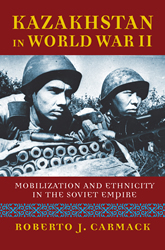
Kazakhstan in World War II: Mobilization and Ethnicity in the Soviet Empire
Roberto J. Carmack. Kazakhstan in World War II: Mobilization and Ethnicity in the Soviet Empire. University Press of Kansas, 2019.
In July 1941, the Soviet Union was in mortal danger. Imperiled by the Nazi invasion and facing catastrophic losses, Stalin called on the Soviet people to “subordinate everything to the needs of the front.” Kazakhstan answered that call. Stalin had long sought to restructure Kazakh life to modernize the local population—but total mobilization during the war required new tactics and produced unique results. Kazakhstan in World War II analyzes these processes and their impact on the Kazakhs and the Soviet Union as a whole. The first English-language study of a non-Russian Soviet republic during World War II, the book explores how the war altered official policies toward the region’s ethnic groups—and accelerated Central Asia’s integration into Soviet institutions. World War II is widely recognized as a watershed for Russia and the Soviet Union—not only did the conflict legitimize prewar institutions and ideologies, it also provided a medium for integrating some groups and excluding others. Kazakhstan in World War II explains how these processes played out in the ethnically diverse and socially “backward” Kazakh republic. Roberto J. Carmack marshals a wealth of archival materials, official media sources, and personal memoirs to produce an in-depth examination of wartime ethnic policies in the Red Army, Soviet propaganda for non-Russian groups, economic strategies in the Central Asian periphery, and administrative practices toward deported groups. Bringing Kazakhstan’s previously neglected role in World War II to the fore, Carmack’s work fills an important gap in the region’s history and sheds new light on our understanding of Soviet identities.
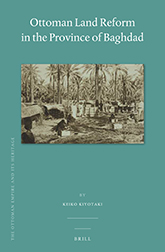
Ottoman Land Reform in the Province of Baghdad
Keiko Kiyotaki. Ottoman Land Reform in the Province of Baghdad. Brill Academic Publishers, 2019.
In Ottoman Land Reform in the Province of Baghdad, Keiko Kiyotaki traces the Ottoman reforms of tax farming and land tenure and establishes that their effects were the key ingredients of agricultural progress. These modernizing reforms are shown to be effective because they were compatible with local customs and tribal traditions, which the Ottoman governors worked to preserve. Ottoman rule in Iraq has previously been considered oppressive and blamed with failure to develop the country. Since the British mandate government’s land and tax policies were little examined, the Ottoman legacy has been left unidentified. This book proves that Ottoman land reforms led to increases in agricultural production and tax revenue, while the hasty reforms enacted by the mandate government ignoring indigenous customs caused new agricultural and land problems.

Foreign Friends: Syngman Rhee, American Exceptionalism, and the Division of Korea
David P. Fields. Foreign Friends: Syngman Rhee, American Exceptionalism, and the Division of Korea. University Press of Kentucky, 2019.
The division of Korea in August 1945 was one of the most consequential foreign policy decisions of the twentieth century. Despite the enormous impact this split has had on international relations from the Cold War to the present, comparatively little has been done to explain the decision. In Foreign Friends: Syngman Rhee, American Exceptionalism, and the Division of Korea, author David P. Fields argues that the division resulted not from a snap decision made by US military officers at the end of World War II but from a forty-year lobbying campaign spearheaded by Korean nationalist Syngman Rhee. Educated in an American missionary school in Seoul, Rhee understood the importance of exceptionalism in American society. Alleging that the US turned its back on the most rapidly Christianizing nation in the world when it acquiesced to Japan’s annexation of Korea in 1905, Rhee constructed a coalition of American supporters to pressure policymakers to right these historical wrongs by supporting Korea’s independence. Following the attack on Pearl Harbor, Rhee and his Korean supporters reasoned that the American abandonment of Korea had given the Japanese a foothold in Asia, tarnishing the US claim to leadership in the opinion of millions of Asians. By transforming Korea into a moralist tale of the failures of American foreign policy in Asia, Rhee and his camp turned the country into a test case of American exceptionalism in the postwar era. Division was not the outcome they sought, but their lobbying was a crucial yet overlooked piece that contributed to this final resolution. Through its systematic use of the personal papers and diary of Syngman Rhee, as well as its serious examination of American exceptionalism, Foreign Friends synthesizes religious, intellectual, and diplomatic history to offer a new interpretation of US-Korean relations.
Kingship and Justice in the Ottonian Empire
Laura Wangerin. Kingship and Justice in the Ottonian Empire. University of Michigan Press, 2019.
Laura E. Wangerin challenges traditional views of the Ottonian Empire’s rulership. Drawing from a broad array of sources including royal and imperial diplomas, manuscript illuminations, and histories, Ottonian kingship and the administration of justice are investigated using traditional historical and comparative methodologies as well as through the application of innovative approaches such as modern systems theories. This study suggests that distinctive elements of the Ottonians’ governing apparatus, such as its decentralized structure, emphasis on the royal iter, and delegation of authority, were essential features of a highly developed political system. Kingship and Justice in the Ottonian Empire provides a welcome addition to English-language scholarship on the Ottonians, as well as to scholarship dealing with rulership and medieval legal studies. Scholars have recognized the importance of ritual and symbolic behaviors in the Ottonian political sphere, while puzzling over the apparent lack of administrative organization, a contradiction between what we know about the Ottonians as successful rulers and their traditional characterization as rulers of a disorganized polity. Trying to account for the apparent disparity between their political and military achievements, cultural and artistic efflorescence, and relative dynastic stability, which seemingly accompanied a disinterest in writing law or creating a centralized hierarchical administration, is a tension that persists in the scholarship. This book argues that far from being accidental successes or employing primitive methods of governance, the Ottonians were shrewd rulers and administrators who exploited traditional methods of conflict resolution and delegated jurisdictional authority to keep control over their vast empire. Thus, one of the important things that this book aims to accomplish is to challenge our preconceived notions of what successful government looks like.
The City That Ate Itself: Butte, Montana and Its Expanding Berkeley Pit
Brian Leech. The City That Ate Itself: Butte, Montana and Its Expanding Berkeley Pit. University of Nevada Press, 2019.
Brian James Leech provides a social and environmental history of Butte, Montana’s Berkeley Pit, an open-pit mine which operated from 1955 to 1982. Using oral history interviews and archival finds, The City That Ate Itself explores the lived experience of open-pit copper mining at Butte’s infamous Berkeley Pit. Because an open-pit mine has to expand outward in order for workers to extract ore, its effects dramatically changed the lives of workers and residents. Although the Berkeley Pit gave consumers easier access to copper, its impact on workers and community members was more mixed, if not detrimental. The pit’s creeping boundaries became even more of a problem. As open-pit mining nibbled away at ethnic communities, neighbors faced new industrial hazards, widespread relocation, and disrupted social ties. Residents variously responded to the pit with celebration, protest, negotiation, and resignation. Even after its closure, the pit still looms over Butte. Now a large toxic lake at the center of a federal environmental cleanup, the Berkeley Pit continues to affect Butte’s search for a postindustrial future.
Inventing Pollution: Coal, Smoke, and Culture in Britain Since 1800
Peter Thorsheim. Inventing Pollution: Coal, Smoke, and Culture in Britain Since 1800. Ohio University Press, 2018.
Going as far back as the thirteenth century, Britons mined and burned coal. Britain’s supremacy in the nineteenth century depended in large part on its vast deposits of coal, which powered industry, warmed homes, and cooked food. As coal consumption skyrocketed, the air in Britain’s cities and towns filled with ever-greater and denser clouds of smoke. Yet, for much of the nineteenth century, few people in Britain even considered coal smoke to be pollution. Inventing Pollution examines the radically new understanding of pollution that emerged in the late nineteenth century, one that centered not on organic decay but on coal combustion. This change, as Peter Thorsheim argues, gave birth to the smoke-abatement movement and to new ways of thinking about the relationships among humanity, technology, and the environment. Even as coal production in Britain has plummeted in recent decades, it has surged in other countries. This reissue of Thorsheim’s far-reaching study includes a new preface that reveals the book’s relevance to the contentious national and international debates—which aren’t going away anytime soon—around coal, air pollution more generally, and the grave threat of human-induced climate change.
Scholarly Community at the Early University of Paris: Theologians, Education and Society, 1215-1248
Spencer E. Young. Scholarly Community at the Early University of Paris: Theologians, Education and Society, 1215-1248. Cambridge University Press, 2018.
This book explores the ways in which theologians at the early University of Paris promoted the development of this new centre of education into a prominent institution within late medieval society. Drawing upon a range of evidence, including many theological texts available only in manuscripts, Spencer E. Young uncovers a vibrant intellectual community engaged in debates on such issues as the viability of Aristotle’s natural philosophy for Christian theology, the implications of the popular framework of the seven deadly sins for spiritual and academic life, the social and religious obligations of educated masters, and poor relief. Integrating the intellectual and institutional histories of the Faculty of Theology, Young demonstrates the historical significance of these discussions for both the university and the thirteenth-century church. He also reveals the critical role played by many of the early university’s lesser-known members in one of the most transformative periods in the history of higher education.
African Political Activism in Postcolonial France: State Surveillance and Social Welfare
Gillian Glaes. African Political Activism in Postcolonial France: State Surveillance and Social Welfare. Routledge, 2018.
African Political Activism in Postcolonial France engages with several areas of scholarly inquiry, ranging from the study of immigrants to the investigation of surveillance and the legacy of colonialism. Within migration studies, many important analyses have focused on integration, yielding critical contributions to our understanding of immigration and identity. This work moves in a different direction. Factoring in the dynamics of colonialism, decolonization, and their effect on immigrant political activism and state policy in the postcolonial, Cold War era reveals that immigrants from francophone Sub-Saharan Africa were key players who shaped the development of public policy toward immigrants. Through this approach, we can understand how republicanism, colonial ideology, immigration policy, and immigrant political activism intersected in the post-colonial era, shaping the reception of African workers and affecting their lives and experiences in France.
The Burdens of Brotherhood: Jews and Muslims from North Africa to France
Ethan B. Katz. The Burdens of Brotherhood: Jews and Muslims from North Africa to France. Harvard University Press, 2018.
Headlines from France suggest that Muslims have renewed an age-old struggle against Jews and that the two groups are once more inevitably at odds. But the past tells a different story. The Burdens of Brotherhood is a sweeping history of Jews and Muslims in France from World War I to the present. Here Ethan Katz introduces a richer and more complex world that offers fresh perspective for understanding the opportunities and challenges in France today. Focusing on the experiences of ordinary people, Katz shows how Jewish–Muslim relations were shaped by everyday encounters and by perceptions of deeply rooted collective similarities or differences. We meet Jews and Muslims advocating common and divergent political visions, enjoying common culinary and musical traditions, and interacting on more intimate terms as neighbors, friends, enemies, and even lovers and family members. Drawing upon dozens of archives, newspapers, and interviews, Katz tackles controversial subjects like Muslim collaboration and resistance during World War II and the Holocaust, Jewish participation in French colonialism, the international impact of the Israeli–Arab conflict, and contemporary Muslim antisemitism in France. We see how Jews and Muslims, as ethno-religious minorities, understood and related to one another through their respective relationships to the French state and society. Through their eyes, we see colonial France as a multiethnic, multireligious society more open to public displays of difference than its postcolonial successor. This book thus dramatically reconceives the meaning and history not only of Jewish–Muslim relations but ultimately of modern France itself.
The Stadium Century: Sport, Spectatorship and Mass Society in Modern France
Robert W. Lewis. The Stadium Century: Sport, Spectatorship and Mass Society in Modern France. Manchester University Press, 2018.
The stadium century traces the history of stadia and mass spectatorship in modern France from the vélodromes of the late nineteenth century to the construction of the Stade de France before the 1998 soccer World Cup. As the book demonstrates, the stadium was at the center of debates over public health and urban development and proved to be a key space for mobilizing the urban crowd for political rallies and spectator sporting events alike. After 1945, the transformed French stadium constituted part of the process of postwar modernization but also was increasingly connected to global transformations to the spaces and practices of sport. Drawing from a wide range of sources,the stadium century links the histories of French urbanism, mass politics and sport through the stadium in an innovative work that will appeal to historians, students of French history and the history of sport, and general readers alike.
Foreign Intervention in Africa after the Cold War: Sovereignty, Responsibility, and the War on Terror
Elizabeth Schmidt. Foreign Intervention in Africa After the Cold War: Sovereignty, Responsibility, and the War on Terror. Ohio University Press, 2018.
In Foreign Intervention in Africa after the Cold War—interdisciplinary in approach and intended for nonspecialists—Elizabeth Schmidt provides a new framework for thinking about foreign political and military intervention in Africa, its purposes, and its consequences. She focuses on the quarter century following the Cold War (1991–2017), when neighboring states and subregional, regional, and global organizations and networks joined extracontinental powers in support of diverse forces in the war-making and peace-building processes. During this period, two rationales were used to justify intervention: a response to instability, with the corollary of responsibility to protect, and the war on terror. Often overlooked in discussions of poverty and violence in Africa is the fact that many of the challenges facing the continent today are rooted in colonial political and economic practices, in Cold War alliances, and in attempts by outsiders to influence African political and economic systems during the decolonization and postindependence periods. Although conflicts in Africa emerged from local issues, external political and military interventions altered their dynamics and rendered them more lethal. Foreign Intervention in Africa after the Cold War counters oversimplification and distortions and offers a new continentwide perspective, illuminated by trenchant case studies.
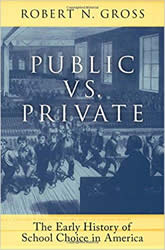
Public vs Private: The Early History of School Choice in America
Robert N. Gross. Public Vs Private: The Early History of School Choice in America. Oxford University Press, 2018.
Americans today choose from a dizzying array of schools, loosely lumped into categories of “public” and “private.” How did these distinctions emerge in the first place, and what do they tell us about the more general relationship in the United States between public authority and private enterprise? In Public vs. Private, Robert N. Gross describes how, more than a century ago, public policies fostered the rise of modern school choice. In the late nineteenth century, American Catholics began constructing rival, urban parochial school systems, an enormous and dramatic undertaking that challenged public school systems’ near-monopoly of education. In a nation deeply committed to public education, mass attendance in Catholic schools produced immense conflict. States quickly sought ways to regulate this burgeoning private sector and the competition it produced, even attempting to abolish private education altogether in the 1920s. Ultimately, however, Gross shows how the public policies that resulted produced a stable educational marketplace, where choice flourished. The creation of the educational marketplace that we have inherited today–with systematic alternatives to public schools–was as much a product of public power as of private initiative. Gross also demonstrates that schools have been key sites in the development of the American legal conceptions of “public” and “private”. Landmark Supreme Court cases about the state’s role in regulating private schools, such as the 1819 Dartmouth v. Woodward decision, helped define and redefine the scope of government power over private enterprise. Judges and public officials gradually blurred the meaning of “public” and “private,” contributing to the broader shift in how American governments have used private entities to accomplish public aims. As ever more policies today seek to unleash market forces in education, Americans would do well to learn from the historical relationship between government, markets, and schools.
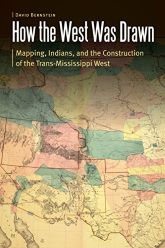
How the West Was Drawn Mapping, Indians, and the Construction of the Trans-Mississippi West
David Bernstein. How the West Was Drawn Mapping, Indians, and the Construction of the Trans-Mississippi West. University of Nebraska Press, 2018.
How the West Was Drawn explores the geographic and historical experiences of the Pawnees, the Iowas, and the Lakotas during the European and American contest for imperial control of the Great Plains during the eighteenth and nineteenth centuries. David Bernstein argues that the American West was a collaborative construction between Native peoples and Euro-American empires that developed cartographic processes and culturally specific maps, which in turn reflected encounter and conflict between settler states and indigenous peoples. Bernstein explores the cartographic creation of the Trans-Mississippi West through an interdisciplinary methodology in geography and history. He shows how the Pawnees and the Iowas—wedged between powerful Osages, Sioux, the horse- and captive-rich Comanche Empire, French fur traders, Spanish merchants, and American Indian agents and explorers—devised strategies of survivance and diplomacy to retain autonomy during this era. The Pawnees and the Iowas developed a strategy of cartographic resistance to predations by both Euro-American imperial powers and strong indigenous empires, navigating the volatile and rapidly changing world of the Great Plains by brokering their spatial and territorial knowledge either to stronger indigenous nations or to much weaker and conquerable American and European powers. How the West Was Drawn is a revisionist and interdisciplinary understanding of the global imperial contest for North America’s Great Plains that illuminates in fine detail the strategies of survival of the Pawnees, the Iowas, and the Lakotas amid accommodation to predatory Euro-American and Native empires.
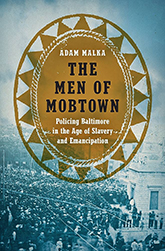
The Men of Mobtown: Policing Baltimore in the Age of Slavery and Emancipation
Adam Malka. The Men of Mobtown: Policing Baltimore in the Age of Slavery and Emancipation. University of North Carolina Press, 2018.
What if racialized mass incarceration is not a perversion of our criminal justice system’s liberal ideals, but rather a natural conclusion? Adam Malka raises this disturbing possibility through a gripping look at the origins of modern policing in the influential hub of Baltimore during and after slavery’s final decades. He argues that America’s new professional police forces and prisons were developed to expand, not curb, the reach of white vigilantes, and are best understood as a uniformed wing of the gangs that controlled free black people by branding them—and treating them—as criminals. The post–Civil War triumph of liberal ideals thus also marked a triumph of an institutionalized belief in black criminality. Mass incarceration may be a recent phenomenon, but the problems that undergird the “new Jim Crow” are very, very old. As Malka makes clear, a real reckoning with this national calamity requires not easy reforms but a deeper, more radical effort to overcome the racial legacies encoded into the very DNA of our police institutions.
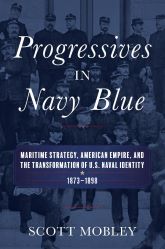
Progressives in Navy Blue: Maritime Strategy, American Empire, and the Transformation of U.S. Naval Identity, 1873-1898
Scott Mobley. Progressives in Navy Blue: Maritime Strategy, American Empire, and the Transformation of U.S. Naval Identity, 1873-1898. U.S. Naval Institute, 2018.
This study examines how intellectual and institutional developments transformed the U.S. Navy from 1873 to 1898. The period was a dynamic quarter-century in which Americans witnessed their Navy evolve. Cultures of progress—clusters of ideas, beliefs, values, and practices pertaining to modern warfare and technology—guided the Navy’s transformation. The agents of naval transformation embraced a progressive ideology. They viewed science, technology, and expertise as the best means to effect change in a world contorted by modernizing and globalizing trends. Within the Navy’s progressive movement, two new cultures—Strategy and Mechanism—influenced the course of transformation. Although they shared progressive pedigrees, each culture embodied a distinctive vision for the Navy’s future.
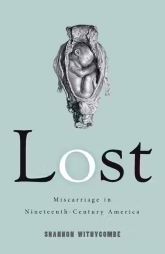
Lost: Miscarriage in Nineteenth-Century America
Shannon Withycombe. Lost: Miscarriage in Nineteenth-Century America. Rutgers University Press, 2018.
In Lost, medical historian Shannon Withycombe weaves together women’s personal writings and doctors’ publications from the 1820s through the 1910s to investigate the transformative changes in how Americans conceptualized pregnancy, understood miscarriage, and interpreted fetal tissue over the course of the nineteenth century. Withycombe’s pathbreaking research reveals how Americans construed, and continue to understand, miscarriage within a context of reproductive desires, expectations, and abilities. This is the first book to utilize women’s own writings about miscarriage to explore the individual understandings of pregnancy loss and the multiple social and medical forces that helped to shape those perceptions. What emerges from Withycombe’s work is unlike most medicalization narratives.
Democracy in Chains: The Deep History of the Radical Right’s Stealth Plan for America
Nancy MacLean. Democracy in Chains: The Deep History of the Radical Right’S Stealth Plan for America. Penguin Random House, 2017.
Behind today’s headlines of billionaires taking over our government is a secretive political establishment with long, deep, and troubling roots. The capitalist radical right has been working not simply to change who rules, but to fundamentally alter the rules of democratic governance. But billionaires did not launch this movement; a white intellectual in the embattled Jim Crow South did. Democracy in Chains names its true architect—the Nobel Prize-winning political economist James McGill Buchanan—and dissects the operation he and his colleagues designed over six decades to alter every branch of government to disempower the majority.In a brilliant and engrossing narrative, Nancy MacLean shows how Buchanan forged his ideas about government in a last gasp attempt to preserve the white elite’s power in the wake of Brown v. Board of Education. In response to the widening of American democracy, he developed a brilliant, if diabolical, plan to undermine the ability of the majority to use its numbers to level the playing field between the rich and powerful and the rest of us.Corporate donors and their right-wing foundations were only too eager to support Buchanan’s work in teaching others how to divide America into “makers” and “takers.” And when a multibillionaire on a messianic mission to rewrite the social contract of the modern world, Charles Koch, discovered Buchanan, he created a vast, relentless, and multi-armed machine to carry out Buchanan’s strategy. Without Buchanan’s ideas and Koch’s money, the libertarian right would not have succeeded in its stealth takeover of the Republican Party as a delivery mechanism. Now, with Mike Pence as Vice President, the cause has a longtime loyalist in the White House, not to mention a phalanx of Republicans in the House, the Senate, a majority of state governments, and the courts, all carrying out the plan. That plan includes harsher laws to undermine unions, privatizing everything from schools to health care and Social Security, and keeping as many of us as possible from voting. Based on ten years of unique research, Democracy in Chains tells a chilling story of right-wing academics and big money run amok. This revelatory work of scholarship is also a call to arms to protect the achievements of twentieth-century American self-government.
White Trash: The 400-Year Untold History of Class in America
Nancy Isenberg. White Trash: The 400-Year Untold History of Class in America. Penguin Random House, 2017.
In her groundbreaking bestselling history of the class system in America, Nancy Isenberg, #4 on the 2016 Politico 50 list, takes on our comforting myths about equality, uncovering the crucial legacy of the ever-present, always embarrassing—if occasionally entertaining—poor white trash. “When you turn an election into a three-ring circus, there’s always a chance that the dancing bear will win,” says Isenberg of the political climate surrounding Sarah Palin. And we recognize how right she is today. Yet the voters that put Trump in the White House have been a permanent part of our American fabric, argues Isenberg. The wretched and landless poor have existed from the time of the earliest British colonial settlement to today’s hillbillies. They were alternately known as “waste people,” “offals,” “rubbish,” “lazy lubbers,” and “crackers.” By the 1850s, the downtrodden included so-called “clay eaters” and “sandhillers,” known for prematurely aged children distinguished by their yellowish skin, ragged clothing, and listless minds. Surveying political rhetoric and policy, popular literature and scientific theories over four hundred years, Isenberg upends assumptions about America’s supposedly class-free society––where liberty and hard work were meant to ensure real social mobility. Poor whites were central to the rise of the Republican Party in the early nineteenth century, and the Civil War itself was fought over class issues nearly as much as it was fought over slavery. Reconstruction pitted poor white trash against newly freed slaves, which factored in the rise of eugenics–-a widely popular movement embraced by Theodore Roosevelt that targeted poor whites for sterilization. These poor were at the heart of New Deal reforms and LBJ’s Great Society; they haunt us in reality TV shows like Here Comes Honey Boo Boo and Duck Dynasty. Marginalized as a class, white trash have always been at or near the center of major political debates over the character of the American identity. We acknowledge racial injustice as an ugly stain on our nation’s history. With Isenberg’s landmark book, we will have to face the truth about the enduring, malevolent nature of class as well.
Mexicans in Wisconsin
Sergio Gonzales. Mexicans in Wisconsin. Wisconsin Historical Society Press, 2017.
Trace the diverse journeys of Mexicans to the Upper Midwest and learn about the trials and triumphs of the generations of Mexican immigrants in Mexicans in Wisconsin. From agricultural and factory workers to renowned writers and musicians, the Mexican immigrants who have made their homes in Wisconsin over the past century have become a significant and diverse part of this state’s cultural and economic history. Coming from a variety of educational and professional backgrounds, the earliest Mexican immigrants traveled north in search of better economic opportunities and relief from the violence and economic turmoil of the Mexican Revolution. They found work in tanneries and foundries, and on beet farms where they replaced earlier European immigrant workers who had moved on to family farms. As Mexican immigration has grown to the present day, these families have become integral members of Wisconsin communities, building businesses, support systems, and religious institutions. But their experience has also been riddled with challenges, as they have fought for adequate working conditions, access to education, and acceptance amid widespread prejudice. In this concise history, learn the fascinating stories of this vibrant and resilient immigrant population: from the Tejano migrant workers who traveled north seasonally to work in the state’s cucumber fields, to the determined labor movement led by Jesus Salas, to the young activists of the Chicano Movement, and beyond.
Singing the Resurrection: Body, Community, and Belief in Reformation Europe
Erin Lambert. Singing the Resurrection: Body, Community, and Belief in Reformation Europe. Oxford University Press, 2017.
Singing the Resurrection brings music to the foreground of Reformation studies, as author Erin Lambert explores song as a primary mode for the expression of belief among ordinary Europeans in the sixteenth century, for the embodiment of individual piety, and the creation of new communities of belief. Together, resurrection and song reveal how sixteenth-century Christians–from learned theologians to ordinary artisans, and Anabaptist martyrs to Reformed Christians facing exile–defined belief not merely as an assertion or affirmation but as a continuous, living practice. Thus these voices, raised in song, tell a story of the Reformation that reaches far beyond the transformation from one community of faith to many. With case studies drawn from each of the major confessions of the Reformation–Lutheran, Anabaptist, Reformed, and Catholic–Singing the Resurrection reveals sixteenth-century belief in its full complexity.

The Fight for Local Control: Schools, Suburbs, and American Democracy
Campbell F. Scribner. The Fight for Local Control: Schools, Suburbs, and American Democracy. Cornell Universirty Press, 2016.
Throughout the twentieth century, local control of school districts was one of the most contentious issues in American politics. As state and federal regulation attempted to standardize public schools, conservatives defended local prerogative as a bulwark of democratic values. Yet their commitment to those values was shifting and selective. In The Fight for Local Control, Campbell F. Scribner demonstrates how, in the decades after World War II, suburban communities appropriated legacies of rural education to assert their political autonomy and in the process radically changed educational law. Scribner’s account unfolds on the metropolitan fringe, where rapid suburbanization overlapped with the consolidation of thousands of small rural schools. Rural residents initially clashed with their new neighbors, but by the 1960s the groups had rallied to resist government oversight. What began as residual opposition to school consolidation would transform into campaigns against race-based busing, unionized teachers, tax equalization, and secular curriculum. In case after case, suburban conservatives carved out new rights for local autonomy, stifling equal educational opportunity. Yet Scribner also provides insight into why many conservatives have since abandoned localism for policies that stress school choice and federal accountability. In the 1970s, as new battles arose over unions, textbooks, and taxes, districts on the rural-suburban fringe became the first to assert individual choice in the form of school vouchers, religious exemptions, and a marketplace model of education. At the same time, they began to embrace tax limitation and standardized testing, policies that checked educational bureaucracy but bypassed local school boards. The effect, Scribner concludes, has been to reinforce inequalities between districts while weakening participatory government within them, keeping the worst aspects of local control in place while forfeiting its virtues.
Mapping the Country of Regions: The Chorographic Commission of Nineteenth-Century Colombia
Nancy P. Appelbaum. Mapping the Country of Regions: The Chorographic Commission of Nineteenth-Century Colombia. The University of North Carolina Press, 2016.
The nineteenth century was an era of breathtakingly ambitious geographic expeditions across the Americas. The seminal Chorographic Commission of Colombia, which began in 1850 and lasted about a decade, was one of Latin America’s most extensive. The commission’s mandate was to define and map the young republic and its resources with an eye toward modernization. In this history of the commission, Nancy P. Appelbaum focuses on the geographers’ fieldwork practices and visual production as the men traversed the mountains, savannahs, and forests of more than thirty provinces in order to delineate the country’s territorial and racial composition. Their assumptions and methods, Appelbaum argues, contributed to a long-lasting national imaginary. What jumps out of the commission’s array of reports, maps, sketches, and paintings is a portentous tension between the marked differences that appeared before the eyes of the geographers in the field and the visions of sameness to which they aspired. The commissioners and their patrons believed that a prosperous republic required a unified and racially homogeneous population, but the commission’s maps and images paradoxically emphasized diversity and helped create a “country of regions.” By privileging the whiter inhabitants of the cool Andean highlands over those of the boiling tropical lowlands, the commission left a lasting but problematic legacy for today’s Colombians.
Now Peru is Mine: The Life and Times of a Campesino Activist
Manuel Llamojha Mitma, and Jaymie Patricia Heilman. Now Peru Is Mine: The Life and Times of a Campesino Activist. Duke University Press, 2016.
Born in 1921, Manuel Llamojha Mitma became one of Peru’s most creative and inspiring indigenous political activists. Now Peru Is Mine combines extensive oral history interviews with archival research to chronicle his struggles for indigenous land rights and political inclusion as well as his fight against anti-Indian racism. His compelling story—framed by Jaymie Patricia Heilman’s historical contextualization—covers nearly eight decades, from the poverty of his youth and teaching himself to read, to becoming an internationally known activist. Llamojha also recounts his life’s tragedies, such as being forced to flee his home and the disappearance of his son during the war between the Shining Path and the government. His life gives insight into many key developments in Peru’s tumultuous twentieth-century history, among them urbanization, poverty, racism, agrarian reform, political organizing, the demise of the hacienda system, and the Shining Path. The centrality of his embrace of his campesino identity forces a rethinking of how indigenous identity works inside Peru, while the implications of his activism broaden our understanding of political mobilization in Cold War Latin America.
The Gospel of Kindness: Animal Welfare and the Making of Modern America
Janet M. Davis. The Gospel of Kindness: Animal Welfare and the Making of Modern America. Oxford University Press, 2016.
When we consider modern American animal advocacy, we often think of veganism, no-kill shelters, Internet campaigns against trophy hunting, or celebrities declaring that they would “rather go naked” than wear fur. Contemporary critics readily dismiss animal protectionism as a modern secular movement that privileges animals over people. Yet the movement’s roots are deeply tied to the nation’s history of religious revivalism and social reform. In The Gospel of Kindness, Janet M. Davis explores the broad cultural and social influence of the American animal welfare movement at home and overseas from the Second Great Awakening to the Second World War. Dedicated primarily to laboring animals at its inception in an animal-powered world, the movement eventually included virtually all areas of human and animal interaction. Embracing animals as brethren through biblical concepts of stewardship, a diverse coalition of temperance groups, teachers, Protestant missionaries, religious leaders, civil rights activists, policy makers, and anti-imperialists forged an expansive transnational “gospel of kindness,” which defined animal mercy as a signature American value. Their interpretation of this “gospel” extended beyond the New Testament to preach kindness as a secular and spiritual truth. As a cultural product of antebellum revivalism, reform, and the rights revolution of the Civil War era, animal kindness became a barometer of free moral agency, higher civilization, and assimilation. Yet given the cultural, economic, racial, and ethnic diversity of the United States, its empire, and other countries of contact, standards of kindness and cruelty were culturally contingent and potentially controversial. Diverse constituents defended specific animal practices, such as cockfighting, bullfighting, songbird consumption, and kosher slaughter, as inviolate cultural traditions that reinforced their right to self-determination. Ultimately, American animal advocacy became a powerful humanitarian ideal, a touchstone of inclusion and national belonging at home and abroad that endures to this day.

The World the Game Theorists Made
Paul Erickson. The World the Game Theorists Made. University of Chicago Press, 2015.
In recent decades game theory—the mathematics of rational decision-making by interacting individuals—has assumed a central place in our understanding of capitalist markets, the evolution of social behavior in animals, and even the ethics of altruism and fairness in human beings. With game theory’s ubiquity, however, has come a great deal of misunderstanding. Critics of the contemporary social sciences view it as part of an unwelcome trend toward the marginalization of historicist and interpretive styles of inquiry, and many accuse its proponents of presenting a thin and empirically dubious view of human choice. The World the Game Theorists Made seeks to explain the ascendency of game theory, focusing on the poorly understood period between the publication of John von Neumann and Oscar Morgenstern’s seminal Theory of Games and Economic Behavior in 1944 and the theory’s revival in economics in the 1980s. Drawing on a diverse collection of institutional archives, personal correspondence and papers, and interviews, Paul Erickson shows how game theory offered social scientists, biologists, military strategists, and others a common, flexible language that could facilitate wide-ranging thought and debate on some of the most critical issues of the day.
Country Soul: Making Music and Making Race in the American South
Charles L. Hughes. Country Soul: Making Music and Making Race in the American South. University of North Carolina Press, 2015.
In the sound of the 1960s and 1970s, nothing symbolized the rift between black and white America better than the seemingly divided genres of country and soul. Yet the music emerged from the same songwriters, musicians, and producers in the recording studios of Memphis and Nashville, Tennessee, and Muscle Shoals, Alabama–what Charles L. Hughes calls the “country-soul triangle.” In legendary studios like Stax and FAME, integrated groups of musicians like Booker T. and the MGs and the Muscle Shoals Rhythm Section produced music that both challenged and reconfirmed racial divisions in the United States. Working with artists from Aretha Franklin to Willie Nelson, these musicians became crucial contributors to the era’s popular music and internationally recognized symbols of American racial politics in the turbulent years of civil rights protests, Black Power, and white backlash. Hughes offers a provocative reinterpretation of this key moment in American popular music and challenges the conventional wisdom about the racial politics of southern studios and the music that emerged from them. Drawing on interviews and rarely used archives, Hughes brings to life the daily world of session musicians, producers, and songwriters at the heart of the country and soul scenes. In doing so, he shows how the country-soul triangle gave birth to new ways of thinking about music, race, labor, and the South in this pivotal period.
Forging Islamic Power and Place: The Legacy of Shaykh Daud bin ‘Abd Allah al-Fatani in Mecca and Southeast Asia
Francis R. Bradley. Forging Islamic Power and Place: The Legacy of Shaykh Daud Bin ‘Abd Allah Al-Fatani in Mecca and Southeast Asia. University of Hawai’I Press, 2015.
Forging Islamic Power and Place charts the nineteenth-century rise of a vast network of Islamic scholars stretching across Southeast Asia and the Indian Ocean to Arabia. Following the political and military collapse of the tiny Sultanate of Patani in what is now southern Thailand and northern Malaysia, a displaced community of scholars led by Shaykh Dā’ūd bin ‘Abd Allāh al-Faṭānī regrouped in Mecca. In the years that followed, al-Faṭānī composed more than forty works that came to form the basis for a new, text-based type of Islamic practice. Via a network of scholars, students, and scribes, al-Faṭānī’s writings made their way back to Southeast Asia, becoming the core texts of emerging pondok (Islamic schools) throughout the region. Islamic scholars thus came to be the primary power brokers in the construction of a new moral community, setting forth an intellectual wave that spurred cultural identity, literacy, and a religious practice that grew ever more central to daily life. In Forging Islamic Power and Place, Francis R. Bradley analyzes the important role of this vibrant Patani knowledge network in the formation of Islamic institutions of learning in Southeast Asia. He makes use of an impressive range of sources, including official colonial documents, traveler accounts, missionary writings, and above all a trove of handwritten manuscripts in Malay and Arabic, what remains of one of the most fertile zones of knowledge production anywhere in the Islamic world at the time. Writing against prevailing notions of Southeast Asia as the passive recipient of the Islamic traditions of the Middle East, Bradley shows how a politically marginalized community engineered its own cultural renaissance via the moral virility of the Islamic scholarly tradition and the power of the written word. He highlights how, in an age of rising colonial power, these knowledge producers moved largely unnoticed and unhindered between Southeast Asia and the Middle East carrying out sweeping cultural and religious change. His focus on Thailand’s so-called “deep south,” which has been marginalized in scholarly studies until recent times, helps lay the groundwork for a new generation of scholarship on the region and furthers our understanding of the present-day crisis in southern Thailand. The study of Islam in Southeast Asia has been most often relegated to the realm of religious studies, and historians have considered the development of the nation as the single-most important historiographical problem in the region. By focusing on the role of human agency and the logistics of knowledge transmission, this book transforms our understanding of the long and complex history of the flow of religious knowledge between the Middle East and Southeast Asia.
Building a Peaceful Nation: Julius Nyerere and the Establishment of Sovereignty in Tanzania, 1960-1964
Paul Bjerk. Building a Peaceful Nation: Julius Nyerere and the Establishment of Sovereignty in Tanzania, 1960-1964. University of Rochester Press, 2015.
A compelling account of the establishment of Tanzania’s stable and ambitious government in the face of external threats and internal turmoil. In the early 1960s, nationalist politicians established in Tanzania a stable government in the face of external threats and internal turmoil. Paul Bjerk’s volume chronicles this history and examines the politics and policies of the nation’s first president, Julius Nyerere. One of the great leaders of modern Africa, Nyerere unified the diverse people who became citizens of the new nation and negotiated the tumultuous politics of the Cold War. In an era when many postcolonial countries succumbed to corrupt dictatorship or civil war, Nyerere sought principled government. Making difficult choices between democratic and autocratic rule, Nyerere creatively managed the destabilizing forces of decolonization. With extensive archival research and interviews with scores of participants in this history, Bjerk reorients our understanding of the formative years of Tanzanian independence. This study provides a new paradigm for understanding the history of the postcolonial nations that became independent in a global postwar order defined by sovereignty.
George Perkins Marsh: Prophet of Conservation
David Lowenthal. George Perkins Marsh: Prophet of Conservation. University of Washington Press, 2015.
George Perkins Marsh (1801-1882) was the first to reveal the menace of environmental misuse, to explain its causes, and to prescribe reforms. David Lowenthal here offers fresh insights, from new sources, into Marsh’s career and shows his relevance today, in a book which has its roots in but wholly supersedes Lowenthal’s earlier biography George Perkins Marsh: Versatile Vermonter (1958). Marsh’s devotion to the repair of nature, to the concerns of working people, to women’s rights, and to historical stewardship resonate more than ever. His Vermont birthplace is now a national park chronicling American conservation, and the crusade he launched is now global. Marsh’s seminal book Man and Nature is famed for its ecological acumen. The clue to its inception lies in Marsh’s many-sided engagement in the life of his time. The broadest scholar of his day, he was an acclaimed linguist, lawyer, congressman, and renowned diplomat who served 25 years as U.S. envoy to Turkey and to Italy. He helped found and guide the Smithsonian Institution, shaped the Washington Monument, penned potent tracts on fisheries and on irrigation, spearheaded public science, art, and architecture. He wrote on camels and corporate corruption, Icelandic grammar and Alpine glaciers. His pungent and provocative letters illuminate life on both sides of the Atlantic. Like Darwin’s Origin of Species, Marsh’s Man and Nature marked the inception of a truly modern way of looking at the world, of taking care lest we irreversibly degrade the fabric of humanized nature we are bound to manage. Marsh’s ominous warnings inspired reforestation, watershed management, soil conservation, and nature protection in his day and ours. George Perkins Marsh: Prophet of Conservation was awarded the Association for American Geographers’ 2000 J. B. Jackson Prize. The book was also on the shortlist for the first British Academy Book Prize, awarded in December 2001.
Home Rule: Households, Manhood, and National Expansion on the Eighteenth-Century Kentucky Frontier
Honor Sachs. Home Rule: Households, Manhood, and National Expansion on the Eighteenth-Century Kentucky Frontier. Yale University Press, 2015.
On America’s western frontier, myths of prosperity concealed the brutal conditions endured by women, slaves, orphans, and the poor. As poverty and unrest took root in eighteenth-century Kentucky, western lawmakers championed ideas about whiteness, manhood, and patriarchal authority to help stabilize a politically fractious frontier. Honor Sachs combines rigorous scholarship with an engaging narrative to examine how conditions in Kentucky facilitated the expansion of rights for white men in ways that would become a model for citizenship in the country as a whole. Endorsed by many prominent western historians, this groundbreaking work is a major contribution to frontier scholarship.
Houston Bound: Culture and Color in a Jim Crow City
Tyina L. Steptoe. Houston Bound: Culture and Color in a Jim Crow City. University of California Press, 2015.
Beginning after World War I, Houston was transformed from a black-and-white frontier town into one of the most ethnically and racially diverse urban areas in the United States. Houston Bound draws on social and cultural history to show how, despite Anglo attempts to fix racial categories through Jim Crow laws, converging migrations—particularly those of Mexicans and Creoles—complicated ideas of blackness and whiteness and introduced different understandings about race. This migration history also uses music and sound to examine these racial complexities, tracing the emergence of Houston’s blues and jazz scenes in the 1920s as well as the hybrid forms of these genres that arose when migrants forged shared social space and carved out new communities and politics. This interdisciplinary book provides both an innovative historiography about migration and immigration in the twentieth century and a critical examination of a city located in the former Confederacy.
Metis and the Medicine Line: Creating a Boarder and Dividing a People
Michael Hogue. Metis and the Medicine Line: Creating a Boarder and Dividing a People. The University of North Carolina Press, 2015.
Born of encounters between Indigenous women and Euro-American men in the first decades of the nineteenth century, the Plains Metis people occupied contentious geographic and cultural spaces. Living in a disputed area of the northern Plains inhabited by various Indigenous nations and claimed by both the United States and Great Britain, the Metis emerged as a people with distinctive styles of speech, dress, and religious practice, and occupational identities forged in the intense rivalries of the fur and provisions trade. Michel Hogue explores how, as fur trade societies waned and as state officials looked to establish clear lines separating the United States from Canada and Indians from non-Indians, these communities of mixed Indigenous and European ancestry were profoundly affected by the efforts of nation-states to divide and absorb the North American West. Grounded in extensive research in U.S. and Canadian archives, Hogue’s account recenters historical discussions that have typically been confined within national boundaries and illuminates how Plains Indigenous peoples like the Metis were at the center of both the unexpected accommodations and the hidden history of violence that made the “world’s longest undefended border.”
The Force of Beauty: Transforming French Ideas of Femininity in the Third Republic
Holly Grout. The Force of Beauty: Transforming French Ideas of Femininity in the Third Republic. Louisiana State University Press, 2015.
The market for commercial beauty products bloomed in Third Republic France, with a proliferation of goods promising to erase female imperfections and perpetuate an aesthetic of femininity that conveyed health and respectability. While the industry’s meteoric growth helped to codify conventional standards of womanhood, The Force of Beauty moves beyond the narrative of beauty culture as a tool for sociopolitical subjugation to show how it also targeted women as important consumers in major markets and created new avenues by which they could express their identities and challenge or reinforce gender norms. As cultural media—from magazines to novels to cinema—and cosmetics companies urged women to aspire to commercial standards of female perfection, beauty evolved as a goal to pursue rather than mere biological inheritance. The products and techniques that enabled women to attain society’s feminine ideal also taught them how to fashion their bodies into objects of desire and thus offered a subversive tool of self-expression. Exploring this new sense of empowerment, Grout reveals the French commercial beauty industry’s efforts to reconcile traditional norms of respectability with new ideas about female sexuality. Grout draws on a wide range of primary sources—hygiene manuals, professional and legal debates about the right to fabricate and distribute “medicines,” advertisements for beauty products, and contemporary fiction and works of art—to explore how French women navigated the changing views of their femininity. Her seamless integration of gender studies with business history, aesthetics, and the history of medicine results in a textured and complex study of the relationship between the politics of womanhood and the politics of beauty.
The Lost Territories: Thailand’s History of National Humiliation
Shane Strate. The Lost Territories: Thailand’S History of National Humiliation. University of Hawai’I Press, 2015.
It is a cherished belief among Thai people that their country was never colonized. Yet politicians, scholars, and other media figures chronically inveigh against Western colonialism and the imperialist theft of Thai territory. Thai historians insist that the country adapted to the Western-dominated world order more successfully than other Southeast Asian kingdoms and celebrate their proud history of independence. But many Thai leaders view the West as a threat and portray Thailand as a victim. Clearly Thailand’s relationship with the West is ambivalent. The Lost Territories explores this conundrum by examining two important and contrasting strands of Thai historiography: the well-known Royal-Nationalist ideology, which celebrates Thailand’s long history of uninterrupted independence; and what the author terms “National Humiliation discourse,” its mirror image. Shane Strate examines the origins and consequences of National Humiliation discourse, showing how the modern Thai state has used the idea of national humiliation to sponsor a form of anti-Western nationalism. Unlike triumphalist Royal-Nationalist narratives, National Humiliation history depicts Thailand as a victim of Western imperialist bullying. Focusing on key themes such as extraterritoriality, trade imbalances, and territorial loss, National Humiliation history maintains that the West impeded Thailand’s development even while professing its support and cooperation. Although the state remains the hero in this narrative, it is a tragic heroism defined by suffering and foreign oppression. Through his insightful analysis of state and media sources, Strate demonstrates how Thai politicians have deployed National Humiliation imagery in support of ethnic chauvinism and military expansion. He shows how the discourse became the ideological foundation of Thailand’s irredentist strategy, the state’s anti-Catholic campaign, and its acceptance of pan-Asianism during World War II; and how the “state as victim” narrative has been used by politicians to redefine Thai identity and elevate the military into the role of national savior. The Lost Territories will be of particular interest to historians and political scientists for the light it sheds on many episodes of Thai foreign policy, including the contemporary dispute over Preah Vihear. The book’s analysis of the manipulation of historical memory will interest academics exploring similar phenomena worldwide.
The Product of Our Souls: Ragtime, Race, and the Birth of the Manhattan Musical Marketplace
David Gilbert. The Product of Our Souls: Ragtime, Race, and the Birth of the Manhattan Musical Marketplace. The University of North Carolina Press, 2015.
In 1912 James Reese Europe made history by conducting his 125-member Clef Club Orchestra at Carnegie Hall. The first concert by an African American ensemble at the esteemed venue was more than just a concert–it was a political act of desegregation, a defiant challenge to the status quo in American music. In this book, David Gilbert explores how Europe and other African American performers, at the height of Jim Crow, transformed their racial difference into the mass-market commodity known as “black music.” Gilbert shows how Europe and others used the rhythmic sounds of ragtime, blues, and jazz to construct new representations of black identity, challenging many of the nation’s preconceived ideas about race, culture, and modernity and setting off a musical craze in the process. Gilbert sheds new light on the little-known era of African American music and culture between the heyday of minstrelsy and the Harlem Renaissance. He demonstrates how black performers played a pioneering role in establishing New York City as the center of American popular music, from Tin Pan Alley to Broadway, and shows how African Americans shaped American mass culture in their own image.
Transitional France: The Modern History of a Universal Nation
Tyler Stovall. Transitional France: The Modern History of a Universal Nation. Routledge, 2015.
In this compelling volume, Tyler Stovall takes a transnational approach to the history of modern France, and by doing so draws the reader into a key aspect of France’s political culture: universalism. Beginning with the French Revolution and its aftermath, Stovall traces the definitive establishment of universal manhood suffrage and the abolition of slavery in 1848. Following this critical time in France’s history, Stovall then explores the growth of urban and industrial society, the beginnings of mass immigration, and the creation of a new, republican Empire. This time period gives way to the history of the two world wars, the rise of political movements like Communism and Fascism, and new directions in popular culture. The text concludes with the history of France during the Fourth and Fifth republics, concentrating on decolonization and the rise of postcolonial society and culture. Throughout these major historical events Stovall examines France’s relations with three other areas of the world: Europe, the United States, and France’s colonial empire, which includes a wealth of recent historical studies. By exploring these three areas-and their political, social, and cultural relations with France-the text will provide new insights into both the nature of French identity and the making of the modern world in general.
Where the River Burned: Carl Stokes and the Struggle to Save Cleveland
David Stradling, and Richard Stradling. Where the River Burned: Carl Stokes and the Struggle to Save Cleveland. Cornell Universirty Press, 2015.
In the 1960s, Cleveland suffered through racial violence, spiking crime rates, and a shrinking tax base, as the city lost jobs and population. Rats infested an expanding and decaying ghetto, Lake Erie appeared to be dying, and dangerous air pollution hung over the city. Such was the urban crisis in the “Mistake on the Lake.” When the Cuyahoga River caught fire in the summer of 1969, the city was at its nadir, polluted and impoverished, struggling to set a new course. The burning river became the emblem of all that was wrong with the urban environment in Cleveland and in all of industrial America.Carl Stokes, the first African American mayor of a major U.S. city, had come into office in Cleveland a year earlier with energy and ideas. He surrounded himself with a talented staff, and his administration set new policies to combat pollution, improve housing, provide recreational opportunities, and spark downtown development. In Where the River Burned, David Stradling and Richard Stradling describe Cleveland’s nascent transition from polluted industrial city to viable service city during the Stokes administration.The story culminates with the first Earth Day in 1970, when broad citizen engagement marked a new commitment to the creation of a cleaner, more healthful and appealing city. Although concerned primarily with addressing poverty and inequality, Stokes understood that the transition from industrial city to service city required massive investments in the urban landscape. Stokes adopted ecological thinking that emphasized the connectedness of social and environmental problems and the need for regional solutions. He served two terms as mayor, but during his four years in office Cleveland’s progress fell well short of his administration’s goals. Although he was acutely aware of the persistent racial and political boundaries that held back his city, Stokes was in many ways ahead of his time in his vision for Cleveland and a more livable urban America.
A History of Modern Tourism
Eric G. E. Zuelow. A History of Modern Tourism. Palgrave Macmillan, 2015.
Tourism is one of the largest industries in the world, yet leisure travel is more than just economically important. It plays a vital role in defining who we are by helping to place us in space and time. In so doing, it has aesthetic, medical, political, cultural, and social implications. However, it hasn’t always been so. Tourism as we know it is a surprisingly modern thing, both a product of modernity and a force helping to shape it. A History of Modern Tourism is the first book to track the origins and evolution of this pursuit from earliest times to the present. From a new understanding of aesthetics to scientific change, from the invention of steam power to the creation of aircraft, from an elite form of education to family car trips to see national ‘shrines,’ this book offers a sweeping and engaging overview of a fascinating story not yet widely known.

The Emergence of Tropical Medicine in France
Michael A. Osborne. The Emergence of Tropical Medicine in France. University of Chicago Press, 2014.
The Emergence of Tropical Medicine in France examines the turbulent history of the ideas, people, and institutions of French colonial and tropical medicine from their early modern origins through World War I. Until the 1890s colonial medicine was in essence naval medicine, taught almost exclusively in a system of provincial medical schools built by the navy in the port cities of Brest, Rochefort-sur-Mer, Toulon, and Bordeaux. Michael A. Osborne draws out this separate species of French medicine by examining the histories of these schools and other institutions in the regional and municipal contexts of port life. Each site was imbued with its own distinct sensibilities regarding diet, hygiene, ethnicity, and race, all of which shaped medical knowledge and practice in complex and heretofore unrecognized ways. Osborne argues that physicians formulated localized concepts of diseases according to specific climatic and meteorological conditions, and assessed, diagnosed, and treated patients according to their ethnic and cultural origins. He also demonstrates that regions, more so than a coherent nation, built the empire and specific medical concepts and practices. Thus, by considering tropical medicine’s distinctive history, Osborne brings to light a more comprehensive and nuanced view of French medicine, medical geography, and race theory, all the while acknowledging the navy’s crucial role in combating illness and investigating the racial dimensions of health.
“A Peculiar People”: Anti-Mormonism and the Making of Religion in Nineteenth-Century America
J. Spencer Fluhman. “A Peculiar People”: Anti-Mormonism and the Making of Religion in Nineteenth-Century America. The University of North Carolina Press, 2014.
Though the U.S. Constitution guarantees the free exercise of religion, it does not specify what counts as a religion. From its founding in the 1830s, Mormonism, a homegrown American faith, drew thousands of converts but far more critics. In “A Peculiar People”, J. Spencer Fluhman offers a comprehensive history of anti-Mormon thought and the associated passionate debates about religious authenticity in nineteenth-century America. He argues that understanding anti-Mormonism provides critical insight into the American psyche because Mormonism became a potent symbol around which ideas about religion and the state took shape. Fluhman documents how Mormonism was defamed, with attacks often aimed at polygamy, and shows how the new faith supplied a social enemy for a public agitated by the popular press and wracked with social and economic instability. Taking the story to the turn of the century, Fluhman demonstrates how Mormonism’s own transformations, the result of both choice and outside force, sapped the strength of the worst anti-Mormon vitriol, triggering the acceptance of Utah into the Union in 1896 and also paving the way for the dramatic, yet still grudging, acceptance of Mormonism as an American religion.
An Irish-Speaking Island: State, Religion, Community, and the Linguistic Landscape in Ireland, 1770-1870
Nicholas M. Wolf. An Irish-Speaking Island: State, Religion, Community, and the Linguistic Landscape in Ireland, 1770-1870. University of Wisconsin Press, 2014.
After 1770, Ireland experienced the establishment of modern forms of Irish Catholicism, new engagement by the public with the political process, and the growth of the modern state, represented by new legal and educational systems. An Irish-Speaking Island investigates the role in these developments of the population who spoke Irish in their daily lives—whether as a first or second language—and links the history of language contact and bilingualism with the broader history of Ireland in the eighteenth and nineteenth centuries. As late as 1840, Ireland had as many as four million Irish speakers—a significant proportion of the total population—who could be found in every county of the island and in all social classes and religious persuasions. Their impact on the modern history of Ireland and the United Kingdom cannot be captured by a simple conclusion that they became anglicized. Rather, Nicholas M. Wolf explores the complex ways in which the transition from Irish to English placed a premium on adaptive bilingualism and shaped beliefs and behavior in the domestic sphere, religious life, and oral culture within the community. An Irish-Speaking Island will interest not only historians but also scholars of linguistics, folklore, politics, literature, and religion.
Eden on the Charles: The Making of Boston
Michael Rawson. Eden on the Charles: The Making of Boston. Harvard University Press, 2014.
Drinking a glass of tap water, strolling in a park, hopping a train for the suburbs: some aspects of city life are so familiar that we don’t think twice about them. But such simple actions are structured by complex relationships with our natural world. The contours of these relationships—social, cultural, political, economic, and legal—were established during America’s first great period of urbanization in the nineteenth century, and Boston, one of the earliest cities in America, often led the nation in designing them. A richly textured cultural and social history of the development of nineteenth-century Boston, this book provides a new environmental perspective on the creation of America’s first cities. Eden on the Charles explores how Bostonians channeled country lakes through miles of pipeline to provide clean water; dredged the ocean to deepen the harbor; filled tidal flats and covered the peninsula with houses, shops, and factories; and created a metropolitan system of parks and greenways, facilitating the conversion of fields into suburbs. The book shows how, in Boston, different class and ethnic groups brought rival ideas of nature and competing visions of a “city upon a hill” to the process of urbanization—and were forced to conform their goals to the realities of Boston’s distinctive natural setting. The outcomes of their battles for control over the city’s development were ultimately recorded in the very fabric of Boston itself. In Boston’s history, we find the seeds of the environmental relationships that—for better or worse—have defined urban America to this day.
Empress San Francisco: The Pacific Rim, the Great West, and California at the Panama-Pacific International Exposition
Abigail M. Markwyn. Empress San Francisco: The Pacific Rim, the Great West, and California at the Panama-Pacific International Exposition. University of Nebraska Press, 2014.
When the more than 18 million visitors poured into the Panama-Pacific International Exposition (PPIE) in San Francisco in 1915, they encountered a vision of the world born out of San Francisco’s particular local political and social climate. By seeking to please various constituent groups ranging from the government of Japan to local labor unions and neighborhood associations, fair organizers generated heated debate and conflict about who and what represented San Francisco, California, and the United States at the world’s fair. The PPIE encapsulated the social and political tensions and conflicts of pre–World War I California and presaged the emergence of San Francisco as a cosmopolitan cultural and economic center of the Pacific Rim. Empress San Francisco offers a fresh examination of this, one of the largest and most influential world’s fairs, by considering the local social and political climate of Progressive Era San Francisco. Focusing on the influence exerted by women, Asians and Asian Americans, and working-class labor unions, among others, Abigail M. Markwyn offers a unique analysis both of this world’s fair and the social construction of pre–World War I America and the West.
Freedom’s Frontier: California and the Struggle over Unfree Labor, Emancipation, and Reconstruction
Stacey L. Smith. Freedom’S Frontier: California and the Struggle over Unfree Labor, Emancipation, and Reconstruction. University of North Carolina Press, 2014.
Most histories of the Civil War era portray the struggle over slavery as a conflict that exclusively pitted North against South, free labor against slave labor, and black against white. In Freedom’s Frontier, Stacey L. Smith examines the battle over slavery as it unfolded on the multiracial Pacific Coast. Despite its antislavery constitution, California was home to a dizzying array of bound and semibound labor systems: African American slavery, American Indian indenture, Latino and Chinese contract labor, and a brutal sex traffic in bound Indian and Chinese women. Using untapped legislative and court records, Smith reconstructs the lives of California’s unfree workers and documents the political and legal struggles over their destiny as the nation moved through the Civil War, emancipation, and Reconstruction. Smith reveals that the state’s anti-Chinese movement, forged in its struggle over unfree labor, reached eastward to transform federal Reconstruction policy and national race relations for decades to come. Throughout, she illuminates the startling ways in which the contest over slavery’s fate included a western struggle that encompassed diverse labor systems and workers not easily classified as free or slave, black or white.

Home Fires: How Americans Kept Warm in the 19th Century
Sean Patrick Adams. Home Fires: How Americans Kept Warm in the 19th Century. Johns Hopkins University Press, 2014.
Home Fires tells the fascinating story of how changes in home heating over the nineteenth century spurred the growth of networks that helped remake American society. Sean Patrick Adams reconstructs the ways in which the “industrial hearth” appeared in American cities, the methods that entrepreneurs in home heating markets used to convince consumers that their product designs and fuel choices were superior, and how elite, middle-class, and poor Americans responded to these overtures. Adams depicts the problem of dwindling supplies of firewood and the search for alternatives; the hazards of cutting, digging, and drilling in the name of home heating; the trouble and expense of moving materials from place to place; the rise of steam power; the growth of an industrial economy; and questions of economic efficiency, at both the individual household and the regional level. Home Fires makes it clear that debates over energy sources, energy policy, and company profit margins have been around a long time. The challenge of staying warm in the industrializing North becomes a window into the complex world of energy transitions, economic change, and emerging consumerism. Readers will understand the struggles of urban families as they sought to adapt to the ever-changing nineteenth-century industrial landscape. This perspective allows a unique view of the development of an industrial society not just from the ground up but from the hearth up.
Rally the Scattered Believers: Northern New England’s Religious Geography
Shelby M. Balik. Rally the Scattered Believers: Northern New England’S Religious Geography. Indiana University Press, 2014.
Northern New England, a rugged landscape dotted with transient settlements, posed challenges to the traditional town church in the wake of the American Revolution. Using the methods of spatial geography, Shelby M. Balik examines how migrants adapted their understanding of religious community and spiritual space to survive in the harsh physical surroundings of the region. The notions of boundaries, place, and identity they developed became the basis for spreading New England’s deeply rooted spiritual culture, even as it opened the way to a new evangelical age.

The Country of Football: Soccer and the Making of Modern Brazil
Roger Kittleson. The Country of Football: Soccer and the Making of Modern Brazil. University of California Press, 2014.
Soccer is the world’s most popular sport, and the Brazilian national team is beloved around the planet for its beautiful playing style, the jogo bonito. With the most successful national soccer team in the history of the World Cup, Brazil is the only country to have played in every competition and the winner of more championships than any other nation. Soccer is perceived, like carnival and samba, to be quintessentially Brazilian and Afro-Brazilian. Yet the practice and history of soccer are also synonymous with conflict and contradiction as Brazil continues its trajectory toward modernity and economic power. The ongoing debate over how Team Brazil should play and positively represent a nation of demanding supporters bears on many crucial facets of a country riven by racial and class tensions. The Country of Football is filled with engaging stories of star players and other key figures, as well as extraordinary research on local, national, and international soccer communities. Soccer fans, scholars, and readers who are interested in the history of sport will emerge with a greater understanding of the complex relationship between Brazilian soccer and the nation’s history.
The Myth of Seneca Falls: Memory and the Women’s Suffrage Movement: 1848-1898
Lisa Tetrault. The Myth of Seneca Falls: Memory and the Women’S Suffrage Movement: 1848-1898. University of North Carolina Press, 2014.
The story of how the women’s rights movement began at the Seneca Falls convention of 1848 is a cherished American myth. The standard account credits founders such as Elizabeth Cady Stanton, Susan B. Anthony, and Lucretia Mott with defining and then leading the campaign for women’s suffrage. In her provocative new history, Lisa Tetrault demonstrates that Stanton, Anthony, and their peers gradually created and popularized this origins story during the second half of the nineteenth century in response to internal movement dynamics as well as the racial politics of memory after the Civil War. The founding mythology that coalesced in their speeches and writings–most notably Stanton and Anthony’s History of Woman Suffrage–provided younger activists with the vital resource of a usable past for the ongoing struggle, and it helped consolidate Stanton and Anthony’s leadership against challenges from the grassroots and rival suffragists. As Tetrault shows, while this mythology has narrowed our understanding of the early efforts to champion women’s rights, the myth of Seneca Falls itself became an influential factor in the suffrage movement. And along the way, its authors amassed the first archive of feminism and literally invented the modern discipline of women’s history.

The Nature of Childhood: An Environmental History of Growing Up in America Since 1865
Pamela Riney-Kehrberg. The Nature of Childhood: An Environmental History of Growing Up in America Since 1865. University Press of Kansas, 2014.
When did the kid who strolled the wooded path, trolled the stream, played pick-up ball in the back forty turn into the child confined to the mall and the computer screen? How did Go out and play! go from parental shooing to prescription? When did parents become afraid to send their children outdoors? Surveying the landscape of childhood from the Civil War to our own day, this environmental history of growing up in America asks why and how the nations children have moved indoors, often losing touch with nature in the process. In the time the book covers, the nation that once lived in the country has migrated to the city, a move whose implications and ramifications for youth Pamela Riney-Kehrberg explores in chapters concerning childrens adaptation to an increasingly urban and sometimes perilous environment. Her focus is largely on the Midwest and Great Plains, where the response of families to profound economic and social changes can be traced through its urban, suburban, and rural permutations—as summer camps, scouting, and nature education take the place of childrens unmediated experience of the natural world. As the story moves into the mid-twentieth century, and technology in the form of radio and television begins to exert its allure, Riney-Kehrberg brings her own experience to bear as she documents the emerging tug-of-war between indoors and outdoors—and between the preferences of children and parents. It is a battle that children, at home with their electronic amenities, seem to have won—an outcome whose meaning and likely consequences this timely book helps us to understand.
The Politics of Chieftaincy: Authority and Property in Colonial Ghana, 1920-1950
Naaborko Sackeyfio-Lenoch. The Politics of Chieftaincy: Authority and Property in Colonial Ghana, 1920-1950. University of Rochester Press, 2014.
The Settlers’ Empire: Colonialism and State Formation in America’s Old Northwest
Bethel Saler. The Settlers’ Empire: Colonialism and State Formation in America’S Old Northwest. University of Pennsylvania Press, 2014.
The 1783 Treaty of Paris, which officially recognized the United States as a sovereign republic, also doubled the territorial girth of the original thirteen colonies. The fledgling nation now stretched from the coast of Maine to the Mississippi River and up to the Great Lakes. With this dramatic expansion, argues author Bethel Saler, the United States simultaneously became a postcolonial republic and gained a domestic empire. The competing demands of governing an empire and a republic inevitably collided in the early American West. The Settlers’ Empire traces the first federal endeavor to build states wholesale out of the Northwest Territory, a process that relied on overlapping colonial rule over Euro-American settlers and the multiple Indian nations in the territory. These entwined administrations involved both formal institution building and the articulation of dominant cultural customs that, in turn, served also to establish boundaries of citizenship and racial difference. In the Northwest Territory, diverse populations of newcomers and Natives struggled over the region’s geographical and cultural definition in areas such as religion, marriage, family, gender roles, and economy. The success or failure of state formation in the territory thus ultimately depended on what took place not only in the halls of government but also on the ground and in the everyday lives of the region’s Indians, Francophone creoles, Euro- and African Americans, and European immigrants. In this way, The Settlers’ Empire speaks to historians of women, gender, and culture, as well as to those interested in the early national state, the early West, settler colonialism, and Native history.
Thinking Orthodox in Modern Russia: Culture, History, Context
Patrick Lally Michelson (Co-editor), and Judith Deutsch Kornblatt (Co-editor). Thinking Orthodox in Modern Russia: Culture, History, Context. University of Wisconsin Press, 2014.
Thinking Orthodox in Modern Russia illuminates the significant role of Russian Orthodox thought in shaping the discourse of educated society during the imperial and early Soviet periods. Bringing together an array of scholars, this book demonstrates that Orthodox reflections on spiritual, philosophical, and aesthetic issues of the day informed much of Russia’s intellectual and cultural climate. Volume editors Patrick Lally Michelson and Judith Deutsch Kornblatt provide a historical overview of Russian Orthodox thought and a critical essay on the current state of scholarship about religious thought in modern Russia. The contributors explore a wide range of topics, including Orthodox claims to a unique religious Enlightenment, contests over authority within the Russian Church, tensions between faith and reason in academic Orthodoxy, the relationship between sacraments and the self, the religious foundations of philosophical and legal categories, and the effect of Orthodox categories in the formation of Russian literature.

Wilderness and the American Mind
Roderick Frazier Nash. Wilderness and the American Mind. Yale University Press, 2014.
Roderick Nash’s classic study of changing attitudes toward wilderness during American history, as well as the origins of the environmental and conservation movements, has received wide acclaim since its initial publication in 1967. The Los Angeles Times listed it among the one hundred most influential books published in the last quarter century, Outside Magazine included it in a survey of “books that changed our world,” and it has been called the “Book of Genesis for environmentalists.” For the fifth edition, Nash has written a new preface and epilogue that brings Wilderness and the American Mind into dialogue with contemporary debates about wilderness. Char Miller’s foreword provides a twenty-first-century perspective on how the environmental movement has changed, including the ways in which contemporary scholars are reimagining the dynamic relationship between the natural world and the built environment. Roderick Frazier Nash is professor emeritus of history and environmental studies at the University of California at Santa Barbara. He is regarded as one of the founders of environmental history in the United States. Char Miller is the W. M. Keck Professor of Environmental Analysis at Pomona College.
How Reason Almost Lost Its Mind: The Strange Career of Cold War Rationality
Paul Erickson (Co-editor), Judy L. Klein (Co-editor), Lorraine Daston (Co-editor), Rebecca Lemov (Co-editor), Thomas Sturm (Co-editor), and Michael D. Gordin (Co-editor). How Reason Almost Lost Its Mind: The Strange Career of Cold War Rationality. The University of Chicago Press, 2013.
In the United States at the height of the Cold War, roughly between the end of World War II and the early 1980s, a new project of redefining rationality commanded the attention of sharp minds, powerful politicians, wealthy foundations, and top military brass. Its home was the human sciences—psychology, sociology, political science, and economics, among others—and its participants enlisted in an intellectual campaign to figure out what rationality should mean and how it could be deployed. How Reason Almost Lost Its Mind brings to life the people—Herbert Simon, Oskar Morgenstern, Herman Kahn, Anatol Rapoport, Thomas Schelling, and many others—and places, including the RAND Corporation, the Center for Advanced Study in the Behavioral Sciences, the Cowles Commission for Research and Economics, and the Council on Foreign Relations, that played a key role in putting forth a “Cold War rationality.” Decision makers harnessed this picture of rationality—optimizing, formal, algorithmic, and mechanical—in their quest to understand phenomena as diverse as economic transactions, biological evolution, political elections, international relations, and military strategy. The authors chronicle and illuminate what it meant to be rational in the age of nuclear brinkmanship.
The First Atomic Age: Scientists, Radiations, and the American Public, 1895-1945
Matthew Lavine. The First Atomic Age: Scientists, Radiations, and the American Public, 1895-1945. Palgrave Macmillan, 2013.
At the close of the 19th century, strange new forms of energy arrested the American public’s attention in ways that no scientific discovery ever had before. This groundbreaking cultural history tells the story of the first nuclear culture, one whose lasting effects would be seen in the familiar “atomic age” of the post-war twentieth century.
Cold War University: Madison and the New Left in the Sixties
Matthew Levin. Cold War University: Madison and the New Left in the Sixties. University of Wisconsin Press, 2013.
As the Cold War between the United States and the Soviet Union escalated in the 1950s and 1960s, the federal government directed billions of dollars to American universities to promote higher enrollments, studies of foreign languages and cultures, and, especially, scientific research. In Cold War University, Matthew Levin traces the paradox that developed: higher education became increasingly enmeshed in the Cold War struggle even as university campuses became centers of opposition to Cold War policies. The partnerships between the federal government and major research universities sparked a campus backlash that provided the foundation, Levin argues, for much of the student dissent that followed. At the University of Wisconsin in Madison, one of the hubs of student political activism in the 1950s and 1960s, the protests reached their flashpoint with the 1967 demonstrations against campus recruiters from Dow Chemical, the manufacturers of napalm. Levin documents the development of student political organizations in Madison in the 1950s and the emergence of a mass movement in the decade that followed, adding texture to the history of national youth protests of the time. He shows how the University of Wisconsin tolerated political dissent even at the height of McCarthyism, an era named for Wisconsin’s own virulently anti-Communist senator, and charts the emergence of an intellectual community of students and professors that encouraged new directions in radical politics. Some of the events in Madison—especially the 1966 draft protests, the 1967 sit-in against Dow Chemical, and the 1970 Sterling Hall bombing—have become part of the fabric of “The Sixties,” touchstones in an era that continues to resonate in contemporary culture and politics. “The University of Wisconsin is well-known for its political activism during the 1960s but Levin takes the story back to the 1950s and shows us the ways the Cold War played out in higher education and Wisconsin’s role in it. The dynamics of radically increased funding from the Federal Government produced unintended consequences when opposition coalesced in Madison. Levin helps us to understand a turbulent period, the era of Joe McCarthy through the Vietnam War, where faculty and students critiqued American institutions and policies that produced a new political understanding.” —James Danky, University of Wisconsin–Madison

Shaky Foundations: The Politics-Patronage-Social Science Nexus in Cold War America
Mark Solovey. Shaky Foundations: The Politics-Patronage-Social Science Nexus in Cold War America. Rutgers University Press , 2013.
Numerous popular and scholarly accounts have exposed the deep impact of patrons on the production of scientific knowledge and its applications. Shaky Foundations provides the first extensive examination of a new patronage system for the social sciences that emerged in the early Cold War years and took more definite shape during the 1950s and early 1960s, a period of enormous expansion in American social science. By focusing on the military, the Ford Foundation, and the National Science Foundation, Mark Solovey shows how this patronage system presented social scientists and other interested parties, including natural scientists and politicians, with new opportunities to work out the scientific identity, social implications, and public policy uses of academic social research. Solovey also examines significant criticisms of the new patronage system, which contributed to widespread efforts to rethink and reshape the politics-patronage-social science nexus starting in the mid-1960s. Based on extensive archival research, Shaky Foundations addresses fundamental questions about the intellectual foundations of the social sciences, their relationships with the natural sciences and the humanities, and the political and ideological import of academic social inquiry.
Almost Worthy: The Poor, Paupers, and the Science of Charity in America, 1877-1917
Brent Ruswick. Almost Worthy: The Poor, Paupers, and the Science of Charity in America, 1877-1917. Indiana University Press, 2012.
In the 1880s, social reform leaders warned that the “unworthy” poor were taking charitable relief intended for the truly deserving. Armed with statistics and confused notions of evolution, these “scientific charity” reformers founded organizations intent on limiting access to relief by the most morally, biologically, and economically unfit. Brent Ruswick examines a prominent national organization for scientific social reform and poor relief in Indianapolis in order to understand how these new theories of poverty gave birth to new programs to assist the poor.
Birds of Empire, Birds of Nation. A History of Science, Economy, and Conservation in United States-Colombia Relations
Camilo Quintero Toro. Birds of Empire, Birds of Nation. A History of Science, Economy, and Conservation in United States-Colombia Relations. Universidad de los Andes, 2012.
Birds of Empire, Birds of Nation reveals the history behind the trade of Colombian birds as a means of comprehending the scientific, economic, and environmental relations between the United States and Colombia from the 1880s to the 1960s. Through the study of the feather trade, scientific expeditions, scientific communities, and nature conservation the author brings to light how international relations and national agendas shaped the study and perception of nature in both countries during those years.
Cold War Social Science: Knowledge Production, Liberal Democracy, and Human Nature
Hamilton Cravens (Co-editor), and Mark Solovey (Co-editor). Cold War Social Science: Knowledge Production, Liberal Democracy, and Human Nature. Palgrave Macmillan , 2012.
From World War II to the early 1970s, social science research expanded in dramatic and unprecedented fashion in the United States. This volume examines how, why, and with what consequences this rapid and yet contested expansion depended on the entanglement of the social sciences with the Cold War.
Challenging Authoritarianism in Mexico Revolutionary Struggles and the Dirty War, 1964-1982
Adela Cedillo (Co-editor), and Fernando Calderon (Co-editor). Challenging Authoritarianism in Mexico Revolutionary Struggles and the Dirty War, 1964-1982. Routledge Taylor & Francis Group, 2012.
The Cold War in Latin America spawned numerous authoritarian and military regimes in response to the ostensible threat of communism in the Western Hemisphere, and with that, a rigid national security doctrine was exported to Latin America by the United States. Between 1964 and 1985, Argentina, Chile, Mexico, Brazil, Paraguay, and Uraguay experienced a period of state-sponsored terrorism commonly referred to as the “dirty wars.” Thousands of leftists, students, intellectuals, workers, peasants, labor leaders, and innocent civilians were harassed, arrested, tortured, raped, murdered, or ‘disappeared.’ Many studies have been done about this phenomenon in the other areas of Latin America, but strangely, Mexico’s dirty war has been excluded from this particular scholarship. Here for the first time is a sustained look at this period and consideration of the many facets that make up the nearly two decades of the Mexican dirty war. Offering the reader a broad perspective of the period, the case studies in the book present narratives of particular armed revolutionary movements as well as thematic essays on gender, human rights, culture, student radicalism, the Cold War, and the international impact of this state-sponsored terrorism.

Wrestling with Nature: From Omens to Science
Peter Harrison (Co-editor), and Michael H. Shank (Co-editor). Wrestling With Nature: From Omens to Science. University of Chicago Press, 2011.
When and where did science begin? Historians have offered different answers to these questions, some pointing to Babylonian observational astronomy, some to the speculations of natural philosophers of ancient Greece. Others have opted for early modern Europe, which saw the triumph of Copernicanism and the birth of experimental science, while yet another view is that the appearance of science was postponed until the nineteenth century. Rather than posit a modern definition of science and search for evidence of it in the past, the contributors to Wrestling with Nature examine how students of nature themselves, in various cultures and periods of history, have understood and represented their work. The aim of each chapter is to explain the content, goals, methods, practices, and institutions associated with the investigation of nature and to articulate the strengths, limitations, and boundaries of these efforts from the perspective of the researchers themselves. With contributions from experts representing different historical periods and different disciplinary specializations, this volume offers a fresh perspective on the history of science and on what it meant, in other times and places, to wrestle with nature.
An Empire of Ice: Scott, Shackleton, and the Heroic Age of Antarctic Science
Edward J. Larson. An Empire of Ice: Scott, Shackleton, and the Heroic Age of Antarctic Science. Yale University Press, 2011.
Published to coincide with the centenary of the first expeditions to reach the South Pole, An Empire of Ice presents a fascinating new take on Antarctic exploration. Retold with added information, it’s the first book to place the famed voyages of Norwegian explorer Roald Amundsen, his British rivals Robert Scott and Ernest Shackleton, and others in a larger scientific, social, and geopolitical context. Efficient, well prepared, and focused solely on the goal of getting to his destination and back, Amundsen has earned his place in history as the first to reach the South Pole. Scott, meanwhile, has been reduced in the public mind to a dashing incompetent who stands for little more than relentless perseverance in the face of inevitable defeat. An Empire of Ice offers a new perspective on the Antarctic expeditions of the early twentieth century by looking at the British efforts for what they actually were: massive scientific enterprises in which reaching the South Pole was but a spectacular sideshow. By focusing on the larger purpose, Edward Larson deepens our appreciation of the explorers’ achievements, shares little-known stories, and shows what the Heroic Age of Antarctic discovery was really about.
Witchcraft and Inquisition in Early Modern Venice
Jonathan Seitz. Witchcraft and Inquisition in Early Modern Venice. Cambridge University Press, 2011.
In early modern Europe, ideas about nature, God, demons, and occult forces were inextricably connected and much ink and blood was spilled in arguments over the characteristics and boundaries of nature and the supernatural. Seitz uses records of Inquisition witchcraft trials in Venice to uncover how individuals across society, from servants to aristocrats, understood these two fundamental categories. Others have examined this issue from the points of view of religious history, the history of science and medicine, or the history of witchcraft alone, but this work brings these sub-fields together to illuminate comprehensively the complex forces shaping early modern beliefs.

Looking for a Few Good Males: Female Choice in Evolutionary Biology
Erika Lorraine Milam. Looking for a Few Good Males: Female Choice in Evolutionary Biology. The Johns Hopkins University Press, 2010.
Why do female animals select certain mates, and how do scientists determine the answer? In considering these questions, Erika Lorraine Milam explores the fascinating patterns of experiment and interpretation that emerged as twentieth-century researchers studied sexual selection and female choice. Approaching the topic from both biological and animal-studies perspectives, Milam not only presents a broad history of sexual selection—from Darwin to sociobiology—but also analyzes the animal-human continuum from the perspectives of sex, evolution, and behavior. She asks how social and cultural assumptions influence human-animal research and wonders about the implications of gender on scientific outcomes. Although female choice appears to be a straightforward theoretical concept, the study of sexual selection has been anything but simple. Scientists in the early twentieth century investigated female choice in animals but did so with human social and sexual behavior as their ultimate objective. By the 1940s, evolutionary biologists and population geneticists shifted their focus, studying instead how evolution affected natural animal populations. Two decades later, organismal biologists once again redefined the investigation of sexual selection as sociobiology came to dominate the discipline. Outlining the ever-changing history of this field of study, Milam uncovers lost mid-century research programs and finds that the discipline did not languish in the decades between Darwin’s theory of sexual selection and sociobiology, as observers commonly believed. Rather, population geneticists, ethologists, and organismal biologists alike continued to investigate this important theory throughout the twentieth century.
Lessons amid the Rubble: An Introduction to Post-Disaster Engineering and Ethics
Sarah K. A. Pfatteicher. Lessons Amid the Rubble: An Introduction to Post-Disaster Engineering and Ethics. Johns Hopkins University Press, 2010.
(Revised from a UW dissertation) The aftermath of September 11, 2001, brought the subject of engineering-failure forensics to public attention as had no previous catastrophe. In keeping with the engineering profession’s long tradition of building a positive future out of disasters, Lessons amid the Rubble uses the collapse of the World Trade Center towers to explore the nature and future of engineering education in the United States. Sarah K. A. Pfatteicher draws on historical and current practice in engineering design, construction, and curricula to discuss how engineers should conceive, organize, and execute a search for the reasons behind the failure of man-made structures. Her survey traces the analytical journey engineers take after a disaster and discusses the technical, social, and moral implications of their work. After providing an overview of the investigations into the collapse of the Twin Towers, Pfatteicher explores six related events to reveal deceptively simple lessons about the engineering enterprise, each of which embodies an ethical dilemma at the heart of the profession. In tying these themes together, Pfatteicher highlights issues of professionalism and professional identity infused in engineering education and encourages an explicit, direct conversation about their meaning. Sophisticated and engagingly written, this volume combines history, engineering, ethics, and philosophy to provoke a deep discussion about the symbolic meaning of buildings and other structures and the nature of engineering.
Death Investigation in America: Coroners, Medical Examiners, and the Pursuit of Medical Certainty
Jeffrey M. Jentzen. Death Investigation in America: Coroners, Medical Examiners, and the Pursuit of Medical Certainty. Harvard University Press, 2009.
A death occurs at home, in a hospital, on a street: why? As Jeffrey Jentzen reveals, we often never know. Why is the American system of death investigation so inconsistent and inadequate? What can the events of the assassination of President Kennedy, killing of Bobby Kennedy, and Chappaquiddick reveal about the state of death investigation? If communities in early America had a coroner at all, he was politically appointed and poorly trained. As medicine became more sophisticated and the medical profession more confident, physicians struggled to establish a professionalized, physician-led system of death investigation. The conflict between them and the coroners, as well as politicians and law enforcement agencies, led to the patchwork of local laws and practices that persist to this day. In this unique political and cultural history, Jentzen draws on archives, interviews, and his own career as a medical examiner to look at the way that a long-standing professional and political rivalry controls public medical knowledge and public health.
Controversies in Science and Technology
Daniel Lee Kleinman (Co-editor), Karen A. Cloud-Hansen (Co-editor), Christina Matta (Co-editor), and Jo Handelsman (Co-editor). Controversies in Science and Technology. Mary Ann Liebert, Inc., 2008.
Controversies in Science and Technology Volume 2: From Climate to Chromosomes explores five of the most controversial scientific issues facing our world today. This collection of informative and engaging essays addresses stem cell research, information technology, space exploration, global warming, and biology and gender. These issues challenge our beliefs about each other, our planet, societal fairness, the concept of “knowing,” and the definition of human life itself.
Turkish Migration to the United States: From Ottoman Times to the Present
Deniz Balgamis (Editor), and Kemal H. Karpat (Editor). Turkish Migration to the United States : From Ottoman Times to the Present. The University of Wisconsin Press, 2008.
This is the first attempt to present a comprehensive picture of immigration to the United States from the Ottoman Empire and the Republic of Turkey, consisting of historical overviews, case studies of recent Turkish immigrants’ adaptation to contemporary American life and their attitudes towards Islam, and essays on sources.
Thomas Hardy’s Novel Universe: Astronomy, Cosmology, and Gender in the Post‐Darwinian World
Pamela Gossin. Thomas Hardy’S Novel Universe: Astronomy, Cosmology, and Gender in the Post‐Darwinian World. Ashgate, 2007.
Pamela Gossin has “found consilience between literature and science” at the same place, she says, where “Hardy found it—at the level of primary expression of lived history and thought” (p. 6). Like Hardy’s novels, Gossin’s book is a lived product, the expression of many convergences: of literature and science, of literary studies and the history of science, of critical methodologies and their eloquent applications, and of both opening and closing “gaps between the unknowable, possible, probable and certain” (p. 8)—the openings generally done, Gossin asserts, by literary scholars and the closings by historians of science. Thomas Hardy’s Novel Universe is not a major book on Hardy, nor is it a major contribution to history of science; however, it does offer a gracious, clear voice in the post–Science Wars era—not a voice for either/or, but one for both.
Science Talk: Changing Notions of Science in American Culture
Daniel Patrick Thurs. Science Talk: Changing Notions of Science in American Culture. Rutgers University Press, 2007.
Science news is met by the public with a mixture of fascination and disengagement. On the one hand, Americans are inflamed by topics ranging from the question of whether or not Pluto is a planet to the ethics of stem-cell research. But the complexity of scientific research can also be confusing and overwhelming, causing many to divert their attentions elsewhere and leave science to the “experts.” Whether they follow science news closely or not, Americans take for granted that discoveries in the sciences are occurring constantly. Few, however, stop to consider how these advances—and the debates they sometimes lead to—contribute to the changing definition of the term “science” itself. Going beyond the issue-centered debates, Daniel Patrick Thurs examines what these controversies say about how we understand science now and in the future. Drawing on his analysis of magazines, newspapers, journals and other forms of public discourse, Thurs describes how science—originally used as a synonym for general knowledge—became a term to distinguish particular subjects as elite forms of study accessible only to the highly educated.
The Coldest Crucible: Arctic Exploration and American Culture
Michael F. Robinson. The Coldest Crucible: Arctic Exploration and American Culture. University of Chicago Press, 2006.
In the late 1800s, “Arctic Fever” swept across the nation as dozens of American expeditions sailed north to the Arctic to find a sea route to Asia and, ultimately, to stand at the North Pole. Few of these missions were successful, and many men lost their lives en route. Yet failure did little to dampen the enthusiasm of new explorers or the crowds at home that cheered them on. Arctic exploration, Michael F. Robinson argues, was an activity that unfolded in America as much as it did in the wintry hinterland. Paying particular attention to the perils facing explorers at home, The Coldest Crucible examines their struggles to build support for the expeditions before departure, defend their claims upon their return, and cast themselves as men worthy of the nation’s full attention. In so doing, this book paints a new portrait of polar voyagers, one that removes them from the icy backdrop of the Arctic and sets them within the tempests of American cultural life. With chronological chapters featuring emblematic Arctic explorers—including Elisha Kent Kane, Charles Hall, and Robert Peary—The Coldest Crucible reveals why the North Pole, a region so geographically removed from Americans, became an iconic destination for discovery.

Courage Tastes of Blood: The Mapuche Community of Nicolás Ailío and the Chilean State, 1906–2001
Florencia Mallon. Courage Tastes of Blood: The Mapuche Community of Nicolás Ailío and the Chilean State, 1906–2001. Durham: Duke University Press, 2005.
Until now, very little about the recent history of the Mapuche, Chile’s largest indigenous group, has been available to English-language readers. Courage Tastes of Blood helps to rectify this situation. It tells the story of one Mapuche community—Nicolás Ailío, located in the south of the country—across the entire twentieth century, from its founding in the resettlement process that followed the military defeat of the Mapuche by the Chilean state at the end of the nineteenth century. Florencia E. Mallon places oral histories gathered from community members over an extended period of time in the 1990s in dialogue with one another and with her research in national and regional archives. Taking seriously the often quite divergent subjectivities and political visions of the community’s members, Mallon presents an innovative historical narrative, one that reflects a mutual collaboration between herself and the residents of Nicolás Ailío. Mallon recounts the land usurpation Nicolás Ailío endured in the first decades of the twentieth century and the community’s ongoing struggle for restitution. Facing extreme poverty and inspired by the agrarian mobilizations of the 1960s, some community members participated in the agrarian reform under the government of socialist president Salvador Allende. With the military coup of 1973, they suffered repression and desperate impoverishment. Out of this turbulent period the Mapuche revitalization movement was born. What began as an effort to protest the privatization of community lands under the military dictatorship evolved into a broad movement for cultural and political recognition that continues to the present day. By providing the historical and local context for the emergence of the Mapuche revitalization movement, Courage Tastes of Blood offers a distinctive perspective on the evolution of Chilean democracy and its rupture with the military coup of 1973.
British Naturalists in Qing China: Science, Empire, and Cultural Encounter
Fa-ti Fan. British Naturalists in Qing China: Science, Empire, and Cultural Encounter. Harvard University Press, 2004.
In the eighteenth and nineteenth centuries, Western scientific interest in China focused primarily on natural history. Prominent scholars in Europe as well as Westerners in China, including missionaries, merchants, consular officers, and visiting plant hunters, eagerly investigated the flora and fauna of China. Yet despite the importance and extent of this scientific activity, it has been entirely neglected by historians of science. This book is the first comprehensive study on this topic. In a series of vivid chapters, Fa-ti Fan examines the research of British naturalists in China in relation to the history of natural history, of empire, and of Sino–Western relations. The author gives a panoramic view of how the British naturalists and the Chinese explored, studied, and represented China’s natural world in the social and cultural environment of Qing China. Using the example of British naturalists in China, the author argues for reinterpreting the history of natural history, by including neglected historical actors, intellectual traditions, and cultural practices. His approach moves beyond viewing the history of science and empire within European history and considers the exchange of ideas, aesthetic tastes, material culture, and plants and animals in local and global contexts. This compelling book provides an innovative framework for understanding the formation of scientific practice and knowledge in cultural encounters.
Evolution: The Remarkable History of a Scientific Theory
Edward J. Larson. Evolution: The Remarkable History of a Scientific Theory. Penguin Random House, 2004.
“I often said before starting, that I had no doubt I should frequently repent of the whole undertaking.” So wrote Charles Darwin aboard The Beagle, bound for the Galapagos Islands and what would arguably become the greatest and most controversial discovery in scientific history. But the theory of evolution did not spring full-blown from the head of Darwin. Since the dawn of humanity, priests, philosophers, and scientists have debated the origin and development of life on earth, and with modern science, that debate shifted into high gear. In this lively, deeply erudite work, Pulitzer Prize–winning science historian Edward J. Larson takes us on a guided tour of Darwin’s “dangerous idea,” from its theoretical antecedents in the early nineteenth century to the brilliant breakthroughs of Darwin and Wallace, to Watson and Crick’s stunning discovery of the DNA double helix, and to the triumphant neo-Darwinian synthesis and rising sociobiology today. Along the way, Larson expertly places the scientific upheaval of evolution in cultural perspective: the social and philosophical earthquake that was the French Revolution; the development, in England, of a laissez-faire capitalism in tune with a Darwinian ethos of “survival of the fittest”; the emergence of Social Darwinism and the dark science of eugenics against a backdrop of industrial revolution; the American Christian backlash against evolutionism that culminated in the famous Scopes trial; and on to today’s world, where religious fundamentalists litigate for the right to teach “creation science” alongside evolution in U.S. public schools, even as the theory itself continues to evolve in new and surprising directions. Throughout, Larson trains his spotlight on the lives and careers of the scientists, explorers, and eccentrics whose collaborations and competitions have driven the theory of evolution forward. Here are portraits of Cuvier, Lamarck, Darwin, Wallace, Haeckel, Galton, Huxley, Mendel, Morgan, Fisher, Dobzhansky, Watson and Crick, W. D. Hamilton, E. O. Wilson, and many others. Celebrated as one of mankind’s crowning scientific achievements and reviled as a threat to our deepest values, the theory of evolution has utterly transformed our view of life, religion, origins, and the theory itself, and remains controversial, especially in the United States (where 90% of adults do not subscribe to the full Darwinian vision). Replete with fresh material and new insights, Evolution will educate and inform while taking readers on a fascinating journey of discovery.
Philosophical Path for Paracelsian Medicine: The Ideas, Intellectual Context, and Influence of Petrus Severinus (1540-1602)
Jole R. Shackelford. Philosophical Path for Paracelsian Medicine: The Ideas, Intellectual Context, and Influence of Petrus Severinus (1540-1602). Museum Tusculanum Press, 2004.
The great Paracelsian scholar Walter Pagel and the pioneer medical historian Kurt Polycarp Sprengel identified Petrus Severinus’ Idea Medicinæ (1571) as an influential vehicle for the elaboration and diffusion of Paracelsian ideas in the late sixteenth and early seventeenth centuries, a process that has recently come under renewed scrutiny. Severinus’ conception that diseases grow from living, seed-like entities proved to be an especially important idea, which was recognized by prominent scientific and medical authors from Oswald Croll and Daniel Sennert to Pierre Gassendi and Robert Boyle. But they also formed a useful theoretical model for reconciling ideas about physical causation with certain Christian Platonist concerns in Protestant theology. A Philosophical Path for Paracelsian Medicine is the first book-length monograph to treat Severinus, a Danish royal physician and contemporary of the great astronomer Tycho Brahe, and to present his ideas in their historical context as well as considering their ramifications for medical and religious theory in the decades prior to the Thirty Years’ War. This book will prove to be a useful tool in the reexamination of the process by which Paracelsian ideas were spread and assimilated and will appeal to all those interested the intellectual background for the work of Tycho Brahe and his students and the role of Paracelsian and Hermetic metaphysical ideas in the scientific revolution of the seventeenth century.
Elephant Slaves and Pampered Parrots: Exotic Animals in Eighteenth-Century Paris
Louise E. Robbins. Elephant Slaves and Pampered Parrots: Exotic Animals in Eighteenth-Century Paris. Johns Hopkins University Press, 2002.
In 1775, a visitor to Laurent Spinacuta’s Grande Ménagerie at the annual winter fair in Paris would have seen two tigers, several kinds of monkeys, an armadillo, an ocelot, and a condor—in all, forty-two live animals. In Elephant Slaves and Pampered Parrots, Louise Robbins explains that exotic animals from around the world were common in eighteenth-century Paris. In the streets of the city, residents and visitors could observe performing elephants and a fighting polar bear. Those looking for unusual pets could purchase parrots, flying squirrels, and capuchin monkeys. The royal menagerie at Versailles displayed lions, cranes, an elephant, a rhinoceros, and a zebra, which in 1760 became a major court attraction. For Enlightenment-era Parisians, exotic animals both piqued scientific curiosity and conveyed social status. Their availability was a boon for naturalists like Buffon, author of the best-selling Histoire naturelle, who observed unusual species in a variety of locations around the city. Louis XVI saw his menagerie as a manifestation of his power and funded its upkeep accordingly, while critics used the caged animals as metaphors of slavery and political oppression amidst the growing political turmoil. In her engaging and often surprising account, Robbins considers nearly every aspect of France’s obsession with exotic fauna, from the vast literature on exotic animals and the inner workings of the oiseleurs’ (birdsellers’) guild to how the animals were transported, housed, and cared for. Based on wide-ranging and imaginative research, Elephant Slaves and Pampered Parrots stands as a major contribution to the history of human-animal relations, eighteenth-century culture, and French colonialism.
Christian Science on Trial: Religious Healing in America
Rennie B. Schoepflin. Christian Science on Trial: Religious Healing in America. Johns Hopkins University Press, 2002.
In Christian Science on Trial, historian Rennie B. Schoepflin shows how Christian Science healing became a viable alternative to medicine at the end of the nineteenth century. Christian Scientists did not simply evangelize for their religious beliefs; they engaged in a healing business that offered a therapeutic alternative to many patients for whom medicine had proven unsatisfactory. Tracing the evolution of Christian Science during the late nineteenth and early twentieth centuries, Christian Science on Trial illuminates the movement’s struggle for existence against the efforts of organized American medicine to curtail its activities. Physicians exhibited an anxiety and tenacity to trivialize and control Christian Scientists which indicates a lack of confidence among the turn-of-the-century medical profession about who controlled American health care. The limited authority of the medical community becomes even clearer through Schoepflin’s examination of the pitched battles fought by physicians and Christian Scientists in America’s courtrooms and legislative halls over the legality of Christian Science healing. While the issues of medical licensing, the meaning of medical practice, and the supposed right of Americans to therapeutic choice dominated early debates, later confrontations saw the legal issues shift to matters of contagious disease, public safety, and children’s rights. Throughout, Christian Scientists revealed their ambiguous status as medical practitioners and religious healers. The 1920s witnessed an unsteady truce between American medicine and Christian Science. The ambivalence of many Americans about the practice of religious healing persisted, however. In Christian Science on Trial we gain a helpful historical context for understanding late–twentieth-century public debates over children’s rights, parental responsibility, and the authority of modern medicine.
The Alfred Russel Wallace Reader: A Selection of Writings From the Field
Jane R. Camerini (Editor). The Alfred Russel Wallace Reader: A Selection of Writings From the Field. The Johns Hopkins University Press, 2001.
Wallace is one of the most important figures of nineteenth-century biology and in character among its most admirable. He is also one of the very few, like Darwin and Maxwell, whose importance grows with time. This volume, a well-written biography interleaved with Wallace’s own writing, brings the great naturalist to life.
How to Write the History of the New World: Histories, Epistemologies, and Identities in the Eighteenth-Century Atlantic World
Jorge Cañizares-Esguerra. How to Write the History of the New World: Histories, Epistemologies, and Identities in the Eighteenth-Century Atlantic World. Stanford University Press, 2001.
In the mid-eighteenth century, the French naturalist Buffon contended that the New World was in fact geologically new—that it had recently emerged from the waters—and that dangerous miasmas had caused all organic life on the continents to degenerate. In the “dispute of the New World” many historians, naturalists, and moral philosophers from Europe and the Americas (including Thomas Jefferson) sought either to confirm or refute Buffon’s views. This book maintains that the “dispute” was also a debate over historical authority: upon whose sources and facts should naturalists and historians reconstruct the history of the continent and its peoples? The author traces the cultural processes that led early-modern intellectuals on both sides of the Atlantic to question primary sources that had long been considered authoritative: Mesoamerican codices, early colonial Spanish chronicles, and travel accounts. In the process, he demonstrates how the writings of these critics led to the rise of the genre of conjectural history. The book also adds to the literature on nation formation by exploring the creation of specific identities in Spain and Spanish America by means of particular historical narratives and institutions. Finally, it demonstrates that colonial intellectuals went beyond mirroring or contesting European ideas and put forth daring and original critiques of European epistemologies that resulted in substantially new historiographical concepts.
Summer for the Gods: The Scopes Trial and America’s Continuing Debate Over Science and Religion
Edward J. Larson. Summer for the Gods: The Scopes Trial and America’S Continuing Debate Over Science and Religion. Basic Books, 1997.
In the summer of 1925, the sleepy hamlet of Dayton, Tennessee, became the setting for one of the 20th century’s most contentious dramas: the Scopes trial that pit William Jennings Bryan and the anti-Darwinists against a teacher named John Scopes into a famous debate over science, religion, and their place in public education That trial marked the start of a battle that continues to this day-in Dover, Pennsylvania, Kansas, Cobb County, Georgia, and many other cities and states throughout the country. Edward Larson’s classic, Summer for the Gods, received the Pulitzer Prize in History in 1998 and is the single most authoritative account of a pivotal event whose combatants remain at odds in school districts and courtrooms. For this edition, Larson has added a new preface that assesses the state of the battle between creationism and evolution, and points the way to how it might potentially be resolved.

The Healthiest City: Milwaukee and the Politics of Health Reform
Judith W. Leavitt. The Healthiest City: Milwaukee and the Politics of Health Reform. University of Wisconsin Press, 1996.
Between 1850 and 1900, Milwaukee’s rapid population growth also gave rise to high death rates, infectious diseases, crowded housing, filthy streets, inadequate water supplies, and incredible stench. The Healthiest City shows how a coalition of reform groups brought about community education and municipal action to achieve for Milwaukee the title of “the healthiest city” by the 1930s. This highly praised book reminds us that cutting funds and regulations for preserving public health results in inconvenience, illness, and even death.

To Make a Spotless Orange: Biological Control in California
Richard C. Sawyer. To Make a Spotless Orange: Biological Control in California. Iowa State Press, 1996.
In 1889, California orange growers faced a devastating attack of cottony-cushion scale. In response, scientists from the U.S. Department of Agriculture (USDA) imported the Australian vedalia beetle, which preyed on the insect that caused the scale. In less than a year the vedalia beetle eliminated the pest, and a standard for biological control was established. The predation of pests by other insects is but one component of Richard Sawyer’s To Make a Spotless Orange. The focus of the work is biological pest control in the California citrus industry, and through this discussion other themes emerge. The creation of consumer demand for California oranges, the maturation of the science of entomology, and the technology of biological control contribute to the story of managing agricultural pests in the citrus industry. Sawyer begins by assessing the emergence of the California citrus industry. According to Sawyer, this group of producers is uniquely inclined to accept nontraditional production methods, such as biological control. The success of the vedalia beetle increased their expectations for additional triumphs. Entomologists from the federal government and the state of California tempered the enthusiasm of producers and fellow scientists to prevent the accidental introduction of harmful insects. The need to produce a spotless orange is a model of producers’ creating a demand for a product. A bright, shiny orange free of blemishes appealed visually to the consumer, but citrus growers wished to increase the demand for their product by other means. Sawyer cites the 1908 “Oranges for Health, California for Wealth” campaign in Iowa as an example of cooperation between the California Fruit Growers Exchange (renamed Sunkist Growers in 1952) and the Southern Pacific Railroad to encourage citrus consumption and emigration to California (p. 33). The consumption of oranges by Iowans increased 50 percent that year, and many Midwesterners did relocate to the West. Citrus growers believed in the gospel of the spotless orange, and growers employed chemical and biological means to receive the premium price for blemish-free fruit. Anyone who challenged the high cosmetic standards for the oranges was denounced. Sawyer emphasizes the importance of the individual in establishing a credible biological control program in California through his analysis of the role of Harry Smith, the first director of the California Department of Biological Control in Riverside. Smith cultivated and received the respect of the USDA administrators, local officials, and producers. After he retired in [End Page 801] 1951, succeeding administrators could not maintain the consensus he had established. Academic politics weakened the department, and factions at Berkeley and Riverside oversaw the dissolution of the only state department of biological control. To Make a Spotless Orange is organized chronologically, and the narrative is easily followed. Sawyer succinctly describes the shifting definition of biological control and the ongoing successes and failures of the work. Entomologists first restricted biological control to only the introduction of insects to combat pests. By the 1940s, however, biological control expanded to combating weeds. The later introduction of sterile pests is recognized as another means of biological control. Sawyer also considers the tension and cooperation between federal, state, and local agencies as well as the dynamic between private and university interests. He addresses American cultural history, such as the social climate after World War II, and the reaction to the intensified use of chemical applications following the 1962 publication of Rachel Carson’s Silent Spring. An extended treatment of Carson’s book would have enhanced this book. Sawyer argues that California agricultural scientists dedicated themselves to their perceived constituents, the citrus growers. This assertion requires additional development. Conversely, as entomologists investigated biological control, they found that producers selected cheaper and more effective chemical applications. Agricultural scientists sometimes neglected the effect of chemicals on public health, which led to criticism that the researchers served as agents of agribusiness. Sawyer contends that biological control developed through the support of agribusiness, and that the story is more complex than a morality tale against intensive fruit production. The work concludes with a reassessment of biological control and its relationship to agriculture. Though advocates for biological control continue to argue for its use, research universities look toward pure science rather than applications. The “juncture of pure and applied science” employed by agricultural scientists is no longer in balance, and many institutions no longer value the pure science outcomes discovered through applied science (p. 67). Sawyer’s work is a valuable contribution to the history of American technology and agriculture in the twentieth century, and it serves as a useful argument for applied science
Catching Babies: The Professionalization of Childbirth, 1870-1920
Charlotte G. Borst. Catching Babies: The Professionalization of Childbirth, 1870-1920. Harvard University Press, 1995.
Childbirth is a quintessential family event that simultaneously holds great promise and runs the risk of danger. By the late nineteenth century, the birthing room had become a place where the goals of the new scientific professional could be demonstrated, but where traditional female knowledge was in conflict with the new ways. Here the choice of attendants and their practices defined gender, ethnicity, class, and the role of the professional. Using the methodology of social science theory, particularly quantitative statistical analysis and historical demography, Charlotte Borst examines the effect of gender, culture, and class on the transition to physician-attended childbirth. Earlier studies have focused on physician opposition to midwifery, devoting little attention to the training for and actual practice of midwifery. As a result, until now we knew little about the actual conditions of the midwife’s education and practice. Catching Babies is the first study to examine the move to physician-attended birth within the context of a particular community. It focuses on four representative counties in Wisconsin to study both midwives and physicians within the context of their community. Borst finds that midwives were not pushed out of practice by elitist or misogynist obstetricians. Instead, their traditional, artisanal skills ceased to be valued by a society that had come to embrace the model of disinterested, professional science. The community that had previously hired midwives turned to physicians who shared ethnic and cultural values with the very midwives they replaced.

Sex, Race, and Science: Eugenics in the Deep South
Edward J. Larson. Sex, Race, and Science: Eugenics in the Deep South. Johns Hopkins University Press, 1995.
In the first book to explore the theory and practice of eugenics in the American South, Edward J. Larson shows how the quest for “strong bloodlines”expressed itself in state laws and public policies from the Progressive Era through World War II. Larson shows how the seemingly broad-based eugenics movement was in fact a series of distinct campaigns by small groups of determined individuals for legislation at the state level.
Between Copernicus and Galileo: Christoph Clavius and the Collapse of Ptolemaic Cosmology
James M. Lattis. Between Copernicus and Galileo: Christoph Clavius and the Collapse of Ptolemaic Cosmology. University of Chicago Press, 1994.
Between Copernicus and Galileo is the story of Christoph Clavius, the Jesuit astronomer and teacher whose work helped set the standards by which Galileo’s famous claims appeared so radical, and whose teachings guided the intellectual and scientific agenda of the Church in the central years of the Scientific Revolution. Though relatively unknown today, Clavius was enormously influential throughout Europe in the late sixteenth and early seventeenth centuries through his astronomy books—the standard texts used in many colleges and universities, and the tools with which Descartes, Gassendi, and Mersenne, among many others, learned their astronomy. James Lattis uses Clavius’s own publications as well as archival materials to trace the central role Clavius played in integrating traditional Ptolemaic astronomy and Aristotelian natural philosophy into an orthodox cosmology. Although Clavius strongly resisted the new cosmologies of Copernicus and Tycho, Galileo’s invention of the telescope ultimately eroded the Ptolemaic world view. By tracing Clavius’s views from medieval cosmology the seventeenth century, Lattis illuminates the conceptual shift from Ptolemaic to Copernican astronomy and the social, intellectual, and theological impact of the Scientific Revolution.
Nature, the Exotic, and the Science of French Colonialism
Michael A. Osborne. Nature, the Exotic, and the Science of French Colonialism. Indiana University Press, 1994.
The colonization of Algeria in the nineteenth century was premised on the belief that Europeans, as well as non-indigenous animals and plants, could acclimatize to life in North Africa. While traditional French science showed little interest in such practical matters as attempting to adapt exotic plants and animals to new environments, support came from the Societe zoologique d’acclimatation – the “French Sierra Club” – whose story is the subject of this book. Because its work was politically useful in support of France’s colonial ambitions in Algeria and elsewhere, the Society found favor with Napoleon III’s government, and its influence was soon widespread. For example, the Society fostered the creation of nature preserves in Africa and zoos in Paris, and its ideas changed the research agendas of pure science as well. In this major study of how the acquisition of empire affected French science, Michael A. Osborne treats in turn the founding of the Society and its evolution to 1920; its monument to Napoleon III’s “modern” Paris, the Jardin zoologique d’acclimatation; the Society’s core scientific ideology of Lamarckian transformation; the history of provincial acclimatization societies in Nancy and Grenoble; and the Society’s activities in the colonies of the new French empire. An important study of the patronage and politics of science, this book offers new insights for students of environmentalism, science history and policy, and modern European history.
Patronage, Practice, and the Culture of American Science: Alexander Dallas Bache and the U. S. Coast Survey
Hugh Richard Slotten. Patronage, Practice, and the Culture of American Science: Alexander Dallas Bache and the U. S. Coast Survey. Cambridge University Press, 1994.
In this text, Dr Slotten explores the institutional and cultural history of science in the United States. The main focus of the book is an analysis of the activities of Alexander Dallas Bache, great grandson of Benjamin Franklin and the acknowledged ‘chief’ of the American scientific community during the second third of the nineteenth century. Bache became the most important leader of the scientific community through his control of the United States Coast Survey, which he superintended from 1843 until his death in 1867. Under Bache’s command the Coast Survey became the central scientific institution in antebellum America. Using richly detailed archival records, Slotten pursues an analysis of Bache and the Coast Survey that illuminates important themes in the history of science in the United States.
Simon Baruch: Rebel in the Ranks of Medicine, 1840-1921
Patricia Spain Ward. Simon Baruch: Rebel in the Ranks of Medicine, 1840-1921. University of Alabama Press, 1994.
This biography recounts the remarkable life of a Prussian/Polish Jew who immigrated to the United States as a teenager in the 1850s and became one of the nation’s best-known physicians by the turn of the century. After medical study in South Carolina and Virginia on the eve of the Civil War, Baruch served the Confederacy as a surgeon for three years, twice undergoing capture and internment. Despite economic hardships while practicing in South Carolina during Reconstruction, he helped to reactivate the State Medical Association and served as president of the State Board of Health. In 1881 he joined the exodus of southern physicians and scientists of that period, taking up residence in New York City, where he rose to prominence through his advocacy of surgery in one of the early operations for appendicitis and through is role as the protective physician in a widely publicized “child cruelty” case involving the musical prodigy, Josef Hofmann. Baruch became a leader in the nationwide movement to establish free public baths for tenement dwellers and in the development of expert medical journalism. Although his advocacy of such natural remedies as water, fresh air, and diet often made him appear unaccountably iconoclastic to his contemporaries, he has gained posthumous recognition as a pioneer in physical medicine. Bernard N. Baruch, one of his four sons, has memorialized this work through endowments for research and instruction in physical medicine and rehabilitation. Ward reconstructs the life of a medical student in the South at the opening of the Civil War, the adventures of a Confederate surgeon, and the difficulties of a practitioner in Reconstruction South Carolina. Simon Baruch’s physician’s registers and his correspondence with colleagues afford the reader an immediate sense of the therapeutic dilemmas facing physicians and patients of his era. Baruch’s experiences while establishing himself in New York City after 1881 reflect the challenges facing those trying to break into what was then the nation’s medical capital—as well as that city’s rich opportunities and heady intellectual atmosphere. His energetic campaign for free public baths illustrates one of the most colorful chapters of American social history, as immigrants flooded the cities at the turn of the century. As medical editor of the New York Sun from 1912 to 1918, Baruch touched on most of the health concerns of that period and a few—such as handgun control—that persist to this day.
Science, Medicine, and the State in Germany: The Case of Baden, 1815-1871
Arleen Marcia Tuchman. Science, Medicine, and the State in Germany: The Case of Baden, 1815-1871. Oxford University Press, 1993.
This superb account of the development of scientific research in the state of Baden places the growth of science in nineteenth century Germany within a broad social and economic context. The book analyses the progress of scientific research and its institutionalization in the state university system. Focusing on the experimental sciences, the book explores the introduction of the research ethic into the university medical curriculum, and the process by which laboratory science came to be an essential pedagogical tool in the education of future citizens of the state. The social and economic changes that ultimately transformed Germany into a modern industrial state are also considered. It was within this setting that laboratory training, once considered inappropriate for university studies, grew in status, and that dissatisfaction with the overly theoretical education traditionally offered by the universities began to increase. Thus, much like computers today, the scientific method in the nineteenth century came to represent an instrument for teaching not only specific skills but also a particular way of approaching, analyzing, and solving the problems of an industrializing economy. This compelling volume will be of interest to historians of science, medicine, and European studies.
Men among the Mammoths: Victorian Science and the Discovery of Human Prehistory
A. Bowdoin Van Riper. Men Among the Mammoths: Victorian Science and the Discovery of Human Prehistory. University of Chicago Press, 1993.
Van Riper recreates scientists’ first arguments for human antiquity, placing these debates within the context of Victorian science. Using field notes, scientific reports, and previously unpublished letters, he shows also how the study of human prehistory brought together geologists, archeologists, and anthropologists in their first interdisciplinary scientific effort. A vivid account of how the discovery of human antiquity forced Victorians to redefine their assumptions about human evolution and the relationship of science to Christianity.
The Botanizers: Amateur Scientists in Nineteenth-Century America
Elizabeth B. Keeney. The Botanizers: Amateur Scientists in Nineteenth-Century America. University of North Carolina Press, 1992.
Keeney examines the role of botany in the lives of nineteenth-century ‘botanizers,’ amateur scientists who collected, identified, and preserved plant specimens as a pastime. Using popular magazines, fiction, and autobiographies of the day, she explores the popular culture of this avocation, which attracted both men and women by the thousands.
The Founders of Humanistic Psychology
Roy Jose DeCarvalho. The Founders of Humanistic Psychology. Praeger Publishers, 1991.
(Revised from a UW dissertation)

Unrolling Time: Christiaan Huygens and the Mathematization of Nature
Joella G. Yoder. Unrolling Time: Christiaan Huygens and the Mathematization of Nature. Cambridge University Press, 1989.
This case study examines the interrelationship between mathematics and physics in the work of one of the major figures of the Scientific Revolution: the Dutch mathematician, physicist, and astronomer, Christian Huygens (1629–1695). Joella Yoder details the creative interaction that led Huygens to invent a pendulum clock that theoretically beat absolutely uniform time, to measure the constant of gravitational acceleration, to analyze centrifugal force, and to create the mathematical theory of evolutes. In the second half of the book, Dr Yoder places Huygens’s work in the context of his time by examining his relationship with other scientists and the priority disputes that sometimes motivated his research. The role of evolutes in the history of mathematics is analyzed; the reception of Huygens’s masterpiece, the Horologium Oscillatorium of 1673, is described; and finally, the part that Christian Huygens played in the rise of applied mathematics is addressed.
Academic Scientists and the Pharmaceutical Industry: Cooperative Research in Twentieth-Century America
John Patrick Swann. Academic Scientists and the Pharmaceutical Industry: Cooperative Research in Twentieth-Century America. Johns Hopkins University Press, 1988.
(Revised from a UW dissertation)
Mothers and Medicine: A Social History of Infant Feeding, 1890–1950
Rima D. Apple. Mothers and Medicine: A Social History of Infant Feeding, 1890–1950. University of Wisconsin Press, 1987.
In the nineteenth century infants were commonly breast-fed; yet by the middle of the twentieth century, women typically bottle-fed their babies on the advice of their doctors. Rima D. Apple analyzes the complex interactions of science, medicine, economics, and culture that underlie this dramatic shift in infant-care practices. As infant feeding became the keystone of the emerging specialty of pediatrics, the manufacture of infant food became a lucrative industry. More and more mothers reported difficulty in nursing their babies. This book clarifies the complex and contradictory interaction between women and the medical profession in America.

Trial and Error: The American Controversy Over Creation and Evolution
Edward J. Larson. Trial and Error: The American Controversy Over Creation and Evolution. Oxford University Press, 1985.
The debate over teaching evolution in the public schools remains one of the most emotionally charged controversies in twentieth-century America. The newly revised third edition of Trial and Error, Edward J. Larson’s highly acclaimed study–which ranges from before the Scopes trial of 1925 to the creationism disputes of the 1980s–offers the first comprehensive account of the educational and legal battles erupting from this persistent confrontation. This updated classic work presents a balanced historical interpretation of legal and educational debates over evolutionism, and will appeal to those interested in the fields of history, religion, science, and law.
Victorian Social Medicine: The Ideas and Methods of William Farr
John M. Eyler. Victorian Social Medicine: The Ideas and Methods of William Farr. Johns Hopkins University Press, 1979.
(Revised from a UW dissertation)